1993 Disability Forum
In January 1993, SSA's Atlanta Region hosted a conference on the disability
program. The highlight and main focus of the program was a panel that
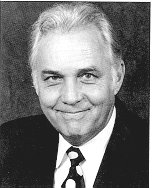
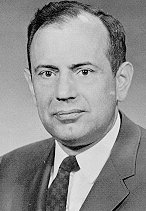
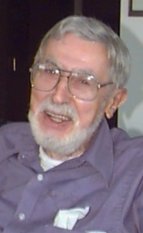
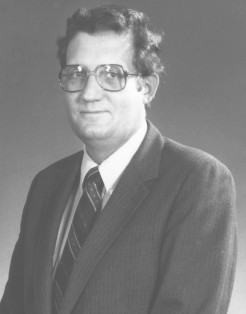
consisted of two former SSA officials (Arthur Hess and Alvin David) reflecting
on the historical context and development of disability benefits under
the Social Security Act. In addition, two SSA officials, Gil Fisher and
Ilene Zeitzer, briefed the audience on the issues then current in the
disability program.
These oral reminiscences by Hess and David are especially valuable oral
histories because they were two prominent SSA executives who were present
and played key roles in the early years of the disability program.
| February 17, 1993 TO Symposium Participants It was a special pleasure to host the Savannah Disability Symposium. As Noel Wall indicated in his opening remarks, it was a unique opportunity -- "indeed, an historic occasion" -- to hear pioneers from the early days of the disability program talk about the issues and concerns of Social Security and Congress during those times. From there we can follow the developments over the history of the program to understand today's problems, discover some solutions and chart a course for tomorrow. Enclosed, as promised, is a report of the meeting. Included are edited transcripts of the presentations of Art Hess, Alvin David, Gil Fisher and Ilene Zeitzer and a summary of the discussions resulting from the additional agenda items. As you read these transcripts and recall the many highpoints of the symposium, may the spirit, excitement and vision of these pioneers inspire our efforts, imagination and courage in today's disability struggles. Gordon M. Sherman |
|
U.
S. DEPARTMENT OF HEALTH and HUMAN SERVICES DISABILITY SYMPOSIUM
The Disability Program Its
Origins - Our Heritage
Thursday, January 21, 1993, 8:30 a.m. Sheraton Savannah Inn Savannah, Georgia
C O N T E N T S Opening Remarks by Mr. Sherman, et. al Presentation by Mr. Hess and Mr. David Presentation by Mr. Fisher Presentation by Ms. Zeitzer
MR. SHERMAN: Good morning, ladies and gentlemen, on the first day of the Clinton administration. We are glad to have you here. Are you glad to be here? (NOTE: Applause.) MR. SHERMAN: Okay. That sounds good! We are getting a little leisurely start, we wanted you to socialize and get to know each other as we begin this historic meeting. And it really is historic. But to welcome us to Savannah we have our Savannah District Manager, Russ Waller. Russ! MR. WALLER: Well, I would like to welcome everybody this morning. Those of you who have not been to Savannah I think you will find it a great town. Those of you who have been here already know that. I see some of the faces I saw back in the springtime. You brought the rain with you again just like you did back in March. But I do want to welcome you. Savannah is a great place. We did pass out a few tourist information type things, a few coupons for some local restaurants if you want to get out. I don't know if any of you are spending the weekend, but Savannah has a lot of historic places, Fort Pulaski, the beach. We've have a lot of places to spend some time and money of course. I'm glad you are here in Savannah. I know some of you may be a little bit worried coming into the Atlanta Region knowing how competitive we are here. I want to make sure that you are all relaxed in that aspect. We did time how long it took you to make breakfast and make it to the meeting this morning. But Gordon says we won't publish those rankings until after you leave. I would like to introduce a few people this morning, that are involved with Savannah. The prior District Manager is here, Mr. Wade Allen. He's down on this end. A lot of you probably know Wade more than you know me. Wade was here for what, 20 years, Wade, 22? MR. ALLEN: Twenty-two. MR. WALLER: Twenty-two years. He decided he would retire and enjoy Savannah, and I don't think he is going anywhere for the rest of his life. I may be here just as long, Gordon. So get used to that fact! I would like to introduce my staff here in Savannah. Ms. Eve Cappo, the Assistant Manager and we have three supervisors here, Gloria Williams, Charles Hildebrand and Alan Polite. And if we can do or my staff can do anything for you here in the next couple of days, let us know. Whether it's connections back to the airport or something from the local office, we would be glad to help. That's about all I've got to say this morning, so I'm going to turn it back over to Gordon. I'm sure you are going to have a great meeting. MR. SHERMAN: Thank you very much, Russ. Both Noel Wall and I also welcome all of you from the Atlanta and Dallas Regions to this historic session. But before we get into that we would like to go around the table and ask each of you to introduce yourselves and tell us your role in this great Social Security institution. We will begin to my right and go around the table. I think we can hear well enough. The acoustics are pretty good here. If not, we will try to some public address support. Let's begin with Gil here -- but before that, three people who were going to be with us are unable to make it. Robert Bynum, a former Deputy Commissioner of Social Security was going to be with us today, but his wife had a fall and he has to remain with her in Alabama. We will miss him of course but we understand his situation. Also our Acting Commissioner, Lou Enoff will not be able to make it. Lou is standing by in case Secretary Shalala calls. And she most likely will call wouldn't you say, Gil? MR. FISHER: Yes, sir. MR. SHERMAN: And we are glad that he is there standing by and on duty while we are here. Susan Parker who was our Associate Commissioner for Disability, I guess you might say played out her options at noontime yesterday, Gil? MR. FISHER: Yes. MR. SHERMAN: She wanted to be with us. But we regret that she is no longer with the organization. She contributed so much. We do have a couple of people here from her operation in Baltimore. They will introduce themselves as we go around the table. And Mr. Alvin David who was a former Assistant Commissioner for Program Evaluation and Planning will join us in a few minutes. We have sent a car for him to Hilton Head. He will be here before we start our session on the historic part of the disability program. With that we will go around the table and we will begin with Gil. MR. FISHER: Gil Fisher, from the Office of Programs in Baltimore. And I am delighted to be here. I had to acknowledge to Noel this morning that I seldom travel. As I think back where I've been across the agency in my years in government, somehow I have always come to either Atlanta or Dallas. Here I an, again, and I'm happy to be here! MR. WALL: I'm Noel Wall from Dallas. And I will say to Gil I know why he is coming to Atlanta and Dallas, because I always identify Gil with the best. (NOTE: Laughter.) MS. BLACKBURN: I'm Kerry Blackburn. I'm here from the Australian Department of Social Security spending 12 months with the SSA in the Atlanta Region. MR. PENCE: I'm Gordon Pence, DPA from the Dallas Regional office, DPA for Texas, New Mexico and Arkansas. MR. CISSELL: I'm Carl Cissell, DPA in the Atlanta Regional Office. And unlike Gordon, I only work with one state, Tennessee. MR. DOBBINS: I'm Cleve Dobbins, Operations Manager for Kentucky. I did a lot of lobbying to get here. And as you see, I was successful. Thank you, Gordon! MR. ALLEN: I'm Wade Allen, former District Manager here in savannah, now retired. come join me, it's great. MR. SHERMAN: Not so fast, now, we need these folks, Wade. MR. HINRICHS: Bob Hinrichs, Assistant Regional Commissioner for Programs in the Atlanta Region and also the flower boy, temporarily. (NOTE: Laughter.) MS. ROBINSON: I'm Janet Robinson, Acting Director for the Florida DDS. MR. BERLING: I'm Tom Berling from the Atlanta Region. I'm DPA for Louisiana and Oklahoma. MR. SEXTON: I'm Glenn Sexton, the DDS Administrator for North Carolina. MR. THOMAS: Jerry Thomas, the DDS Administrator for Georgia, and welcome! MS. RENO: I'm Virginia Reno. I worked for years in the office of Research and Statistics in the Social security Administration. I an currently on loan to the National Academy of Social Insurance which is a nonprofit research and educational organization in Washington, D.C. The Academy has been asked by the Ways and Means Committee of the House to undertake a comprehensive review of the Social security disability program. For example; Are structural reforms needed? Do we need to rethink the way in which we determine eligibility for benefits, and so on? So I am here, and I'm delighted to be here to learn what concerns you all in the disability program and any receive any advice you nay share with me on for how to make it work better. MR. BUNKER: I'm Doug Bunker, the DPA from the great "Tarheel" State of North Carolina. MR. WARNER: I'm Charlie Warner. I'm the DP Director from Dallas and I see that one of my DPA's has already switched sides.(NOTE: Laughter.) MR. SHERMAN: We really aren't proselyting. We take good people where ever we find them. MR. WILKERSON: I'm Irving Wilkerson and I'm Mississippi DDS Director. MR. LIGHTSEY: I'm Charles Lightsey. I'm located in field operations. I'm presently on detail with the Mississippi DDS. MR. STOJCICH: Charles Stojcich, District Manager, Mobile. Charlie, when Gordon gets out of his job I think I want it. MR. SHERMAN: I want y'all to know those are the three Bubbas from Mississippi. (NOTE: Laughter.) MR. FAIRBANKS: I'm Rick Fairbanks. I'm the DDS Director for New Mexico. And, yes, New Mexico is in the Dallas Region. MR. TAYLOR: I'm Rodney Taylor, Acting DDS Administrator, Alabama. MR. DEMER: I'm Jim Demer, DPA for Georgia. And, Rick, what are you doing here? MR. LEAHY: I'm Tom Leahy, the DPA for Florida. MR. EVERETT: I'm James Everett, the Assistant Regional Commissioner for Programs in Dallas. MS. HOFFPAUIR: I'm Kay Hoffpauir and I'm the Program Director for Louisiana DDS. MS. BOZEMAN: I'm Gloria Bozeman, Acting Director for Regional Program and Internal Review in Atlanta. MS. VIERA: I'm Grela Viera and I'm the Director of the Disability Quality Branch in Atlanta. MR. KUNZLER: I'm Bob Kunzler. I'm the DPA for Kentucky and South Carolina. MS. TROUT: I'm Peggy Trout currently Susan Parker's deputy, or until yesterday, Susan Parker's deputy in the Office of Disability. It's an assignment that I'm on for six months as part of the management development program. Prior to that, I served three years as Director of the Office Research and Statistics. And I'll be moving on from this position in another three months. But I'm enjoying it very much, and I'm very happy to be here. MR. NANCE: I'm Raymond Nance. I'm the Disability Director from Oklahoma. MR. VOGEL: Kenneth Vogel, Administrator, the Texas DDS. MS. TELFORD: Betty Telford. And I'm the Charlie Warner of the Atlanta Region. MR. VANDIVER: I'm Rick Vandiver, DDS Administrator in South Carolina and Voluntary DPA for Louisiana and New Mexico. (NOTE: Laughter.) MR. DAVID: I'm Alvin David who in ancient times was the Assistant Commissioner of Social Security. MR. CAMPBELL: I'm Keller Campbell, DDS Administrator from Kentucky. MS. ZEITZER: I'm Ilene Zeitzer. I'm the Special Assistant to the Associate Commissioner for Disability in Central Office in Baltimore. MS. CRATER: I'm Fran Crater and I'm the DDS Administrator for Tennessee. MR. SHERMAN: And I'll introduce the other individual here when we get into our program. At this point in tine we want to do a little something different. We have a little variety here. So, Bob Hinrichs, our Assistant Regional Commissioner for Program Operations and Systems, wants to hold a drawing for prizes. MR. HINRICHS: Yes, we want to keep
things light, and we want to extend further the hospitality of the
Savannah Field Office. They have very graciously rounded up some
gifts. So, we want to have a little drawing. Now, the process here
is simple. We are going to draw for two prizes. You can tell the
flowers are one. By the way if you win the flowers and aren't in
a position to take them home, we can draw another number. So, Noel, if you would think of a number and just blurt it out, some number between one and 43. MR. WALL: Thirty-nine. MR. HINRICHS: Who has number 39? MR. SHERMAN: Now, that's his age. Should we pick another one. MR. HINRICHS: Thirty-nine, do you have the number? Carl Cissell, goodness sakes. Carl Cissell wins two free tickets! dinner. Agnes gets to eat tonight. (NOTE: Laughter.) MR. HINRICHS: Okay. The flowers. Gordon, would you think of a number, one to 43. MR. SHERMAN: Twenty-three, my age, 23. MR. HINRICHS: Twenty-three, hey- MR. SHERMAN: We've got Tom Berling coming to Atlanta, and we are working on you now, Kay. We couldn't buy you off with a pot of flowers though could we. (NOTE: Laughter.) MR. STOJCICH: Carl, you know since you got a free dinner, you know that isn't going to cut you a deal. (NOTE: Laughter.) MR. SHERMAN: That's right. We've got to economize.
Well, the topic today is the disability program and all of us are heavily involved in that in serving the American citizens with protection against disability. Our theme is: The Disability Program, Its Origins, Our Heritage! Its Future, Our Challenge! I want to read three lines to you from Maya Angelou's inaugural poem, yesterday, which I think is quite appropriate. If you haven't read her poem it's in USA Today. It's really a fine poem, and I quote these lines which apply to our session. "History, despite it's retching pain, Can not be unlived. And if faced with courage, Need not be lived again." If we look at that as our theme for our session today as we move into it, I think it would be very apropos. Noel Wall and I had talked about a session like this with Arthur Hess earlier this -- well, last year really. And we are much pleased that it came to fruition. But before we move into that, I would like to ask Noel to join me to talk some more about the objectives of our session here today. Noel, if you would join me here at the podium, the first thing I would like to do is recognize my colleague for his leadership in the Dallas Region in serving the American people. And it's also the home of the Dallas Cowboys. (NOTE: Laughter.) MR. SHERMAN: I can't give you a Dallas Cowboys tee shirt, Noel, but before you make your comments, I want to give you an Olympic tee shirt because we are very proud of the Olympics in Atlanta. And of course one of these days our Braves are going to win the World Series. But I would like for you to take this tee shirt. It symbolizes the Olympic flame for 1996. Wear it with pride throughout the Dallas Region. (NOTE: Laughter.) MR. WALL: Thank you, Gordon. I will wear it with pride. And we would like to enter our Cowboys. MR. SHERMAN: But I want you to also take this commemorative Coke bottle because Coke is it. And Atlanta is the international headquarters of Coca-Cola. MR. WALL: You really are showing your age, Gordon. (NOTE: Laughter.) MR. WALL: This is the old-time Coke bottle. Thank you! Well, thank you, Gordon. I am humbled standing before this group this morning because in my career with Social Security, the names that I have always respected so highly and admired so much are here today. I first met Gordon Sherman in about 1967, and I was so impressed with his character and leadership that I decided to make him one of my roll models. And over the years, he has almost become the role model. And I thought when I got to be a Regional Commissioner that I wanted to be a Regional commissioner like Gordon, realizing that I would never really achieve that. But I do respect Gordon so highly. I think though, Gordon, I need another lesson because I was talking with Fran last night, and she asked me what job I had. I told her, and she said, "Well, you don't act like a Regional Commissioner." (NOTE: Laughter.) MR. WALL: So, Gordon, would you tell me how I'm supposed to act as a Regional Commissioner? MR. SHERMAN: I think I had better talk to Fran first. (NOTE: Laughter.) MR. WALL: Last night I was talking with Art Hess and it was such a fine, fine occasion for me because it brought back some good memories. Not just some times that I found educational to me as a young and aspiring SSA manager, but good memories of what SSA has done for the people we serve through the years. And it does seem to me that one of the things we have really lost is accepting the role in SSA of being the monitoring agency for the economic well being of people in this county. And I had the good fortune early on in my career to be pretty closely associated with the Regional Commissioner's office or the predecessor position. And so in many meetings and in a lot of correspondence and other communications, I knew what was going on in the Central office and who was doing it. And so the names of Art Hess and Alvin David and Bob Bynum were very prominent in those years. Not just in ter-.ri,.s of managing the process that we had at the time, but in terms of formulating a program that would eventually mean so much to people. And it had to be. You know, I'm originally from Pottsboro, Texas. The nearest big city to where I grew up was Denison, Texas. And y*all have all heard of Denison of course. I got most of my education reading the Denison Herald and I still read it. And this is from the Denison newspaper, May 1st, 1874. it gave some numbers. Virginia, I have always liked numbers. You may want to write these down. In 1874 the average duration of life was 33 and a half years. one fourth of those born died before they are seven years old and one-half before the age of 17. Out of 100 persons only one reached the age of 60. Well, we can be so proud that numbers like that have changed through the years. But with that in this century brought a whole new set of problems that had to be dealt with by government. And so in the mid-part of the century government was really moving out to deal with those problems. And I wonder, I wonder, if we would have been as successful had it not been for those gentlemen that we will hear today. And so I tell you I stand in awe of them and I'm spending some time on this because I think it's important that everyone who did not have the privilege that Gordon and I enjoyed in those early years, and Wade Allen I'm sure. You didn't have the privilege. But I think you still benefit from the kind of input that these gentlemen had. But today we are America's team. Right? Everybody identifies with the Dallas Cowboys. You do support them don't you? (NOTE: Laughter.) MR. WALL: We are America's team. Do you think it would help the Dallas Cowboys going to San Francisco to be able to think back consciously or subconsciously and say, "We have a heritage." The Dallas Cowboys have been here before. They have been victorious before. They have been to five Super Bowls in the past. Didn't it really help them to know, "Yeah, we can do it again. we owe it to our heritage." And that's the way it is in disability. We have a heritage. Last year we went to a Super Bowl I think in all of the DDS's. I really think the job the DDS's did last year was a superhuman job. And while there are not too many people still working in the DDS's who reach back as far as some of those great years of the past that I'm talking about, it would be an intangible but important factor I think to know, yes, we in the DDS's and, yes, we in Social Security always rise to the occasion. Someway, somehow we do the job. And I think that heritage was important to the achievement that we had last year. You know, if we had been meeting -- I can't speak for the Atlanta Region, but Gordon can give you equally overwhelming numbers. We had risen to about 113,000 claims pending, two plus times our normal pending in the region. Charlie, if I remember correctly we had gone up in our pending every month for about six months. It just looked like the job is overwhelming. I never thought I would stand before a group of people and boast about having 92,000 claims pending in our DDS's, but I'm doing that today because that's down from 113,000 at its high. And we have dropped the pending in 13 of the last 16 weeks. And I know the Atlanta Region looks even better. I'm satisfied being number two to Atlanta, always satisfied. But I think that what we hope to gain from the important segment of this meeting today is a more direct tie-in with what that heritage meant to the achievement last year and what the heritage will mean to what we have to do in the coming year. I really believe we are on downhill run in the DDS's. Now, you look at this operation we have. If you said, "We are going to create a process, draw an organization chart for how to administer a disability program, and you drew it with just the blocks we have today and then you connected the work flow and the way it has to move from federal to state jurisdiction and back to federal and then over some other places and back, a learned person would have looked at that and said it will never work. And I personally don't think it's the most ideal way to make it work. But it's worked because of the excellence of so many people, because of the heritage we have to excel. And I just don't believe it would work, I don't believe it would work at all if we hadn't had a partnership that was built so carefully and nurtured so wisely through the years. And so I hope that this meeting today -- it really was Gordon's idea, but I claim one talent and that's to be able to recognize good ideas when I see them. And, Gordon, as soon as you suggested that I really thought it would mean a lot to our people to know that where we are today is not accidental, but it's part of a foundation that was laid sturdily 40 years ago. And one that we have used and used well. And so I hope that as we listen to how it all happened, that it will better establish the legend, better establish the responsibility and will make all of us who are here feel better and feel more able to deal with the challenges that we are going to face in the next year or so. So, I'm very proud to be here. And Gordon, I really do want to thank all of the, all of you for the hospitality you have shown. It's the traditional southern hospitality, for the Savannah District Office, Eve and Laurie who helped us get here, and all that you have done to make this such a wonderful setting for a meeting. On behalf of the Dallas Region we thank you. MR. SHERMAN: Thank you very much, Noel! After that comment that you got from Fran, Noel, I want to share with you some remarks made by President Lincoln. This is the first day of the new Clinton administration. I understand back during the Civil War one of President Lincoln's staff people came in and said to him, "President Lincoln, President Lincoln, the Secretary of War said you are a fool." Lincoln reportedly thought pensively for a few minutes, then responded, "You know, I'm going to have to talk with him because he is usually right." (NOTE: Laughter.) MR. SHERMAN: I I m going to have to talk with you, Fran, because you are usually right. Look at that record in Tennessee! And Noel, I certainly agree with you. We are getting closer together. I think the Dallas Cowboys are America's football team, but the Atlanta Braves are America's baseball team. Right? Well, Noel was telling you a little about performance and also talked about the great accomplishments of the Dallas Region. And I shall just share a couple of records with you for the Atlanta Region. That's for this fiscal year since the 1st of October, our state agencies have 222,616 receipts of disability claims. And that's 14 percent more than they received during the same period last year. And this is through January 15, they have cleared 227,418 claims thus far. And that's 33 percent more than we did during that same period last year and that's over 90,000 citizens in the eight southeastern states that are getting disability benefits as having been allowed during that period of time. You see what a tremendous situation and help to individuals that is and to the whole economy. In effect we undergird the whole economy. And if you talk about the situation, Noel told you about 1874, 1 just recalled some figures that Gil had put out a few years ago about the cohorts of the men and women born in 1966. And I gather these facts are still pretty much true today. That of the men born in 1966 who will be 27 this year, about 40 percent of them would either die or become disabled before they reach retirement age, one-third of the women born. So, you see we are living much longer and things are much better. But you see what the facts really are. And I'm sure that Alvin and Art both will sharing more information with us about that as we move into the session on the history of this institution. Before we do that though, Charles or Bob, do you have any administrative instructions that we need to tell the group about? Lunch of course will be at -- what is that, the pro shop restaurant? MR. HINRICHS: Yes, there is a restaurant right around the corner. If it's still raining, you can go out through these doors over here in a protected area. I think we are going to have more coffee. MR. SHERMAN: What time is the break time? We do have coffee if you want it during the - MR. HINRICHS: We have some coffee here. MR. SHERMAN: If you would get up and get your coffee. The restrooms are right out this door in the hallway. Do we have a time? What time, Charles, would they bring the coffee? MR. HINRICHS: It was originally scheduled for 9:45. But I'm going to move it back a little since our schedule changed a little bit. We will let you know. MR. SHERMAN: Okay. MR. HINRICHS: Is everybody's accommodations all right? Everybody has got a room I know. But if you have any problems let us know. MR. SHERMAN: Why don't we set the formal break time at 10:30. MR. HINRICHS: Okay, 10:30. MR. SHERMAN: Does anybody want to stretch now before we move into the heat of the session? Well, it's our great pleasure to have our former Deputy Commissioner and Acting Commissioner, Arthur Hess, to be with us to share his experiences over the years in the disability program with us. Art was our first Director of the Bureau of Disability Insurance, which was established in the 501s, which doesn't seem to be too long ago, Art. The disability program was already under way when I came with the Social Security Administration in November of 1958. And I have thoroughly enjoyed all my years in the program and especially working with leadership like Arthur Hess and Alvin David. And having had the experience to get to know those people early in my career and having the opportunity and freedom to do things in this organization to serve people. And as I mentioned, Alvin, before you came in, I told the individuals that you were our former Assistant Commissioner for the Office of Program Evaluation and Planning who had worked so closely with the legislative bodies in Washington in developing the Social Security programs over the years and so close with Arthur Hess and Robert Ball and others who have led this organization over the years. But at this time, Art, we would like to turn the session over to you and Alvin and since Bob Bynum is unable to be with us, to tell us about the past. If we don't understand the past we will probably relive a lot of it in the future. And to share with all of us here the growth and development of the Social Security disability program in America. I present to you Arthur Hess, our former Acting Commissioner of the Social Security Administration. (NOTE: Applause.)
MR. HESS: Thank you very much. since this is going to be a long morning for me and I hope it won't be as uncomfortable for us and for you if I remain seated rather than stand for the balance of the morning program. I'm not permanently and totally disabled, but the old legs begin to ache after a little while. It's a real pleasure to be here. I seen to gravitate toward the South, too, when important things are happening. As we came across from South Carolina into Georgia, the Georgia Welcome Center, the memories came back. At the beginning of the 50's when the disability program was being constructed and put into place one of the first of the first regional manager's meetings that I attended was the meeting that the Atlanta Region had at Jekyll Island near here.
And when we began to work with the state's council of vocational rehabilitation directors which was the fledgling organization of the very, very small rehabilitation effort that had been started in the 30's and 401st and that was going on at that tine and was to become involved as a partner in the disability legislation, we had our first meetings with the officials of the Council of Rehabilitation Administrators in this region because the state vocational rehabilitation agencies in this region were in the leadership as far production and services in the country were concerned. These names won't mean much to you, but I feel obliged to mention them in case any of you go back to South Carolina. Tell Ben Merritt of South Carolina that I remember him. We had Cord Andrews and Craig Mills of Florida and Joe Hiese (phonetic) of Georgia. And they were the state people with whom we sat down and worked out the first agreements as to how this dual program was going to be administered. Now, one of the things that I might mention to you as a preliminary since I've gotten into this enactment and implementation of the disability program prematurely. I intend to take you back a little bit father into New Deal history and even pre-New Deal history of the subject of disability But one of the things I might mention was that when we finally did in 1954 get the first operative disability program which involved the monumental compromise of bringing the state agencies into the picture, this was an absolutely unprecedented piece of legislation from the standpoint of federal/state relations. There had been grants in aid. There were all kinds of federal and state involvements where federal money was either matched with state money or otherwise, but this was the first program that was 100 percent federal money including the salaries and operating expenses of the state agencies which were supposed to and did get into the picture as you well know. And it is still that way today. And I don't know for sure that I would want to say today that there are no other programs of this kind, but that was 100 percent federal money, a federal statute and a few lines of legislation that said, "The Secretary shall--all Social Security legislation is always in terms of the Secretary shall, because that's where the fundamental legal authority rests, but the Secretary pushes it down to the commissioner of Social Security and in those days the commissioner of Social Security pushed it down to me and the fledgling disability organization--"The Secretary shall enter into agreements with the states to have determinations of disability made." That's about as much as was in the law. Now, there was a lot of legislation that had to do with contracts and contract determinations and terminations and all kinds of other things for federal contracting authorities with private agencies, all the things that came out of World War II in the way of fiscal goals. But we didn't come under standard contracting authority and we didn't even have to negotiate those agreements with the governors. In a few places the governors got into the picture. But here we sat, a group of Social Security employees and a group of state's council administrators with the law and we had to work out this arrangement. As Noel has said you all who have to work with this and even more so the people from outside who look at it today, and Virginia Reno's group of the National Academy which is going to be looking at this from the standpoint of the directive from the Ways and Means Committee as she told us a minute ago in her introduction are going to say, "Well, we don't know for sure how it got this way, but this sure doesn't look like the way you would set it up if you were starting over again." And that question has come up from time-to-time and will come up again in the future of this symbiotic relationship that has been established and that both Gordon and Noel have said is working so well despite the unusual structure that was created. But I would like to pick up on the theme of history and heritage because I think it's important to find out or at least to appreciate -- you don't have to remember all of the details and I hope I don't get too detailed in my description of how we got here. But it's important to find out how did we come to a permanent and total disability program under Social Security and how has it evolved in the years past. I'll carry you through or carry us through maybe -I can't see that there is any need to come right up to the present time -- but certainly through the CDI fiasco which all of you know more about than I do because I had already left Social Security then. But I would have some views to give or some information to give if there were nobody else here who could talk to the subject on the questions of the appeals process, how it started, we got into it very early, and what it is today and what its problems and significance are, and the actuarial status of the trust fund and the future. But that's not appropriate really for my assignment nor for the fact that I was no longer around Social Security. Haven't been for quite a while. And I'm glad that Gil will take that on. So, we will carry through with a break until noon and carry through essentially on history. And then we will leave to Gil and the people who will be with him this afternoon talking about the 1980's and 1990's and maybe the year 2000. The subject of disability just -- I hope I don't get to sound too professorial -- but just to get it in perspective actually disability in social and economic terms and in terms of governmental activity, as many of you know, goes back to Bismarck and the Bismarck times in Germany when the first European social insurance system, comprehensive social insurance system was put into effect. And the moral of that was to couple disability as an adjunct or a sequel to cash sickness -- not cash sickness -- to health insurance, to medical care. The German programs started with Weekly benefits for health payments and for people who were out of work, some temporary cash sickness payments and for people who stayed out of work for a long, long time some permanent medical or rehabilitative and other benefits including some cash benefits. And that was the European model which spread all over as the model except in Great Britain where they later established national health insurance quite separate and apart from the concept of payments for retirement and invalidity. I say that only because it is going to be instructive as to what happened here during the New Deal days. And why disability became associated with the retirement programs rather than with the repeated aborted efforts to set up national health insurance in the 130's and 140's in this county. However, disability as a concept, especially permanent and total disability, developed during the pre-World War I days and subsequently in lots and lots of fragmented and pinpointed ways. You had worker's compensation agencies developing or worker's compensation programs developing in the states that had both permanent and total and permanent partial and temporary disability payments. You had during the war, war risk insurance which at the end of the war the government made it possible to convert to U.S. government life insurance which had a waiver of premium provision connected with it. Now, waiver of premium was already something which the insurance companies, private insurance companies, had been selling in the pre-World War I and post World War I days. And what is waiver of premium? Well, for a little bit of additional cost on your life insurance policy you would have a provision that said that if you became permanently and totally unable to engage in work, your life insurance premium would be waived. In other words you wouldn't lose the benefits of your life insurance. You would be excused from paying insurance because of permanent and total disability. Some of these cases started getting court challenges and court interpretation, so the U.S. courts had an early introduction to the question of what is permanent and total disability. Also, the insurance companies got more ambitious and they actually started to write some professional insurance. In other words, they started to write insurance in case, that is actually not life insurance waiver, but actually cash benefits in case you became professionally unable to work or unable to do any work. And those two concepts which are the occupational concept of disability for your usual job and the permanent and total concept for inability to do any gainful work were already embedded in life insurance policies before the Great Depression. The were embedded in a whole series of federal programs that came along like the programs in the 120's for longshoremen and seamen and the program for federal civil service workers. And then the state agencies -- not state agencies -- the states picked up state pensions and the federal government picked up civil service pensions. And you had policemen's and firemen's pensions. And above all after World War I you've got veteran's benefits, compensation and veteran's non-service connected disability. Compensation was service connected and the other veteran's benefits were non-service connected. Compensation which was service connected was total or partial. And there was no problem there of an occupational capacity because it was compensation for the fact that an injured veteran or a veteran injured in service or sick in service got a benefit, total or partial. But they picked up veteran's benefits for those who did not have service connected injuries or illness. And that was total and it was not just occupational.. It was for all work. So, when the New Deal started when FDR came in and the Council on Economic Advisors had the assignment in the depths of this terrible, terrible depression of seeing what were the needs for the millions and millions of people who had lost their jobs, were unemployed, et cetera, et cetera, bank failures and whatnot. Some of this sounds a little familiar, but it's not as bad today as it was then by any means just because we have had all the social programs, the safety net programs, if I may borrow that term. The Council on Economic Advisors looked at the whole scope of social insurance including national health insurance and invalidity and old age pensions and gave President Roosevelt options as to where to start. Obviously the options that were chosen were first of all immediate welfare benefits and the establishment of grant-in-aid programs for those already old or already unemployed and work fare programs like WPA and CCC and so on, and social security, old age pension benefit insurance for workers in commerce and industry. And for the whole first 20 or so years, all during World War II and on up until the late 194 0 Is the self-employed weren't covered, professional self-employed or farm self-employed, domestic workers weren't covered. It was a program of old age insurance to pay people at 65. That was first enacted in 1935 to become effective 137. And in 139 it was extended to cover benefits for survivors, wives, children and survivors of the insured worker. It was built on a pension insurance framework which was predicated on people working and paying in and working steadily for quite a while and becoming entitled to benefits when they became 65 or their survivors if the person died before that time. But remember it was work related and it was work related in terms of first a minimum of six quarters of coverage. But gradually growing to a substantial number of quarters of coverage. A substantial attachment to the labor market lay behind the concept. And it was then that a problem began to emerge that the insurance companies had recognized when they invented waiver of premium. The problem was that people were working under Social Security with the expectation that they were going to have benefits when they reached 65 or that their survivors would get benefits if they died in the meantime. And people were becoming unemployed because of inability to continue in work. And low and behold their insurance status was running out because their insurance status was always stated in terns of either a certain proportion of the elapsed time being in covered work or finally permanent insurance status if you worked as long as ten years. And the priorities that were set in 1937 interestingly enough did not address and it was not recommended by the council on Economic Advisors that they address immediately either health insurance or disability insurance because all the studies were clear that this was going to be a difficult, very difficult type of coverage to enact on a national basis based on the experience of the insurance companies which had disastrous experience with their own private insurance policies during the Great Depression. That first signaled to actuaries and others that there was a strong relationship between the condition of the labor market and the claims that one would receive for benefits. Also the worker's compensation and especially the U.S. government life insurance experience had signaled that it was going to be damn hard to say what is permanent and total disability. Even if you spelled it out and said for any substantial gainful activity, it was going to be pretty hard to say where you drew the line. And when you tried to make a distinction between permanent and total disability for any work which was the thing that people really wanted to insure and inability to do one's customary job which was what many of the pension plans for public employees and railroad employees and so on had, that those were going to be terribly difficult lines to draw and hold. And so all during the 1930's and 1940's the emphasis in planning and in congressional attention to further developments in social insurance was really based on health insurance, putting national health insurance in place. There were a whole series of bills starting at the end of the Roosevelt administration and through the Truman administration and on up until about 1948 or 150 which focused on improvements in the social security coverage which was bad and benefits which were badly lagging. There had been no increase in benefits during the World War II period at all. And it became clear that this program was good enough that to be fair to the American people you had to give other people besides those working in commerce and industry a chance to be under it. So, focus was on the things that Alvin can tell you more about which were the actual updating and improvement of the OASI program itself. And then the addition of health insurance. And when you said health insurance this set off an alarm as far as the medical profession and the insurance profession were concerned. It was not until 1948 that a Senate Finance Committee Advisory Council, of which Bob Ball was the staff director, and I did some of the drafting of the disability provision, actually recommended disability benefits for permanent and total disability with very strict insured status requirements, with a very strict definition, with all kinds of things hedged about it, six months waiting period and medical. improvement, CDI's and so on. And the members of that advisory council which included some very prominent insurance people issued a dissent. But the framework, not the administrative framework, but the programmatic framework for a very limited disability benefit program for presumably everybody who was covered by Social Security was first conceived and drafted in that kind of a climate. The ball was thrown then to the congress because there had been a series of bills. And there was a bill in 1950 which passed the house including provision for disability benefits, but passed the Senate with disability out of the picture completely. And disability was dropped out in conference. The first big postwar legislative expansion of the Social Security program focused on improvements of coverage and benefits. Both health insurance and disability insurance fell by the wayside. That was toward the end of the Truman administration. There was another session of congress and Chairman Doughton of North Carolina was then chairman. incidentally, it's very interesting that a lot of the leadership in the Ways and Means Committee came from these two regions. "Muley" Doughton was from North Carolina. That was his last session in 1952 that I'm going to tell you about. He was followed by Jerry Cooper from Tennessee, later Wilbur Mills from Arkansas. And God bless Wilbur Mills. I hope we can forgive him for his later transgressions which quite ironically arose out of one of the things that we are concerned with in disability. That is alcoholism and substance abuse. But for his working lifetime he was a power and he was strength. And he insisted on the financial solvency of any disability, I mean any Social security provisions which were ever introduced and considered. There were no Ways and Means subcommittees and there weren't dozens and dozens of staff. Wilbur Mills was the main committee and there was a little bit of staff and they held the reins. Alvin and his people worked directly with the staff of the Ways and Means Committee. This legislation originated in the Ways and Means Committee of course because that's the taxing committee and the committee that constitutionally received jurisdiction over the Social Security program. Generally, the Senate came next and whatever came out of the Senate would go to conference. That would be where they would settle the final activity. So, we are down to 1-951, 152 in the Truman administration and a bill came out from the House with the disability freeze in it. Maybe it had disability insurance and the disability -- MR. DAVID: The first one did in 1950. That was one that had disability benefits. And then after that ran into a big storm. The next one came with a freeze. MR. HESS: I'm going to turn the ball over to you in a few moments, Alvin. And then you can give us some of the drama of the activity that took place in the next few years. I do want to say, though, having mentioned the leadership coming from these two regions in the Ways and Means Committee, that the South was well represented in disability history in the Senate. Aside from Senator Albert Gore, Senior, who spoke up in support of the disability program the key person was Walter George of Georgia. He saved the day. And Alvin will give you that story. I just want to tell you about the first abortive legislation in 1952. 1 want to tell you that because it brought us into the problem area of working with the states on how we were going to work out this program. The disability freeze compromise that came out of the Senate/House conference was -- this was Muley Doughton's last term as Chairman of the Ways and Means Committee, he was dropping out. And he was determined he was going to have disability in the bill. The Senate Finance Committee was determined it wasn't going to be in the bill. And they had by that time focused on a freeze to at least address this increasingly growing anomaly of people losing their Social Security coverage because they couldn't continue their insurance status sufficiently long enough, their work sufficiently long enough to have permanently insured status for old age benefits or survivors benefits. In conference there was a deadlock. I think it was July 3rd or July 4th and they were going to adjourn. At that point they began looking for compromises. And somebody said the principal problem is the fear of the doctors of Social Security. This is the entering wedge for health insurance and socialized medicine. Let's give the determination to the state agencies. After all the states have rehabilitation and they have worker's compensation and they have welfare. Actually in 1950 an earlier bill, one of the congressional compromises had been to kill disability insurance, but to set up APTD, the first modern federal grant-in-aid program for the aged, blind and disabled came along with the other grant-in-aid programs in 1950. If this sounds a little confused I will turn it over to be clarified immediately when I explain the now you see it, now you don't freeze. Because the conferees from the Senate side were still not satisfied that putting the states in the picture was going to take then off the hook either for their own intellectual hesitancy about this or because of the continued vehement testimony they had had from the insurance industry that this was disastrous road to go or the violent notices they had from their family doctors at home. 91 Don 9 t you go this way or else." So get the bill out they put the freeze in with an effective date of July 1st, 1953. And then down at the end they said this program or this provision shall terminate June 30th, 1953. So, the freeze terminated the day before it was to go into effect. (NOTE: Laughter.) MR. HESS: That was about 12 months off or 11 months off. And here was Bob Ball and Alvin and others and I had been involved in this drafting, and we said, "What's the point of all this?" They said, "Well, you know we are getting a new congress next year. And if the new congress wants to put the freeze into effect all they have to do is delete that one sentence that says it's expired and then it will be in effect." We said, "Well, what do we do?" So, we set up a shadow staff for the administration of this now you see it, now you don't freeze. And we began to consult with the states and we began to draft administrative provisions and see what we would do. It became clear at that point or it became clear after the new congress came in and they had a lot of other things on their minds, that the freeze wasn't going to be resurrected. And so our planning staff which had consisted just of drawing people together on detail (we drew people together from the field and from other places on detail and had this shadow planning staff) which was the same way we had to set up the disability benefits programs a few years later. You never get the staff ahead of time when the legislation hasn't been passed. And even after the legislation has been passed, you don't get the appropriation and the staff until you are way into administering it. The next couple of years involved some interesting jockeying, and I think rather than talking about the provisions, I would like for you to have a little bit of a feel for the political climate. This provision has always been very politicized. Alvin was much closer to that than I was because he had to sit with the Ways and Means Committee everyday for years and years and years representing across the board all of the things, not just disability but across the board all the things that they considered. I would get in there infrequently when disability was being discussed or when things got hot and we had to say, "Well, what are we going to do?" can you give us a little bit of a feel for the climate around in 1950 and 1952 and so on? MR. DAVID: Yes, it was as you say politicized. It wasn't so hard for us during the Truman administration to work with the staff of the Ways and Means and Finance Committees because the administration was in favor of the program, it was their program. But when the Eisenhower administration came in, they were opposed to all the disability program, the disability freeze and the works.
And at that time the Finance Committee in the Senate and the Ways and Means Committee in the House did not have staff anything like they do today. As a matter of fact, there was the chief counsel of the Ways and Means Committee and one assistant. That was the staff. If it weren't for us from Social Security they would not have been able to operate at all. And one of the things that made the whole thing work out and made it possible was a little known provision in the Social Security Act of 1935 which got in there because of the great interest at that time in health insurance. Health insurance had been recommended by the Committee on Economic Security in 1934. It was their report that was the basis for the Social Security Act of 135. And they wanted to go in with health insurance, but it was quickly recognized by the President, President Roosevelt, that there wasn't a chance in the world that the Social Security program, other than health insurance, getting enacted if health insurance was tied in the same bill. So, that was quickly dropped. Health insurance references in the original Social Security bill of 1934 were dropped. And as a sop to those who wanted to see health insurance come in, a provision was put into the law which gave the Social Security Board authority to conduct research and do studies of various different ways of providing economic security in addition to those that were written into the Social Security bill. It was that provision that gave the Social Security Board authority to conduct studies and do research which enabled us to go charging ahead doing disability planning and writing a draft bill, draft provisions. And being able to go and work with the staff of the two committees, the Finance and the Ways and Means Committees. Without that help the whole thing would have been in shambles. It could not have been done. But now it was easy for them to go. It was easy to do all of this during the Truman administration. But when the Eisenhower administration came in and was opposed to all of this, it was a different story for us. We had to go still under the authority of this provision that I mentioned in the original act giving authority to do research and conduct studies. We were able to go ahead and work with the Committees, but under considerable difficulty because our bosses were not in favor of what was being done. And the high point of that for me, personally, was in 1956 when the Committees had asked for a report from the department about the provisions for Social Security benefits. It came to writing a report for the department to the committees giving the department's views and advice, and that job of writing the report got delegated to me by the assistant secretary for legislation. I did not really know what to do because my heart was in the enactment of the bill, but here I was working for an administration, working directly with the assistant secretary, who had done me the honor of asking me to write this report and I wrote it as best I could. After it had gone the one person who was in charge of legislation for the department at that time was Wilbur Cohen who was then the Director of Research and Statistics. He saw this report that I had written after it had gone and in the presence of ladies he spoke language that I had never heard from his mouth before and never since. He was that much upset. But there was nothing that could be done. He just raised holy hell. But there was nothing that could be done and there was nothing that I could have done in the first place because I had to do as good a report as I could or else we would have broken relationships with the assistant secretary. And such good as we were able to do which was considerable would have been discontinued. If I had offered a report that was not as good as they knew that I could do because they had seen other work that I had done and knew what I knew and didn't know. And so if I had come up with a report that pulled punches and was not as strong as it could have been it would not have been a good idea. And if I had to do it over again I would still have to do the same thing. But the thing that I remember more vividly than anything else was Wilbur Cohen letting go with a string of quite surprisingly unpresentable language about this report. Well, as I said the thing began with this provision for studies which grew out of the fact that there was great interest in health insurance which was being passed over. Another thing that made a great difference and this relates to the political situation that Arthur mentioned, the thing that made the whole business of disability insurance, freeze and all, freeze and benefits and all, possible was something you won't read about in any books. You can read about what happened in 1950, about the enactment of disability benefits in the House and being thrown out in the Senate without even having hearings on it. You can read about a lot of the things that Arthur and I are talking about. But one thing you won't find in the books is a turning point, if it had gone the other way we would not be here. That was in the beginning of 1953 after the Eisenhower administration had come in and there was a lot of talk all over the government about the holdovers, the people who had been there before during the Truman administration, civil service employees. And they were not trusted. Their hearts were not in the right place. All over the government, this was not only health and Social Security, but all over the government there was distrust and suspicion about these people who were holdovers. Then in the spring of 1953 in the early days of the Eisenhower administration the heads of the different units in the Federal Security Agency were called in by the then to be Secretary, Mrs. Hobby, and asked about their programs. Mrs. Hobby and her assistant, Nelson Rockefeller met with Bob Ball, then the Deputy Director -- well, he was Acting Director of the Bureau of Old Age and Survivors Insurance -- went and made a presentation in which he explained to the administrator, Mrs. Hobby and Nelson Rockefeller, the deputy, he explained about what social insurance was. And it was something they didn't know anything about really. And he explained it in a way that nobody else in the world could have. He was and he still is the authority on Social Security. In addition he was one of the world's great authorities on how to explain something that is rather difficult on the face of it. He had a way of making things very, very simple. And even the Secretary and the Administrator and the Deputy could easily see that this was a good program. This was something we ought to be for. This was a good conservative Republican program where people helped themselves. And they didn't get something in the way of a handout. And paid into the fund and from the fund benefits were paid to them when they reached 65 and so forth. And it was a good solid conservative program. And you all ought to be for it. And he said this is a way -- not like what I'm saying now -- but in his own inimitably convincing persuasive way. And they got it. And that enabled us to go ahead and continue to have a disabilities studies branch in our division or whatever we called it, the analysis division. And to continue to do planning and research along the lines that Arthur was mentioning about what was done under other programs, other governments, worker's compensation and so forth. Without that we would not have been able to get what did come out. The other turning point, the turning point you would have to say, was in 1956 when the -- I'm getting ahead of the game because I have to go back and fill in some of the details about the disability freeze and all -- but in 1956 the bill containing disability benefits passed the House and had gone to the Senate Finance Committee. Voted down 11 to four. It went to the floor of the Senate and there one great heroic figure, Walter F. George, took it upon himself to guide through an amendment that would add to the bill the disability provisions for disability benefits. Eleven to four were against it in the Finance Committee. And the opposition was tremendous. It was not only the insurance industry that Arthur mentioned and strong case that they had made about their disastrous experience in trying to operate disability provisions before, but there was also the American Medical Association which poured it on. They had every ingenious idea including a lot of dumb ideas about why this was impossible, it couldn't be done, the costs were going to be astronomical, all out of control. It was not only going to lead to socialized medicine, but one of the Senators said, "This is socialized medicine. We have it right here. The federal government is going to be paying the doctors to do these examinations. The federal government is going to select the doctors to do these examinations. And we are right here in the middle of socialized medicine. Don't let anybody kid you." So, Walter George stood up after doing a lot of homework and having a lot of help as he went, and he held off this powerful offensive by the lobbyists of the insurance industry and the AMA. And of the two I think that the AMA lobbyists were actually the more effective. They did not spare the horses. They did everything. They sent telegrams all the time. They were always sending telegrams to the members of the committee and the Senate telling them why this was terrible thing to do. One of the things that I mentioned in passing about the costs being out of control, it has to be remembered which I don't think any of us are inclined to do unless they are reminded of it, that in those days the disability benefits program was skinned down, narrowed down, restricted so much in all kinds of ingenious ways. It was restricted. Most all of which is still in the law. But it was cut back so far that the cost of this program was one quarter of one percent of payroll for employees, one quarter of one percent for employers. That's what we were dealing with. That was this big deal about the costs going out of control. And there would just be ruin for everything because of these out-of-control costs. That was one of the reasons that they put in the separate trust fund, the disability trust fund, because there was stirred up a lot of fear of these costs going out of control would jeopardize the benefits for the widows and the orphans and the retired people. So, one of the things we did was to put in the separate trust fund. George, Senator George with his marvelous presentation -- I just wish, all of us wished that we had been able to stand up there and give out with all of these good arguments that we had offered and have it sound anything like as good as the way it came out of Senator George. In the end after his presentation -- and nobody in the world could have done this except Senator George. He had the prestige and the ability and the drive and the interest to do it. Nobody else even if they had wanted to would have been able to match his prestige and the way that he could make these ideas come out and hit people, have an impact. At the end after all of his work and contribution that vote came up. And it was finally passed by one vote. Which is to say it passed by 47 to 45. That means that if one vote had changed it would have been 46 to 46 even. That meant that the Vice President, Mr. Nixon, would have cast the deciding vote and defeated the bill. So this one vote, this difference of 47 to 45 was the least, the closest it could be and have the bill get through. If one more vote had been lost the bill would have been lost. Along in there came Senator McCarthy of Wisconsin who had a number of grudges against the Eisenhower administration including the Vice President, Mr. Nixon. McCarthy saw an opportunity to vote with the Democrats, vote for the bill and thereby make it a tie vote in which case the Vice President would have been embarrassed in this election year, 1956, having to cast the deciding vote to kill the disability benefits bill. But it turned out he did vote for the bill, McCarthy did vote for the bill but then as the record came before him and it became clear that the bill was going to pass by one vote without him he quickly turned around and changed his vote. So, it reads now in the record that he voted against the bill, but actually he voted for it the first time in order to embarrass the Vice President. I wrote down a few things while Arthur was talking. Now, let me see what else I have. MR. HESS: Tell them about Lyndon Johnson. MR. DAVID: Oh, yes, well then I said the thing could not have happened without Walter George and that is absolutely true. But it also could have never happened without Lyndon Johnson. He was the majority leader. And he was the one who along with the majority whip was in charge of counting the votes. And supporters of the bill thought that they had enough votes to pass it. They thought they had six votes to spare. And Lyndon Johnson motioned to one of the people in the gallery, as a matter of fact it was Nelson Cruikshank who was the AFL-CIO liaison, head of their Social Security department and motioned for him to come down to the floor, which he did. And Johnson told him, "You don't have enough votes." And Cruikshank, "Sure, we have them. You've got six votes to spare." And Johnson said, "The hell you do." And incidentally, when I say that, one little thing that you may or may not know, the language in private sessions, in committees and sessions in the congress that are not in public on the floor, the language will maybe surprise you. (NOTE: Laughter.) MR. DAVID: The hell you do is minimum of gentle, refined language. Anyway, he said, "The hell you do. You need to round up six more votes." And so what Johnson did was to send word to Senator George to prolong his presentation of the arguments for the bill for one hour during which time the proponents of the bill were able to work to regain the votes of those six that they had somehow lost. Which they did up to the point where the bill passed by that one vote. But it was Lyndon Johnson who arranged for George to talk that extra hour. And also -- Lyndon Johnson -- this is not new, this is the way things operated all of the time -- Lyndon Johnson took hold of the poor arm of the majority whip, senator Clements of Kentucky, who was running for reelection in 1956. And he said, "You have got to vote for this bill. This the leadership position and you can not vote against it." And Senator Clements said, "I gotta vote against. The AMA has come in and they have told everybody that they are going to put everything that they've got into defeating me in November. And I absolutely have to vote against this bill." And Johnson, his poor arm twisted like a rag, you know, led him down the aisle holding him by the elbow. The story goes in giant six foot steps, led him down the aisle to change his vote to support the bill. And the end of that story is that in fact the AMA did go into Kentucky and put in everything they had and they_did defeat Senator Clements in 1956. Arthur was mentioning the political atmosphere that all of this was in. That was one of them. One other thing that has mystified me from the beginning and still does is how grudging the congress has been and as a matter of fact the people about the disability insurance program. It was narrowed down and restricted in every ingenious way that you could think of, tightening the insurance status, the eligibility provisions to a ridiculous, I thought ridiculous extreme, fully insured, currently insured, 20 quarters out of the last 40. There was even one more than that which did get lost along the way. But all the different things, inability to engage in any substantial gainful work, long continued and indefinite duration, all sorts of little provisions to make it tighter and tighter. And those were not just done for the purpose of program, the purpose. But they were done to get the last few votes that were needed to get the bill passed like that vote in the Senate. Without some of these strange provisions that made it so tight there would not have been enough votes to pass it. So those were put in not just because some of us who had a hand in planning the program thought that they were a good idea. They were put in because that was the way you could hope to get the necessary votes. Well, I think all the notes that I made while Arthur was talking I mentioned and I think I should leave it at that. Don't blame us for all of these screwy provisions. (NOTE: Laughter.) MR. DAVID: Including that screwy one about the bill that became operative the day after it expired. It became operative the 1st of July and it expired the 30th of June. Anyway we didn't do all those things. We did what we could and to me it still seems remarkable that some of us were able to stay there and continue the work on disability legislation under an administration that was opposed to it. I will leave you with one more story about that. This administration was opposed to it all the way along. They fought it every step of the way including after 1956 the legislation that took out the age 50 restriction which was in the original bill, benefits were paid only after age 50. They took that out in 1958 and they added disability benefits for the survivors and dependents of the disabled beneficiaries in 1958. All of this under the Eisenhower administration, all of this was done where we, the staff, were operating on a program that we were in favor of and our bosses were opposed to. But in the end after the legislation was passed we got scads of mail. You seldom get much mail after the benefits were put in, but we got scads of mail from people who addressed the president, Mr. Eisenhower, and thanked him with just pathetic enthusiasm. They thanked him so profusely. They could believe what he had done. He had passed this legislation. He had opposed it all the way, but he had signed the bills which of course made the difference. He might not have signed them, but he did sign them to his credit. And he got all of the praise and accolades for his wonderful work in passing disability legislation. Thank you. (NOTE: Applause.) MR. SHERMAN: Well, Alvin, that goes to show if you don't mind who gets credit for what happens you can accomplish a lot, right? (NOTE: Laughter.) MR. SHERMAN: I stole that from Mr. Woodruff of Coca-Cola fame. That's how he built the Coca-Cola Company. Why don't we take a break. And then we can reconvene at 11:00. That will give you a chance to network a little bit and talk about some of the things that we have been discussing. And I would like introduce Mrs. Hess. Jane, would you stand up. This is Art's wife, Jane. (NOTE: Applause.) MR. SHERMAN: And we want to thank Tom Little for being so patient here and working so hard here on the closed microphone. And we will give you a break now too, Tom. So, why don't we take a break until 11:00. MR. HINRICHS: Gordon. MR. SHERMAN: Oh, okay, you've got something else you want to give away. Mr. HINRICHS: May the rain cease and the outside gloom lift, but in case it doesn't I have an umbrella and your very own lighthouse, the Savannah lighthouse. Noel, I need a number. MR. WALL: One. MR. HINRICHS: Who has number one? MR. SEXTON: I've got number one. MR. HINRICHS: Aha. Gordon, I need a number. MR. SHERMAN: Twenty-one. MR. HINRICHS: Twenty-one, who has number 21? MR. THOMAS: Thank you. (NOTE: Applause.) (NOTE: Recess.) MR. SHERMAN: We will continue with the second half of our program on the history and the experiences through the years. So, we will turn it back to Art and Alvin. Art. MR. HESS: We have amplification now. And I leave it up to you as to whether you would prefer to have me use it at this voice level or whether I should go ahead without it. (Static interference.) That's the problem. The problem is that if I look in a direction and don't speak into the amplification and any of you are having difficulty please let me know. Should I use it? Is it better? SEVERAL PARTICIPANTS: Yes. MR. HESS: All right. Don't hesitate to let me know. I want to move now to a few of the specific program provisions that Alvin alluded to that made these programs be very tight but resulted in rapid and continuous amendments over the years, and give you a little bit of background on the reasons for the original provisions and the sense of what came up as changes and expansions and greater program coverage came in. And of course I'm going to begin telling you things that you know more about than I do, like what I call the CDI fiasco. And I guess you might not take offense if it was labeled a fiasco because I'm sure you felt that way when you were living through it. But from the time the disability freeze which was passed in 1954, the actual freeze, not the abortive 1952 freeze, but the actual freeze in 154 was established up until the present there was a long, long period in which the administrative structure of federal/state relations, the role of the district office, how the claimant was handled, where the applications were taken and how much medical evidence was requested in the first instance and what the state law was and how much consultive examination and how the appeals came into the picture and so on, there was a long time when there were very few legislative changes in the causative area of administrative development until we got to I think it was the 184 legislation or the 181 legislation perhaps which redefined the agreement contractual relationship into something that from my point of view think is very much different from what we had before. But which was a congressional effort to satisfy both the people in congress and others as to the formal relationship that should exist between these organizations. There was very little in the growth of the administrative relationships that didn't come through negotiation with the state directors and ad hoc cooperative working relationships between the statest the Regional offices and the Central office as to who was to do what in order to get a final product. But there were 14 pieces of legislation in the period from the Eisenhower administration through Kennedy, Johnson, Nixon, Ford, Carter, Reagan and up until the beginning of the Bush administration. I don't know whether there have been -- my count doesn't cover the last couple of years. And they were all significant in that they made some expansion, mostly expansion and certainly some modifications in the substantive provisions that had to do with the benefits themselves or the way in which the benefits were handled administratively. And I can't touch on all of those, but I want to take a couple of areas and give you a little bit of background as to where we came from and how we got there because I think that they are going to be instructive to all of us and especially you folks who are still very actively going to be playing roles from here on out into the future as to what the disability benefits are going to look like next year and on through the rest of this century. If I say the rest of this century because that isn't so far away. But the record of 14 major pieces of legislation over a period of 30 years or so and the fact that we are coming up against a stone wall on the healthy status of the disability trust fund probably by the end of this decade. It's certainly going to mean there is going to be significant legislation in the coming years dealing with the effort to contain or constrain or make sure that disability benefits are going to the right people in the right amounts, but not in amounts that are considered to be excessive in terms of resources unless there is going to be a reallocation of basic resources that go into the program. And that is a very likely possibility. And I won't get into that because that's going to be Gil Fisher's domain this afternoon. One of the areas that deserves some discussion because again it's only going to begin to take on real significance as time goes on is the role and the reality of rehabilitation in the disability programs especially in the SSI DI program, but also in the SSA, the Social Security DI program. An underlying theme that was in this original compromise in 1954 in the freeze and certainly in 1956 when cash benefits for age 50 came into the picture for the first time was the idea that there would be a realistic role for vocational rehabilitation of disabled individuals. Realistic in terms of both governmental support of programs and in terms of the possibilities of physical restoration and training and placement in the labor market of people who were or became seriously disabled. And that was one of the pieces of underlying rationale and compromise that made the program acceptable in the first instance. We were to enter into contracts with state agencies. And they said state agencies because there were one or two very powerful state welfare directors who hoped to and did get the designation for the welfare department to administer the program. And there was worker's compensation in New York which was very strong and wanted to be in the picture. But by and large it was agreed that it was going to be the state vocational rehabilitation agencies with whom we would work and they would have two functions, assisting in the determination of disability. But at that time a lot of rhetoric and theory that their real function was to be to catch these cases before they went on the rolls and became well embedded into the cash benefit situation. And give every individual a chance to be considered for rehabilitation. At that time the rehabilitation programs were embryonic but had been set in place. But there was a very, very strong motivation in the Eisenhower administration to foster federal/state rehabilitation services. And the director of the rehabilitation agency then was the legendary Mary Switzer who is the mother and I suppose now maybe the grandmother of rehabilitation. But was very powerful in the Eisenhower administration and powerful in her dealings with Social Security. And Ms. Switzer's idea was that while the District office's might identify and take an initial application from the person who was applying for disability benefits, the very first thing that was to be done with that was it was to be turned over to the state rehabilitation agencies and a rehabilitation counselor would go to work and consider each case and determine whether or not the client was likely to profit from rehabilitation services. Well, this was unrealistic in a number of ways. First of all the programs had hardly started except as I said for Georgia, Florida, South Carolina and a few other programs. Relative to the population there wasn't much in the way of services. And where there were services they were primarily for persons who were physically handicapped, needed prosthesis, needed some training to go into sheltered work or something like that. They certainly were never funded for or oriented towards considering rehabilitation of the benefit population which was age 50 and over. And it's true the disability freeze did apply to younger people. But as far as benefits were concerned most of the people who were applying for benefits had by definition to have long work in the labor market. And they were worn out. They were elderly. They were coal miners to the extent that we actually finally got a separate black lung program because the disability program was not responsive enough in its benefits provisions for silicosis and pneumomycosis and the problems in West Virginia. And we got a separate black lung program which was dumped on us overnight. We thought the labor department was going to run the program and then the provisions were made retroactive to the very beginning and there was such a load that they turned it over to Social Security. We didn't know ahead of time that we were going to get it. And it was effective almost immediately. Well, the same with the freeze. When they started to work on the f reeze we said, "Well, you know, there is no point in making this prospective. There are people who started working under Social Security in 1937 and by 1942 they would have met the insurance status requirements that we are now writing into the law. And they have lost their rights to retirement and survivor benefits. And if you don't go back and pick them up you've left a tremendous gap in the promise that was made to the American people when they were brought under the Social Security Act." So, the freeze was made retroactive. And we found overnight that the estimates were that there were a half a million or a million people who were in that category who if you could establish a relationship between the time of their termination of employment and the onset of disability they would be entitled at least to the freeze. And then two years later when we got the age 50 benefits it became even more acute because then if they were over 50 they could establish the fact that they were now entitled to full scale disability benefits. And I had a half a year's battle in the implementation period with Mary Switzer about who was going to get a hold of those applications and move them along and process them before they were considered for rehabilitation. I understood that we ought to get people focused on rehabilitation as soon as possible. But I didn't quite use the language with Mary that Alvin says we used in the closed door meetings of the Ways and Means Committee, but I did say in the nicest kind of terms, "Mary, there are a half a million people out there." And within six months we had a half a million applications of people, many, many of them who were over 50 and many of them who had been disabled and not working anymore, had been disabled for a long period of time. "And you've got rehabilitation programs that only had a half a dozen or a dozen counselors. And we have District offices out there all over the country with tens and hundreds and thousands of people who are immersed in doing nothing but talking to these people, taking their applications, asking them for their preliminary medical evidence. And a lot of these people, the cases are cut and dry." Now, finally working with the state rehabilitation council directors we worked out despite the Washington point of view a realistic schedule of what kind of cases they thought they could look at and would want to look at. And we gave our District Offices the initial opportunity to designate by age, by physical condition, by various other characteristics almost state by state. The people who if they were referred for rehabilitation either by the District Offices or by the DDS wouldn't be wasting counselor time. And it turned out that this was minuscule. And over a period of years until we got into recent times and until we got into the 1619 SSI motivated provisions we struggled with this idea of making it possible for the rehabilitation agencies to give services to the disabled. There was a whole series of provisions starting in about 1956 in which federal money, Social Security money was made available to the state agencies. First in advance and then when the actual rehabilitations were coming out of the pipeline were so little later on congress changed it to be only reimbursement for cases that were actually rehabilitated. And that even aggravated the problem for the rehabilitation agencies because the states then had to put their money out in advance and risk the possibility that there wouldn't be a termination. But it was on again, off again on rehabilitation as such, per se. But it never was a very realistic idea because you were dealing with provisions that were essentially for people who had long established experience in the labor market and for whom even if they could be remotivated or retrained were frequently subject to the vagaries of the employment situation locally. And if they were hired were the last to be hired and the first to be off. So, the rehabilitation thing still stands with us. With the coming of SSI and then the 1619 provisions there had been a lot more attention to SGA and the trial work period and the circumstances under which an individual's rights to disability payments can be preserved as he or she goes on or off the program or has to come back again later on. And we haven't heard the end of this. You folks are going to be probably faced with, and the people who study the future of disability programs, are going to be faced with the question of realistic relationships between services and benefits in an administrative structure which probably is not in a program structure in terms of benefits which probably are not ideally suited as they would be if they had been planned in the first instance in a situation where funding for rehabilitation and prospects for rehabilitation had been realistically related to the benefit population. I want to say just a word or two about worker's compensation offsets and other federal benefits because one of the things that there was a lot of concern about and still is of course is duplication of coverage and benefits under various programs. And going back to the story that Alvin was telling about the touch and go, almost tied but just one vote enacting the disability benefits for people over age 50 in 1956, we planned all along that there had to be an offset for worker's compensation and for veteran's pensions. Not compensation for service connected disability but for veteran's pensions to prevent the duplication of benefits and to get the votes. I mean it was clear to the advisory councils and the Ways and Means Committee and the Senate Finance Committee said, "No way are we going to put these benefits on top of the other benefits without considering their relationship.11 And so there was written into the provisions that Senator George was going to take to the floor an offset for worker's compensation and veteran's pensions. And the veteran's lobby of course was a very, very powerful lobby and always has been and the veteran's lobbyists in Washington came to the committees and to Wilbur Cohen who was spearheading the strategy and said, "We are going to insist on the deletion of the offset for veterans benefits." And Wilbur pled with him. He said, "Look, it's touch and go. It's going to be touch and go and if the veterans raise any questions about this at all it won't go through." And the chief veteran's lobbyist -- I was in the room and he looked across at us -- and he said, "All right, we will keep quiet. We will let it go through this year, but next year we will amend hell out of it." And next year they put a provision in and it was deleted. The offset for veteran's benefits was deleted. And the year following the offset for worker's compensation was modified. And from then on all the way through there is a whole history in the definition of disability, in the insurance status requirements, in the definition of dependents covered, in the vocational rehabilitation services, in the of f set, in every provision there is a whole history of modification and gradual liberalization which has brought us to the point where the program was in the 1970s. Another thing, court cases, do I need to tell you about court cases? You people that are familiar with the court cases that are coming out of recent programs, Zebley and others, do not realize the evolution there has been in both the appeals process and the litigation process in the last 30 or 40 years. I went to law school and became a member of the Maryland bar, and I never knew what a class action suit was. I put disability benefits and medicare into effect before we had the first class action suit. Just before the first Medicare checks were supposed to go out the courts told us to stop the computers. And it was in Vermont for ten people who had gotten involved in a class action suit. And we had to decide were we going to be in contempt of court or were we going to pay a million people throughout the country. Well, strong legal advocacy groups, the courts as I said had gotten into the picture way back in U.S. government life insurance and later on. But the Administrative Procedures Act which applies to Social Security but which does not apply to veteran's affairs, the veteran's affairs have a veteran's appeal board, but you don't go to court after that, created a structure that encouraged litigation. And with the advent of SSI and the strong activity of the advocacy groups and so on we are in a picture now where I guess I have to admit that those of us who wrote the original provisions were wrong when we didn't listen to what the insurance people said. The insurance people said, "The courts are going to kill you. This is going to go from one stage to another. You will never be able to stop it." Well, it depends on how you feel about the essential nature of the benefit and whether there are very many people getting it now who aren't really disabled and aren't really deserving whether you think we have been killed or not. The congress didn't think so. As a matter of fact the congress was sometimes ahead of or frequently on the heels of the liberalizations that came about. But the congress did try on a couple of occasions to tighten up the definition of disability. First of all they had changed long, continued and indefinite to 12 months duration in order to make it easier, likely to extend to 12 months or end in death in order to make it easier for us to handle long continued and indefinite. But gradually congress became very much concerned about the liberalizations. And as you may know back in the Johnson, Nixon and Carter administrations there were repeated attempts to reel in the definition or reemphasize the fact that this was a definition that was not to consider local conditions and local employment opportunities. But was disability for all gainful activity which the courts kept saying realistically doesn't mean a job some place in the other part of the country. And which congress kept saying, "Well, maybe for some people it doesn't, but this is what we want the Social Security program to do for the coal miners. They've got the black lung program. And all they had to really prove was the clinical existence of lung disease and the time of onset. They didn't have to prove whether the clinical existence of that lung dis3ase actually made it impossible for them to engage in some kind of gainful activity. There was a lot of clinical testing which was the equivalent of suggesting this man can't breath enough to work under normal circumstances. But there was no suggestion that if he couldn't go back into the coal mines that he was therefore ipso facto still available for other kind of work. The congress did insist and the courts kept saying, no. Finally we got to the point in the Carter administration where the costs were going far beyond the actuarial expectations and there was a lot of concern especially with Fred Arner who was the staff person in the Senate Finance Committee and with Congressman Long and some others that the program was likely to be getting out of hand. And a whole set of provisions was put into effect which included the modifications of the state agency relationship from agreement to contract so that, the theory that would make it easier to issue regulations that the states would have to follow. And I'm not going to pursue that except to point out that one thing that was innocently put in there. Incidentally in the Carter administration there was strong disagreement between Califono who was for what you might call the restrictive provisions that were being suggested and Bob Ball, the Corimissioner of Social Security. There were some caps and some ceilings put on the level of benefits so that the criticism that a famliy could get too much money or an individual might get too much money could be overcome and the cost, the potential cost estimates could be brought down. But one little innocent provision that was put in there was that CDI's, continuing disability investigations -is it or whatever -- everybody except my wife knows what a CDI is -- which had been in there all along and which were being done a more or less realistic basis to the extent that resources were possible. But were resources possible every time you got a new program with a backlog dumped on you that was the first thing to go. But there was an innocent little provision in there for periodic review of every disability once every three years. And the idea of the people who drafted that and the climate in the Senate, paid very little attention to it, but the thought was, "Well, we will go at that gradually." I think it was first supposed to start in 152 which was a couple of years after enactment and we will go at it systematically. When the administration changed and the Reagan administration came in, (and I don't want to make this too political and I don't want to sound as if that was the only factor in the picture) the people over at OMB were scratching around for balancing the budget. There was a big deficit. The budget was out of hand. The long range projections for the Social Security program were questioned. Does any of that sound familiar? (NOTE: Laughter.) MR. HESS: OMB got the idea that one of the things that could be done is to clear all these people off the disability benefit rolls who shouldn't be on there. Now, they were helped by two pieces of evidence. There had been some internal quality reviews in Social Security and there was a GAO report which resulted in estimates that maybe 20 or 30 percent of the people who were on the rolls shouldn't be on the rolls and that hundreds of millions of dollars could be saved if you paid attention to the CDI problem. And of course we had a new commissioner who was the commissioner for the new administration that wanted to balance the budget. Believe it or not in those days they wanted to too. And the time table was stepped up. And it was stepped up under circumstances where there had never been put into law the kinds of safeguards that made sure that people who were going to be cut off the rolls would have timely notice and timely opportunity to present additional evidence and get into appeal and so on without having an interruption of benefits. Now, we didn't have that in the law because we had administrative policies which we couldn't always be sure were carried out to the nth degree in all places, but people who were going to get CDII.s were supposed to have notice and it was supposed to be done under circumstances where if there was a question about the possible worsening of the condition or the betterment of the condition this was taken into account, et cetera, et cetera. one of the other things of course that had happened in the meantime was there was the SSI enactment and there was the final realization that we were getting a lot more younger workers under both programs with the concurrent entitlement who were mentally disabled. The social progress of this country had emptied the mental institutions in the 1930's and 140's and put a lot more stress on the need for an individual if he was to survive to prove that he was mentally disabled either to get services or to get cash benefits. And the medical standards had originally been both tough and were not in keeping the psychiatric and social developments that had taken place over time. And so you not only got all the CDI's dumped on you but you got them to you under circumstances -- and you have to tell me if I'm wrong -- where I believe the medical listings that you had and the general climate of administration was not terribly sympathetic to people who were ambulatory and appeared to be able to take care of themselves under theoretical possibilities that they could work but where the labor market was very difficult for them. So the standards were going to be reviewed anyway. Well, I want to describe to you the situation where all hell broke loose because you know better than I do what happened in those years after the signals were switched by OMB and the new Commissioner of Social Security and the time table for CDI's was stepped up. And the circumstances under which they went out originally meant that a lot of people got notices and a lot of people got terminations or a lot of people were threatened with the possibility of loss under conditions that were politically and socially unacceptable. And there was then a series of things that occurred in Congress because by that time the Ways and Means Committee had been divided up with subcommittees and the subcommittees had a lot of staff. And not only that but every senator and every congressman now has staff and has disability experts on his staff in Washington and disability people out in the cities and counties of the nation which is their constituency. And the advocacy groups got going. And after the terrible political flack that came about, there was actually an administrative halt and then a series of congressional enactments which said that you've got to pay a lot more attention to the circumstances under which the termination takes place, notice, opportunity for hearing, new standards, et cetera, et cetera. And a terrific backlog ensued again. And I guess the only reason I'm even touching on this because I'm not telling you anything you don't know is to point out that the history of the program has one of continual crisis, continual expansions that were not planned for or that were unrealistically assumed would not happen. When age 50 limitation was put on in 1956 and then the Eisenhower administration went out in 158 and in 160 the age limit of 50 was removed, I remember being in the Ways and Means Committee when they were discussing age 50 and the removal. And the congressmen, some of them who were new and some of them who had been around a long time, kind of looked around at each other and said, "How did this age 50 get in here anyway? This doesn't make much sense." And so the successive liberalizations, and this has been true with Medicare too, very substantial workloads given to the Social Security administration under circumstances where the governmental structure does not provide for resources ahead of time to hire, train, tool up and get on board the staff you need before the workload comes in. And the political situation does not permit congressman who have to go out every two years to be reelected to pass social legislation and make it enacted three or four years hence. They want it enacted within 12 to 18 months. And so we frequently got legislation with effective dates without any apportionment from OMB for a deficiency funding without any ceiling to tool up. And one reason why the Social Security Administration was able to take on these additional expansions, and I'm not just talking about disability and Medicare, but the expansion of coverage to farmers and to self-employed people and domestic workers, the whole impetus has been such. one reason has been the fundamental stability and health of the field organization of social security. Originally the setting up of district offices and the training and the management of the field disability function has been such that, and somewhat the characteristics of the Social Security system per se in terms of the retirement benefits and the survivor benefits, has been such that it was possible at times to take thousands of people in the field who had not been hired to take disability claims or Medicare claims and just reallocate the priorities on the workload that existed in the district offices. And unfortunately as priorities were reallocated certain things like representative pay, CDI's and so on sometimes got backlogged. And certainly if I'm not mistaken in the 183-84 so called stall or freeze of CDI's everybody was on notice that there were going to be new standards, medical standards under which the cases were going to have to be determined. So no more CDI's were to be done until you got the new medical standards. And then of course everybody immediately wanted the CDI determinations to be made. So, I can't predict whether you are going to have new and unanticipated loads of similar consequence in the future. I doubt it. But you are going to have, continue to have problems of resources that do not take into account the ideal handling of workloads that do not have primary political attention, namely rehabilitation, trial work, representative pay to some extent and so on until and unless somebody convinces OMB and the congress that just like Internal Revenue, for every enforcer you put on the rolls, for every facilitator you put on the rolls you save program money. The theory is always to save administrative money, to save ceilings and no attention to saving program money and what is being lost in some of these areas. I think that's going to change in this decade as one becomes more and more sensitive to the problems that are down the road in fully funding disability and SSI which is going to be under much pressure for liberalization. Now, there a few other things -- we are getting close to the lunch hour -- there are a few other things that I could say, but it might not be fair to you and it would be a disappointment to me if I didn't at least devote the next 15 minutes or so to relative silence on my part and an opportunity for you people to speak up. And if it just calls for a response on my part I'll be glad -- or on Alvin's part -- we will be glad to do that. But I think we don't want to talk until the last minute and then turn the afternoon program over to you folks without your having had a chance to take one last crack at this question. How in heaven's name did we get to where we are now? Yes. MR. VANDIVER: I've got one question. MR. HESS: You are South Carolina, right? MR. VANDIVER: Give Ben Merritt my regards. MR. VANDIVER: I certainly will. one of the things that is interesting in listening to the developments of the program in the early days was the kind of stability of the involvement of certain key staff people. In other words your involvement and Mr. David's involvement. MR. HESS: We were civil servants. MR. VANDIVER: It appears that people in Social Security at levels where they can actually write, create, influence the policy and procedures who are politically appointed have moved down through the years and that has influenced the directions the programs have taken and maybe the frequency with which we have had changes. Would you comment on the effect of that long term employment or that stability and where the program got to in early days compared to what we might to see in the future. MR. HESS: Well, I don't think I need to say much except that as Alvin indicated people like Bob Ball and before him Arthur Altmeyer who was a presidential appointee and Chairman of the Social Security Board for 15, almost 20 years, were essentially career people. And those of us -- I worked in the field for five years before I went into the central office and I didn't get down to Alvin's Program Analysis Division until after a couple of years in management -- but essentially those of us who got into planning were career people who had been brought up in the social insurance tradition or concept of the function of social insurance and the dedication of service to people. And that's not to imply that those who have come later are not dedicated to service to people. I think they may not have the strong convictions about the role of social insurance. And to some extent rightly so because I don't think anything like that has to locked into concrete. Social insurance never did encompass the population. For the most part it's now in SSI leaving aside the dual entitlement issue. But there are an awful lot of people in SSI who deserve and need social support. And neither the state welfare programs nor Social Security proper cover that. And incidentally I didn't cover at all the one big thing that happened when the federal categories were federalized and we got SSI. And I said I wasn't going to talk, but I just have to tell you one quick thing. APTD on the federal rolls under the law was, people who were on APTD were to be grandfathered in. We weren't going to have to look at all those cases again and redo them. And one of the things that happened was that a Reagan appointee in the new HEW hierarchy ran across the fact that some of the states were taking people off AFDC, aid to children, and putting them on APTD because they could qualify there and they would be grandfathered into the federal program. And so they got congress because there was some other legislation going through that effected some SSI technicalities to put a requirement in there that wiped out that grandfather clause. And that didn't pass until about a month before we were due to send out checks. We were already getting Treasury ready to write the checks when the whole disability, APTD transfer was pulled out from under us. And those cases all had to be redetermined. Now, I can't remember and maybe Sherman or Gil or somebody can tell me, I can't remember whether we paid those cases in the meantime pending review or whether we just held up the benefits for a short time. MR. SHERMAN: We did, we paid them. MR. HESS: We paid them in the meantime, but that was another CDI load technically that nobody had expected to get. You've got a half a million cases there overnight. But coming to your question, the history of social programs is in separated from the history of governmental developments generally. Not only in the appeals area, administrative areas, but in the political area and in federal civil service. And as the federal civil service was sorted out so that you got the executive service and got more political appointees -- in our day the commissioner, Bob Ball, was the only presidential appointee and that required confirmation -- but Alvin, Social Security did not have any other political appointees? Alvin and I were holdovers. We were civil service and the different between several people who were supposed to come down to this conference, or at least one person who was supposed to come down to this conference who isn't here today is that as of noon yesterday that appointment was terminated. And I do think the implications of what you say without my passing judgment on the political or programmatic aspects of it, the implications of what you say are government wide. Increasingly you have had in all branches of government the appointment of people at key posts who don't intend to stay there. They aren't career people. They are, with apologies to academics, they are frequently people who have made their reputation in academics or in state and local politics or in business or otherwise, they come and go. And we have a whole section in the Social Security Administration that used to be under Gil Fisher before he moved up that is still there that does nothing but prepare briefing books for people who are coming in. And every year you have sessions in which you brief a whole new hierarchy at the secretarial level. And you are going to hear more and I'm not going to say anything more about the independent Social Security Agency. But there is legislation which Moynihan and some others have been pushing and which may come up again of setting Social Security up as an independent agency outside of HEW which would have more status presidentially, more accountability presidentially and to congress and that is more direct accountability. And possibly more career orientation or professional orientation in terms of permanency of personnel. What will happen to that I don't know. But that is another hot political potato that is going to be floating around. MR. BUNKER: Would comment on both intra-administrative appeals system and the judicial review system and tell us did it turn out as you though it was going to turn out? Did it turn out currently as you thought it would and were there any other options that you discussed that were discarded? MR. HESS: I'll try to give you -- we have to break for lunch in a couple of minutes -- but I'll try to give you a little bit of the background. And I think Gil can address the issue in terms of its current relativity and relevance because he is now working very deeply with this whole issue of appeals. But it goes back to the back that in the -- I don't know whether it was in the 1920's, 1930's or certainly the 1940's -- congress passed legislation which set up, it was called the Administrative Procedures Act. Set up the Administrative Conference of the United States which had the chief legal officers and some of the judges. And set up the system of ALJs, administrative law judges. And they were set up primarily and the workload of administrative law judges in all the agencies was primarily to assure appeal before you go to the courts of contracts, of substantive provisions that didn't have anything to do with personal rights. They were really big issues that had to do with decisions of agencies involved in transportation or in communications or in labor relations in which there was an awful lot at stake besides the rights of one individual. But it was never quite clear because of the concurrence of several things whether or not Social Security came under the Administrative Procedures Act because there was not a specific reference in the Social Security law to that. But it was decided early by very high people in government and I think everybody felt properly so and I'm not even convinced now that it was a mistake, but although the veterans did not have an appeal beyond a veteran's appeal board, that Social Security was covered by the Administrative Procedures Act. And for a while I was the Social Security representative to the Administrative Conference of the United States. And the emphasis was on due process, opportunity for fair hearings, due process and opportunity for appeal from that to the federal courts. And even if we hadn't had that I think we would have had appeal to the federal courts and did have for basic Social Security eligibility issues if they existed because first of all the very basic question that was appealed was the constitutionality of the new legislation in the early days of the New Deal. And when we got into disability the courts were very much interested in two things. They were interested in due process and they were interested in substantial evidence, substantial evidence at the administrative hearings level because theoretically they were not to go de novo into the issues of the individual case. They were supposed to determine whether or not the secretary, quote, who in this case was the administrative law judge, had given due process and whether the file and the decision rested on substantial evidence. But for many reason the courts wandered off into the question and started to consider the issue de novo. Partly because as I say they had a history of getting into this in U.S. government life insurance and actually in the permanent and total disability definition that we took had already, that we worked on, had already come out of court decisions and so on. The idea of the listings and I must say this before we go much further, the idea of the listings came from our Social Security work with VA and mostly with railroad retirement neither of whom had listings. But we recognized that there were going to be a vast majority of the cases that might be pretty cut and dried on the medical evidence and where you didn't have to go into vocational issues. And we wanted to find a way to get people through the listings and get them on. The listings were not intended administratively to close the case and foreclose the consideration of capacity to work and substantial activity of one kind or another. But the listings were a scrape to get people in. And therefore we didn't want to give those listings out to the public generally. And for five or ten years Bob Ball and I were considered to be pretty reactionary and unsocial bureaucrats because we told the state agencies and we ourselves said these listings are not to be made public because they are the key to the bank. And doctors and litigators and others would know what the listings were. And it's easy to write up a medical report. I don't mean it's a fraudulent medical report that is slanted in terms of highlighting those manifestations. You are all shaking your heads. I'm not telling you anything you don't know. Finally because of the requirements of the Administrative Procedures Act and Freedom of Information and all the other things that came along we made the listings public. And of course they became much more refined. They weren't the meat-axe kind of things that they were in the beginning. But to answer your question we did not foresee that the opportunity to go to hearing and to court was going to develop in the manner in which it did. We provided for a reconsideration which we hoped would pick up most of the cases that were inadequately determined at the beginning level. And let me say just in two or three words all this idea that what comes later, the reversals on reconsideration and the reversals at the hearing and the reversals even later on, don't necessarily mean that the initial file was incomplete or that the decision was not properly done if you followed the procedures that are needed to gather initial evidence. Because one of the things that was not done was we did not close the case off at the end of the reconsideration. We couldn't before it went to hearing. But we didn't close the case off even after hearing. And the individual can come in with de novo evidence to be considered with additional evidence. And these cases worsened. The circumstances change over time. The person who was as we say determined not to be disabled personally becomes determined to be disabled as he gets worse and worse. And the only thing he can do is pursue this as a way of gaining access to a way to have a benefit. And this whole issue of the relationship of reconsideration and medical evidence, we provided for consultative examinations because although the AMA had frowned very much on the idea that there would be government paid doctors who would get into this picture, we told the state rehabilitation agencies, "Well, you have contracts with doctors all the time for consideration and rehabilitation of people for assessment of Lneir physical disabilities and so on. You use the medical expertise." We said it had to be medical expertise. "But you use the medical expertise. That's under your control." And so you got variations and overtime both administratively and otherwise in all of these phenomenon, rates of purchase of evidence, rates of reconsideration, rates of reversal on appeal, even rates of reversal in the courts. And the implication that all of this means that the initial process is flawed has to be tempered by not only the fact that peoples' conditions do get worse. And we don't close the case. We keep it open because it always has to harp back to the onset of disability. If the worsening is much later and you can prove clearly that at onset it didn't exist, you've got find a point in between. So administratively we said if it's bad enough now chances are you go back to onset. But the other thing was the labor market problem. It is true that the labor market does make a big difference because every time employment conditions have been bad the case load has gone up. And that doesn't mean that people who can work clearly work and have just become unemployed are taking this route. It's people who have been working a long time and hanging on and getting on but hanging on with employers. And physical conditions that maybe don't create problems of current employment until they lose their jobs. But then try to back into the labor market under changed conditions. All of these factors are factors which in the regular Social Security program which is age 65 and death you don't have much trouble knowing whether a person is age 65 or whether he has died. But in the disability program, you know, you've lived with it and we lived with it. Maybe we were a little optimistic in the beginning in saying it can be done and it can be held under control. But congress never thought it had to be held under control. They thought you and we were doing a great job because every two or three years it was liberalized. Now, we are getting into the lunch hour and I may have cut off anybody else's questions, but I'm sorry. MR. SHERMAN: We thank you very much, Art and Alvin. It's been a very enlightening morning. And now is the time that we give some credit to both Alvin and Art. And my photographer, if he is ready we will do this. And Alvin we have a little memento for you. And I see I'm going to have to do something about it because I have ruined the eagle. This is to Alvin David in grateful recognition of you unique contributions to the Social security programs, the Savannah Symposium, January 1993. And we are going to need to stick down the eagle. MR. DAVID: Well, that's beautiful. Thank you very much. (NOTE: Applause.) MR. DAVID: I spoke to Gordon -- I should say to all of you -- I am so impressed with this meeting and with the southern grace that is involved in it. And on top of the southern grace, the Gordon grace. Thank you very, very much. MR. SHERMAN: Well, he couldn't have said the Sherman grace because y'all would have known that wasn't true. (NOTE: Laughter.) MR. SHERMAN: And to you, Art, we have an eagle. To Arthur Hess in grateful recognition of your unique and sustained contributions to SSA's Disability Programs, the Savannah Symposium, January 1992. MR. HESS: Thank you very much. (NOTE: Applause.) MR. HESS: All right, bon appetite. (NOTE: Recess.) MR. SHERMAN: Next we have the Acting Deputy commissioner for Programs, Gil Fisher, to talk with us about the current environment for disability. And Gil had asked me, said please give me a brief and bland introduction. And he knew my style very well, didn't you, Gil? But before we do go through that, Gil, I want to make a presentation to you. We want to give you an Olympic tee shirt and a Coke bottle too. We had this for Lou Enoff, but I think the size is okay for you. (NOTE: Laughter.) MR. SHERMAN: We will take it off and see here. We are very proud of these Olympic tee shirts in Atlanta with the Olympic torch. And it's going to be the centennial of the Olympic games in 196. 1 think that will fit okay. And then Coke is it too. You can have one of those. Thank you very much, Gil. And thank you for coming to be with us. I know you will tell us a lot about the current resources and where we stand in that respect. So, if you will all join me in welcoming Gil Fisher to our podium this afternoon in Savannah, Georgia for this symposium. Gil. (NOTE: Applause.)
MR. FISHER: Thank you, Gordon, and good afternoon. A week or so ago I happened to get a hold of the agenda for the program and I was really impressed. I thought, "Hey, I would really like to be there." I didn't know at the time that it was going to be arranged for me. When I saw Art Hess and Bob Bynum listed on the agenda that I received and then to find out that Alvin David was also going to be here, when I think of my career with SSA Art Hess and Alvin David certainly had a very, very significant influence on me. I think my love for public service and for the Social security programs that SSA administers were greatly fostered by Art and Alvin.
Peggy Trout and I began working with Alvin back in 1968. And it was just an incredible experience for young people coming from SSA's field structure and having the opportunity to work with someone like Alvin. I wanted to tell a story on Alvin and I'm sorry he had to leave. But nevertheless I'm going to tell the story. He was describing the kind of relationship that existed with Wilbur Cohen. And when Wilbur Cohen became Secretary in 1968 I was brand new back in Baltimore. I was really impressed that if Alvin David had an idea he picked up the phone and called Wilbur Cohen. It's not like today where you've got these multiple levels of bureaucracy that even the Commissioner of Social Security must go through to get to the Secretary. MR. HESS: You mean you are not going to call Donna Shalala? (NOTE: Laughter.) MR. FISHER: The only thing that Donna Shalala and I have in common -- I think we are sort of opposite extremes insofar as height -- I am a graduate of the University of Wisconsin. I don't know what that's going to buy me, but -- (NOTE:Laughter.) MR. FISHER: Alvin, who has a wonderful sense of humor, drafted out a short memorandum to then Secretary Cohen. This was during the time that we were looking at extending the Medicare program to the disabled. There was an advisory council in effect in 1968. And Alvin came up with something a bit in jest. He sent a short memorandum talking about the prenatal, obstetrical -- I can remember what all the other words were -- but the acronym came out POPCYCLE. He didn't put the acronym in the actual memorandum, but he sent it over to Secretary Cohen. And a few weeks later something came back and what it said was, "Good idea, provide details." And what had been intended in jest now presented a bit of a problem. And Alvin who is really one of the most clever writers I've ever met sent back just a very warm memorandum in which he confessed, although not directly, that this had been a bit in jest. And Secretary Cohen a few later days later responded with his own memo and suggested Alvin explore another idea. And when we looked the acronym was LOLLIPOP. (NOTE: Laughter.) MR. FISHER: Also I have to tell a story about Bob Bynum. I guess it's perhaps one of my most memorable stories about Bob Bynum. But Bob Bynum had the kind of can do spirit that exists in the Atlanta Region and the Dallas Region. Perhaps one of the most optimistic people I've ever met. And always that friendly smile and the spirit to go forward and accomplish whatever had to be done. It had been raining in Baltimore for ten days or so and we were in a meeting up in the commissioner's conference room. And the heavy draperies were pulled, similar to those. (Indicating.) You really couldn't see outside. And Bob suggested we open up the draperies. And when they were opened it was still a bit dreary out. And within a minute or so the sun came through after ten days of rain. And everyone said that Bob Bynum could see the sunshine among the clouds. And he was always able to find that silver lining. I also want to make a comment about Susan Parker who very much wanted to be with us today. one of the things that Susan brought to SSA and she brought a lot to SSA, I think her understanding of disability issues is far bigger than we many times are dealing with in the Social Security disability programs, she knew where we were going. She has the spirit of our programs. She also had I think a very keen awareness of the importance of the federal/state relationship. It's a spirit that I know exists in the Atlanta Region and in the Dallas Region. And Susan brought it to headquarters. And I don't know who the next Associate Commissioner for Disability is going to be. But we will do our best to try to instill that same kind of spirit of cooperation between the federal government and the states. And we are anxious to find out who that person is and I don't have any idea at this point other than some left over rumors that probably aren't as good as the ones you have. Anyway again, Gordon, and Noel in absentia here, I really applaud you for putting together this program. This morning really was wonderful in many respects, listening to the history of the development of the program. One thing, these days as I get older and older, I really feel like I've been there since day one, and this morning did help me remember that I came in far after day one. One of the problems in discussing the disability program in the current environment is just the complexity of what we face. You practically have to have a medical degree, a legal degree and a doctorate in public administration to really stay up on all aspects of what is happening in the disability program. The challenge that I want to try to meet this afternoon is to capture the essence of the disability program, its goals, its challenges, its direction. And I'll try to do this briefly without getting too bogged down in numbers and in the minutia of what is happening. And at the disability program is under the greatest pressure, the greatest public demand that it has ever experienced. As Lou Enoff meets with the new administration officials and we thing the invasion is occurring today in Washington, at least that was what we were expecting yesterday, that Secretary Shalala -- and I assume by this time she is about to be confirmed by the Senate -- but Ms. Shalala and her new staff intended to be on site today early in the morning. And we put, as Lou was trying to figure just what are the things he needs to address with her immediately, we put the disability workloads and the hearing workloads right at the top of the list. And also the need for the additional resources if we are really going to do the job and serve the public. We have been working to develop plans and strategies for this unprecedented increase in disability filings. And later I'll talk about what's happening on the hearing front. We don't know what has happened in 1990, 1992 and 1992 is something that is a one time experience or whether it's going to be recurring. And I'll talk more about that as I talk about the study that we had done. There is a correlation with the economy, but it's a loose one. So that if the economy improves we can't guarantee that we are going to see a decline in the level of disability applications that we are receiving. Let me give you some up-to-date numbers that will at least give you an idea of the magnitude of the problem. Through the first 12 months of the fiscal year the total number of cases coming into the states is up 17 percent over a year ago. And our actuaries and Office of Supplemental Security Income staff projected that there would be an increase of about three point one -- I'm sorry -- we projected receipts of about three point one million for this fiscal year. But at this point we already know that that's on the low side. To break it down even further we've got 18 states right now that are experiencing increases of over 25 percent from last year. And seven of them, Alabama, Kentucky, Mississippi, Tennessee, Arkansas, Louisiana and Oklahoma are in the Dallas or Atlanta Regions. There are several reasons to explain this increase. And one is the effect of the economy. And I'll say more about that later. Another reason is what is happening so far as the Zebley case and public awareness of the program. And SSI outreach also comes into this discussion. The outreach we wish we could quantify it. I'll try to say a little bit more about that. It's more than just reaching people who are potentially eligible. It's also sending a message about the availability of benefits. And I think this public awareness is probably far more a factor than the actual number of individual cases that we are contacting and bringing into our offices. While this SSI outreach effort has perhaps had a downside there is no way we will regret what's happening. To the extent that we can better serve the public by reaching all of those who are eligible certainly that's what we are in business for. We have increased the number of benefit awards and it's particularly heartening that they have significantly increased. The number of children coming onto the disability rolls as you are aware has taken a very significant increase. So I think we can say with confidence that we are f inding and reaching out to the people with disabilities who should benefit by the assistance provided by our programs. Now, in terms to the success with which we are processing these workloads it's both good news and bad news. And the good news is that our productivity in handling these workloads has increased significantly. And I've got to give a good deal of credit to the state DDS employees around the country who really are processing these workloads. Our productivity per work year in fiscal 191 was approximately 218. In the first 12 months of fiscal year 193 it's up almost to 256. And that's about an 18 percent increase in productivity. And there are several factors involved here. We've put into place some of these short term streamlining initiatives that have made case processing more efficient. We had the advantage of about a hundred million dollars in contingency funds last year and we have also gotten about a hundred million dollars so far this year. And we are trying to use those resources where the backlogs are greatest. But the most important single element has been the willingness of the state employees to work tremendous amounts of overtime. During the last six months of fiscal year 192 DDS employees were working in excess of 30,000 cumulative hours of overtime each week. In the first quarter of 193 they have average slightly over 20,000 hours of overtime per week. And for this current quarter we are budgeted at about 27,000 hours of overtime per week. And I have to add that the Atlanta and the Dallas Regions have been the country's most productive. In terms of cumulative productivity for the year Atlanta is number one and Dallas is number two. What Noel said about maybe I seek out the best when I do get out of the ivory towers in Baltimore, I think there might be some truth to that. Both regions are above average for possessing times, productivity per work year and weeks worked pending. And also as far as decisional accuracy, Atlanta, number one. Particularly impressive I think is the fact that in the first quarter of fiscal year 193 eight states in the two regions and I'll name them again, Alabama, Kentucky, Mississippi, North Carolina, South Carolina, Tennessee, Louisiana and Texas have cleared more cases than they have received. Now, in this current environment with the resource limitations we are experiencing that's really a tremendous achievement. That's the good news. Now, comes the bad news or should I say the realistic news that has us facing these steep increases in workloads without a commensurate increase in our resources. Despite the fact the DDS case clearances increased by approximately 900,000 between fiscal year 188 and fiscal year 192 our number of cases pending increased by about 78 percent over the same period. In this fiscal year we will have about 955 million dollars, that's what we currently have with which to operate the disability programs. That enables us to process about two point eight million cases. And that just simply doesn't keep pace with the projected incoming applications. To keep pace, just to keep pace we would need about another 45 million dollars. We are also looking at about 78,000 Zebley childhood disability cases that are currently unfunded. We have about 32 million dollars to process the remaining Zebley workload. And our estimates are that we need about twice that amount, 64 million dollars to process all of the cases. We could have also a workload impacting very heavily on the New York Region, some class action cases that will hit New York State that might cause another 15,000 pending cases there. And we would need close to six million dollars to process those cases. So, that's where we are at right now. We know the states are working very hard. And we are trying to streamline operations and increase productivity. I should say we know you are trying to do that. And we are just not simply keeping pace with this overwhelming number of cases that are coming into the system. So, where do we go from here? We know that the use of overtime is not a permanent solution to what is happening. I think I know your frustration of perhaps having money in which you could hire additional staff and we are not permitting you to do so. The reasons as we try to give them to you and to convince you is that there is a concern over the amount of money that is actually available in this fiscal year. And that we are not willing to take the risk at this point of doing additional the hiring for fear that we are going to be short on resources in the last half of the year. But we are taking some risks. Just the amount of money that we have. tried to get out for the first half of the year for overtime means that we really have to get additional funding. There is another 98 million dollars in the contingency fund and if need be we might even have to seek additional money through another supplemental appropriation. I think it's safe to say though that in the current economic and budgetary climate that money will not be our long term answer. Far greater answers will have to come from technology, the automation efforts, from improving and modernizing it, the systems with which we process claims and provide service to the public. SSA is committed to insuring that each state disability office automates it process to the desired base line level for improved efficiency., And we want to try to make sure that all states are able to achieve a certain level of automation because we trying to provide equity across all states to our public. This automation is critical to keeping up with our workloads. Full base line automation saves approximately 60 processing minutes per case. And that certainly can make a big dent in our case loads. Today SSA has authorized about 75 million dollars since 1988 for automation of DDS offices. And we have 27 states that have met the base line automation goals. And we estimate that another 35 million will be needed in this and in the next fiscal year to provide the full base line automation across to all states. So, between improved automation and further improvements in streamlining and practices and procedures I believe that we can make significant long range progress in handling the challenges. As I said there is another aspect to our current Social Security disability program. And it's really I think the more inspiring part. It involves the change in direction and the purpose of the program. For all too long SSA and perhaps government as a whole has failed to realize and understand the real needs of people with disabilities. There was a belief that the best we could for people with disabilities was to give them this monthly benefit check and provide some measure of financial security. I think we were wrong in our thinking about what we could and what we should do. To maintain people at less than an ideal standard of living without offering them any hope for something more is really not compassionate at all. The true compassion and sensitivity and understanding comes when we understand the goals and aspirations of people with disabilities and do what we can to help them achieve their objectives. There is a natural human desire for independence and self-sufficiency for the kind of self-fulfillment and self-respect that comes from meaningful work. We want to and we must encourage that desire in people with disabilities and to help them realize that potential toward that end. And there are several things that we are doing. We are working for example to improve our cooperative efforts with rehabilitation services administration and state DDS offices to do a better job on behalf of beneficiaries so far as referral for rehabilitation services. And to this point we are seeing only about a five percent success rate on these referrals. And that means only five percent of the beneficiaries referred have been able to perform SGA for nine months or more. I'm going to say a little bit more about that also in talking about the study that was done on program financing. We need to revise the regulations governing the disability program to allow SSA to develop and implement a comprehensive management system that will improve the way that vocational rehabilitation programs are monitored and evaluated. We also want to extend the availability of both rehab services. The new regulations that we are developing that will probably be issued sometime toward the middle of this calendar year will permit SSA to secure rehab services for individuals with disabilities from organizations other than state agencies when the state agencies are unable to serve these individuals. And we will be testing the option of allowing beneficiaries to choose from providers that offer services that best meet their needs. Another project that we are very excited about is project network which began with the first model in the Dallas/Fort Worth area. And project network is build around the idea that in every community throughout the country there are people with disabilities who with the right rehabilitation services, and the right training, and the right access to available jobs would find meaningful productive employment. And the question is how do we bring together those services and link them with people who want to work. I'm not to say anything more about project network. Ilene Zeitzer will be touching on it in her comments that follow. We also are working with the office of personnel management on what was originally was called skills bank. I think we are calling it project hope now, where we are going to try to link up, and this is on a pilot basis in the Maryland/Virginia area, individuals who are job ready with possible jobs in the federal sector. We've got a ways to go with this. We had a briefing yesterday morning. Acting Commissioner Enoff wanted a progress report and he wanted more progress. He wanted more progress than we were able to report. I guess that's the way to say it. But we will be very soon working with agencies beyond Office of Personnel Management to try to set up this skills bank, again in cooperation with the disability units in Maryland and Virginia. And we are optimistic that at least as a model this has some potential. And if we can get it to work within the federal government atmosphere and let's hope there is going to some hiring so that this will work, we think that it could also be expanded into the private sector. The point I want to make in telling you about these programs and initiatives is there is no limit to what we can do to help persons with disabilities. And congress passed and President signed -- when it was written it was President Bush, I guess he is now former President Bush -- signed the Americans with Disabilities Act we entered a new era of unparalleled opportunities for persons with mental and physical disabilities. But that act loses some of its meaning if the people for whom the legislation was intended are not prepared and equipped to take advantage of the opportunity. And I think that's where we come into play. Working with a Social Security disability program is a difficult experience, sometimes a frustrating experience. But ultimately a rewarding one. And certainly the flavor of this came through this morning in the remarks that Art and Alvin made. The success of the DDS's now so far as making life a bit difficult in our hearing and appeals offices, I don't want to dwell on this, but I just want to give you some idea of the scope of the problem. We left fiscal year 191 with about 187,000 hearings pending, most of which are disability hearings. It was certainly 90 percent plus disability. For the first time ever we crashed the 200,000 pending barrier at the end of fiscal 192. We had about 218,000 hearings pending at the end of fiscal 192. And that's with a record level of dispositions of about 357,000 cases in fiscal 192. But receipts were almost 400,000. And based on the current projections again the result of the claims coming through administrative process in fiscal 193 we are looking at possibly 475,000 hearings requests. And that 218,000 figure at the end of fiscal year 1992 is expected to reach somewhere around 330,000. So from fiscal 191, 187,000 projected through the end of this year, the 330,000 or so, that's going to cause an increase in processing times until you can imagine where we are going to be spending a good deal of our time this year. we are going to be on the hill explaining just what's happening and what we are doing about it. The short term disability initiatives had such good results so far as addressing the disability workloads that Acting Commissioner Enoff decided to try a similar workgroup approach to identifying issues in the hearings process that might be addressed. The one difference perhaps from what Bob Green and his group did last year and what Rich Mueller, the Regional Chief Judge in Dallas and his group just completed was that Bob Green had the contingency monies to work with. At this point Judge Mueller and group came up with a number of ideas for streamlining the process. But we just don't have the dollars at this point to do the processing. Just to give you an idea of the kind of backlogs that we are experiencing, we've got about 100,000 hearings requests that we can't prepare for a hearing before an administrative law judge. The backlogs also exist at the decision writing and the typing stages once the ALJ has made a decision. Those are a little bit more manageable. They are in the range of 16 to 18,000 cases each in decision writing and in typing. But the fact is a lot of attrition has occurred in hearing offices during the course of the last year. I think much the same situation that the disability units are facing, we have been frozen in Office of Hearings and Appeals since about November of 1991. So there has been virtually no replacement hiring and attrition has had a very uneven effect. The number of ALJ's that have left is below historical attrition levels, but the number of clerical employees who have left is lower than historic attrition level, but nevertheless higher than the ALJ attrition levels. So what we are experiencing is just a lack of clerical support in a number of offices to do the very basic jobs of getting the cases, the hearings requests ready for the ALJs. I guess needless to say you are going to be hearing more about this. But I should say don't let up on them. Keep those cases coming. We've got to get these cases both. through the DDS's and through our administrative appeals processed at the office of Hearings and Appeals. Now, let me tell you a little bit about the situation we have with disability program financing. And what I'm going to be saying here in the next few minutes really relates just to the disability insurance program because the focus of our study this last year was just on disability insurance. When the trustee's report went to congress in April of 1992 the trustees were also required by law to inform the congress that disability trust levels under the intermediate assumptions had declined to less than 20 percent than one year's benefit outgo. This is the so called 709 requirement. And the trustees at that point recommended that additional study be given during the course of the year with recommendations for legislation to be submitted by the trustees by the end of 1992. Over the course of about nine months and many, many hours of debate back and forth there was analysis based on information that we had available at the time of the reasons for the large growth in program outlays in 190, 191 and 192. The study that was completed by the Social Security Administration and scrutinized by Treasury and Labor and the Office of the Secretary of HHS, it was transmitted by the trustees to the congress in December. And the recommendation is for a reallocation of the disability insurance tax rate from the current six-tenths of one percent each for employees and employers. Increase that to eight-tenths of one percent each for employees and employers. Under current law it's scheduled to go to point seven one percent in the year 2000. So, there is a need for an immediate change. And without that change the disability insurance program and again under the intermediate assumptions would be out of money in 1996. In the trustee's report that was sent to the congress last April we had projected 197. But based on the experience of this last year it now appears that we would be out of money in calendar year 1996. What's happened? We didn't come up with really neat answers to try to explain it all, but let me just give you a flavor of some of what we found and what the effect was. We looked at application rates, allowance rates and termination rates. And clearly in application rates the economy has to be considered a major factor. As you might expect when the trustees sent this study to the Treasury Department and this letter of transmittal to the congress was prepared the Treasury Department thought that SSI outreach and the effect of court decisions had a greater effect than the economy. So, if you read the letter of transmittal you will see some downplay of the effect of the economy. But nevertheless our feeling from the analysis we did was that the economy probably was the principal reason. I have mentioned already the public awareness and it's not just an awareness of our Social Security disability insurance program and the SSI disability program, but I think there is a perception, and we think this is a powerful factor, there is a perception that it's easier to get on the disability rolls. And we think that has played a part in the increased application rate. I had mentioned outreach. The increase in the SGA level from 300 dollars to 500 dollars, that certainly has had some impact on application rates. The proportion of insured workers, the demographic factor, we have more workers who are insured. There was some effect there, probably small. We can't quantify it, much as we can't quantify most of what I'm going to relate to you here. There are also just the legislative regulatory and judicial effects of what has happened. I'll say more about court cases in just a minute. Looking then at allowance rates, again legislation, regulations and court decisions we think played a major role. But again can't quantify any conclusively. Going back to the 1984 amendments the changes in treating physician evidence, paying multiple impairments and the changes in the mental impairment criteria, they are all factors. How much we don't know at this point. Representation of claimants also has certainly played a factor in the increased allowance rates as has the fact of just a greater tendency for appeals. AIDS, HIV, you have a small factor. Adjudicative climate, you can tell me more about adjudicative climate than I can ever tell you. And perhaps I should have been talking to some of you as we tried to draft and redraft, redraft, redraft that section of our study. It's very difficult to get agreement as to what is the so called adjudicative climate and what effect does it have. Our workloads, that's one thing I think we can establish with some certainty. As we did these short term initiatives and the streamlining that occurred we are quite confident that what happened is that the cases that could be processed to a favorable decision tended to move ahead of the other cases. And when we look at the numbers from the last year we think this is in fact what happened. Allowance rates in the disability insurance program went up to about 43 percent and now they are back to around 40 percent. In looking at applications and I look more at benefits awards, the number of awards in the disability insurance program has leveled off in the last two quarters. It's a declining rate of increase relative to the second quarter of 1992 where I think we had reached our high point. Now, leveling off maybe sounds good, but remember we are leveling off at a higher level overall. The level of awards for the fourth quarter was still 12,000 awards higher than the fourth quarter of calendar year 1991. Just a couple of words about termination and I'll really try to tie this together. With the terminations, demographic factors clearly play an influence. The average age of our beneficiaries is lower and the tendency to stay on the disability insurance program for a longer period of time is there. Economic circumstances again come into play where an individual has a disability insurance benefit perhaps they are less likely to try to work in the economy, to take the risk of losing their Social Security benefits. Perhaps this is a perception, but you know we think it's real. Continuing disability reviews, one of the conclusions that we reached in the report was that the agency simply has to do more CDR's. And Ilene, I think you are going to say something briefly about CDR's also so I'll skip over that. Legislative changes, the effect of the medical improvement standard in the 1984 amendments, that clearly has effected the level of terminations. Work incentives or an absence of work incentives has certainly been a factor in the number of terminations. And finally the legal representation and again the tendency to appeal cessations is a factor in reducing the overall level of terminations. So, what does it add up to? We can't say whether what has happened in 190, 191 and 192 represents a permanent change or whether it's going to be something temporary that we will see changing as there is economic recovery as perhaps there are other changes. We can't say this and unfortunately we can't quantify much of what I have been laying out here. So, there is definitely a need for some additional study. I love it in government where we do a study and at the end of the study we recommend another study. But we were aware in what we did in this last year that we just didn't have the information that we needed. So, right now SSA is in the process of trying to lay out a research agenda that will try to get us some of the information that we need to really discern whether we have a short term trend in the disability programs or whether it's a sustained effect that is going to cause a further look into program financing. I think with that, Mr. Sherman, I'm going to conclude and open it up to any questions. Questions? MR. HESS: Gil, what about the inducement awareness that comes from medical benefits, even Medicaid or sometimes potentially even Medicare? MR. FISHER: Clearly I think if we had been looking at SSI application rates I think the Medicaid benefits drive the SSI application rate up far more than Medicare would cause the disability insurance application rate to increase because of the very long waiting period for the disability insurance benefits. But, yes, the feeling is in SSI that's a definite factor. MR. CAMPBELL: I can certainly understand the need for fiscal responsibility in administering the SSA program. But in states where our receipts are up 25 percent and we don't have the ability to request to replace people when they leave, it seems like they are treating every state the same. You know it may not be the most equitable way in dealing with this. I guess I'm a little bit concerned, particularly in Kentucky, because what we are having to deal with are the increased receipts and planning on probably a historical ten percent attrition rate. That's going to make it doubly difficult for us to administer the projected receipts this year. MR. FISHER: I certainly understand and we have tried -- there is at least an option to appeal for exceptional, situations at this time. And I'll just say I've had to double barrel with Kentucky here because Cleve got me last night. (NOTE: Laughter.) MR. VANDIVER: You mentioned that y1all were aware that the automation was going to be the key to a successful future. And you are at the base line automation. Are you going to make system funds available in 1993? Has that been decided we will have automation funds available in 1993? MR. FISHER: A lot of that is going to depend on getting the additional 98 million in contingency funds, possibly getting additional money. Although I'm a realist. I think the changes of getting money beyond the contingency fund probably are remote and you all have read the situation I think that the Clinton administration finds itself in. But to finish the answer to your question, we really didn't like doing business the way we did last year where so much money was freed up right at the end of the year. And there was a hurry up to try to spend and to prioritization of the spending. The money isn't allocated right now. I'm hoping that we can get at least some allocation as soon as we get an answer to the contingency fund release so that we don't go to the eleventh hour again. It's not a complete answer, but I just don't know at this point. I know what I would like to do, but what we are going to be able to do I don't know. MR. VANDIVER: Well, just to give me an idea of where we are, the 955 million you mentioned, does that include the current Zebley money? MR. FISHER: No, there is an additional 32 million Zebley-on top of the 955. MR. VANDIVER: This is 987 all together? MR. FISHER: Correct. But within the 987 there is no automation money that is earmarked. Yes? MR. KUNZLER: Gil, with the increase in the number of people on the disability rolls, in traveling in my states I hear in talking with examiners and their supervisors and also in the symposiums some questions related to the credibility of the program in terms of whether the people we are putting on the rolls are in fact disabled. I'm talking specifically about teachers who are involved in the process because of the evaluation they had to do with children. Have you heard anything from a national standpoint about whether there are some rumblings in the general public about what our disability programs are looking like? MR. FISHER: You are talking specifically about what we are seeing in SI where parents are trying to et children categorized as special education in hope that they going to be made eligible for SSI benefits? MR. KUNZLER: The teachers see two problems. I think they see a problem in terms of their paying into a Social Security system for kids that they are involved with that they don't think are really disabled and who received benefits. But I think even beyond that there is a professional interest. I think the teacher and guidance counselor particularly are concerned that we label these kids as disabled and in essence label them for life. And their real professional concern is that we are doing them a serious disservice. (NOTE: Multiple conversations and questions.) MR. FISHER: We've got some examples out of the Chicago Region that I'm aware of. I started to answer it terms of parents who are trying to push their children into special education programs, but you know we also have the reaction from teachers generally apart from what parents might be doing about what we are doing so far as labeling these individuals as somehow children with disabilities. Yes, not only are we aware of it but Lou Enoff is personally interested in this. He has had some pretty high level telephone calls registering concern about what is happening. Yes, Jim. MR. DEMER: Gil, where are we on readjudication cases. And I'm not stuttering. MR. FISHER: Community Legal Services of Philadelphia filed an order trying to get us to do readjudication in cases. Perhaps you are all aware of that. We tried to work with Community Legal Services in coming up with something that would acknowledge the fact that the error rates since February of 1991 in the Zebley cases were at an intolerable level and there needed to be some kind of readjudication. We fought this for over a year where we attributed it to working out problems with the new childhood disability regulations. It was clear that we were at risk of losing to the extent that we would have to do far more readjudications than we believe is necessary. So, we have been in the process of trying to settle with Community Legal Services. And I think we will have a settlement and it will be made known very shortly. It's a matter of a couple of weeks I would think. Yes. MR. FAIRBANKS: You mentioned the number of ALJ did increase. At the same time has the reversal rate increased or do you have those figures? MR. FISHER: Yes, the reversal rate has increased. When you exclude the dismissals in the calendar year 1992, we were close to a 75 percent reversal rate at the ALJ level. And needless to say that's something that is being looked at. We hope to get some insights out of the new quality assurance system that is being set up for administrative law judges. We won't be looking at individual ALJ decisions as part of this new QA system. We are going to really be looking at the lowest level at which we can get any reliable data. That would be on a regional level. But we are hoping through that as well as other efforts to get some insights as to why this difference at the ALJ level from the DDS level. Going back a number of years we were at about a 50 percent reversal rate. And that crept up, leveled out around 60 percent and then in recent years it has jumped significantly so that it got over 70 percent. Yes. MR. THOMAS: If I may I would like to go back to the first issue that was raised, and that being the problem of the, quote, hiring freeze. I think other DDS Administrators share my concern, but I will be speaking just for Georgia, my position. I'm concerned from two aspects. The first is it's a reversal of a trend which we had welcomed whereby SSA was imposing a less of a restraint on the DDS in the utilization of resources. And we see that it is a complete reversal of that trend. We don't really understand why. Secondly, we are concerned because of the cases that we are receiving, we are going to receive and with the current hiring freeze we will not be able to process. Even if that, quote, freeze were lifted today it would be some period of time before we could realize the benefits of the additional staff we might hire. In essence you have, not you personally, but as I say it condemns the states to deal with the increase in receipts but no increase in resources. You have not allowed us, the freeze has not allowed us to manage as effectively as we might could manage without the freeze. Those are my two principal concerns. And I wonder what strategies do you have for us that we can deal with these increases in receipts without additional staff and resources? MR. FISHER: We are not going to pull the rabbit out of the hat on this one. At best what we are going to do is incremental. There is no substitute for getting some additional resources. I don't want to lay out what the dollar figure was that we would have needed, what 955 would have had to be to really reduce backlogs to a manageable level. But it's more than the agency had the capacity to do. I am going to say automation and we are realistic that it takes a long time to get any returns from automation. The point that you are making about letting you manage, that we have curtailed some of your flexibility in our quest for what I guess I'll loosely term accountability of dollars. And believe me this isn't necessarily accountability on an individual DDS basis, but rather an overall accountability relative to the other agency priorities. Everyone is strapped. I mentioned the Office of Hearings and Appeals and I did so intentionally because frankly when I look at what the workload situation is in the states versus what I see materializing in the Office of Hearings and Appeals I'm a little bit more nervous about the flexibility we have in Office of Hearings and Appeals to address what is happening. I think the best thing I can say is that I hear the message that is coming to the regions and to Baltimore about the fact that we have curtailed your flexibility in managing the program by the constraints that we have put on resources. And the best I can do and I will do is to communicate that concern in Baltimore. MR. THOMAS: One follow-up question. What percentage of projected receipts do you anticipate that we get processed given the constraints? MR. FISHER: I don't have it in terms of the percentage of anticipated receipts. I don't know. MR. THOMAS: Is there a number that you anticipate that we will process nationally? MR. FISHER: I think it's easy enough to get the number. In fact that little briefcase over there probably has the number in it. It's just not in this briefcase. MR. SHERMAN: Do you want to give him my objective. There is no number Jerry. All we expect you to do is get out as many cases each week as you get in, if not more. And do that economically and efficiently and with care within the resources you are allocated. (NOTE: Laughter and multiple conversations.) MR. SHERMAN: That's it. I'm really taking up the gauntlet for you to try to get them to give me a dollar amount and tell me how much money we've got. And then I'll work with you in managing the flexibility to do that. I told Gil that last night. I tell Lou Enoff that. I'm going to tell John Dyer (phonetic) next week. They have got to let us have the flexibility and the creativity to get the job done. And if we have X amount of dollars, tell me that's what we've got and we will do it. And that's what you are asking for in that second part of your question. And, Gil, if you take one thing back -- I don't know, do y1all join me in that -- please take that back and we might get the job done. I mean we have got a talent around this table. And these folks know how to add dollars. We really, really need to have that flexibility. And I don't think we will overspend. I don't know of a time that Dallas or Atlanta Regions have overshot their budgets. Do you? MR. FISHER: No, I don't. MR. SHERMAN: And we might not be able to do it, but that gives us a role to play. And we are talking about empowering folks. Let's empower these people to do what they have to do. You know., even George Patton would direct people what he wanted done but he never told them how to do it. Gil is on our side. He is working for us. (NOTE: Laughter and multiple conversations.) MR. SHERMAN: We've got some more stuff this afternoon. One more question. MR. FISHER: I want to make one more comment. Certainly when I said accountability I'm well aware that when it comes to the Atlanta and the Dallas Regions I don't think we have to be too concerned about accountability. I think your record speaks for itself, that you have always been able to do more with what you have gotten and we have been able to do generally across the country. Yes. MR. KUNZLER: Gil, in terms of long terms solutions for some of the problems that we are looking at in the disability program, are we looking at initiating or suggesting or proposing any legislation maybe along lines of the bill that Congressman (unintelligible) proposed ten or 12 years ago that would have the ALJ I s use the same criteria that the DDS's are using for making decisions? MR. FISHER: You know, it always works out that the last question is the one that would take a ten minute answer and I'm going to short cut it. No, we are not considering any legislation on that. But I think we really have to greater analyze and determine what we are going to do so far as a difference that's there whether we want to publicly acknowledge it or not. So, yes, we've got to do something. MS. TELFORD: I've just got a quick follow-up on that. I think I remember that OHA was doing the study based on what was the cause of the reversals. And one of the categories that broken out was the on record reversal. And, as a person program I'm tremendously interested in knowing why a judge would open up a file that he has just denied and he is trying it on the record. What would lead to that kind of conclusion? Are you contemplating publishing anything about that study so we might have better insight into how some of these specific differences are? MR. FISHER: I don't that anything is going to be published in that area just because of the sensitivity of the information and also if I'm correct what you are referring to, Betty, is something that was done several years ago. MS. TELFORD: Dan Scholler (phonetic) talked about it at an EPC meeting last year as if it were currently under way or about to start. MR. FISHER: Well, I don't think that -- we haven't initiated anything on the OHA side now, but (unintelligible) has actually been trying to do an update to the earlier work that had been done that gave us some insight as to why a different decision results. I was surprised looking at what came out of (unintelligible). The consideration of new medical evidence wasn't as large a factor as I think we have for many years have been saying as we appeared before the congress. And something else that came out of it was that a good quarter of the decision, the difference in decisions simply couldn't be explained based on the analysis that was done. Another quarter related to just a different assessment of residual functional capacity. MR. SHERMAN: Thank you very much, Gil. MR. FISHER: You are very welcome. MR. SHERMAN: I don't know whether to say whether we appreciate that very much, but we do. Thank you so much I would like to ask each of you a couple of questions as to how you would like to proceed the rest of the afternoon. (NOTE: Multiple conversations.)
MR. SHERMAN: We have an option. What we can do is after Ilene we can take a brief respite or small break, with no coffee or anything, and then go right into Charlie's session and try to get through about quarter to four or four so you can have some time this afternoon if you want to socialize. It's cleared up some. You can get outside. Would you like to do that? We will take a short break, ten minutes or so when Ilene finishes her session and then we will go right into Charlie's and then we will wind up a little early. Tom, did you want to take a break. THE COURT REPORTER: I'm fine. MR. SHERMAN: Okay. Well, why don't we go ahead. And if you have stretched and feel free to go to the rest room whenever you need to go and then we will move right into Ilene's session. Ilene Zeitzer is the Special Assistant to the Associate Commissioner for Disability and she is going to talk to you about planning for the future of the disability program. So, Ilene, we will turn it over to you at this point. MS. ZEITZER: This is a little taller than I am. Can you hear me? Well, I'm really delighted to be here. And I'm also delighted that I didn't have to give Gills speech. One of the nice things about doing stuff about the future is that if you are right you are considered brilliant and if you are wrong nobody remembers. So, I think I have the easier task. One of the things that you wanted to hear about was setting the stage for a new era in disability programs. And I'll give you a little bit about my background since I'm a substitute here. I worked for 12 years for SSA's international staff. I was a researcher who specialized in disability programs of other countries. And about three years ago Susan Parker recruited me to come work for her to help look at our disability policy and to see where we are, where we should be going, what our problems are, if there are any suggestions or possibilities from other countries' systems, right or wrong things to do and so forth. So, for the last three years I have been engaged in that effort. I think perhaps the first question we might want to ask is why we should be looking at our disability program. Why do we even want to think about changing something? I'm tempted to say if it ain't broke don't fix it, but I think all of us sitting around the table are not too convinced that it ain't broke. At least broke from the idea of it being broken as opposed to out of money. As we know the world is changing. We are an aging society. We are aging perhaps more rapidly than any of us individually would like to admit. Currently in the United States people over 65 make up about 12 and a half percent of the population. But that percentage is going to increase very rapidly. By the year 2010 it should be up almost, the projections are around 22 percent of the population. So, we know that this is something that we face demographically. And of course there is a linkage between aging and disability whether we like to admit or not. The current, Gil made mention of the current disability beneficiary. And I just got some figures recently from our statistical group. And I was really shocked because for a long time in doing my research I always thought of the average disability beneficiary as being a white male about age 55 with about an eighth grade education. That's not the case anymore. It's still usually a white male, but he is now 47 with more than an eleventh grade education. So, what we are looking at is a decreasing age and an increasing educational experience of our disability worker. And of course we all know I think that once these people are on the rolls they usually stay with us. Given that we have projected that the retirement age will go to 67, let's say at our current effort we are likely to have that person with us for 20 years. We really probably can't afford it from a program perspective. And it's really questionable whether we can afford it from the national perspective. It's not only the cost in program dollars. It's the cost in terms of our GNP, our productivity. Someone who is receiving benefits is not contributing in the sense of not only production but in terms of taxes, income taxes, state and local taxes and FICA taxes. Our birth rate is declining and declining rapidly. When we used to talk about what the average American worker was we were talking about a white male. It may shock you to know that the new entrants to the labor force are now only 14 percent of them white males. You white males in the audience are an endangered species. That means that obviously we are drawing our labor force from other sources, women, blacks, Hispanics and other minorities. Employers are therefore fishing in an ever decreasing pool. One untapped source would be people with disabilities. We know from a Lewis Harris poll done a few years back now that over 66 percent of people with disabilities who want to work have not been able to find work. We also know from my days on the disability advisory council staff, I think we had this number emblazoned on our forehead, less that one-half of one percent of our DI beneficiaries ever leave the rolls to go back to work. And I'm sorry to say we haven't seen too much of an improvement in that since 1988. So, these are all reasons why from a national and a programmatic perspective we need to consider changes in our disability program. From within the program itself workloads are expected to increase due to the aging of the baby boomers. The incident rate of disability, that's the number of SSDI awards pet 100,000 persons insured for disability, increases with age. Most significantly beginning at age 45. In 1990 the incident rate was 4.8% with 471,165 disability claims awarded. We project that by the year 2000 the incident rate will be 4.42% and by the year 2005 4.67% with the total disability awards of 666,250 by the year 2005. SSDI as you well know is only part of our workload. When we consider the trend of increasing numbers of SSI applications including those for children with disabilities it is very clear that we must be prepared for even higher receipts in the future. Now, Gil sort of gave you the grim realities that given the current economic outlook we expect that funding levels will remain flat or decline in constant dollars. So, our real challenge as managers in the disability program is to create a vision of how this program will need to look in order to accomplish more with less To meet that challenge will require some basic changes in the way that we think about disability. Perhaps the most fundamental area to be examined is how we define disability. The old definition of disability as being essentially unable to work is becoming increasing obsolete. This is due to factors such as the changing work force and work place, medical advances and the American with Disabilities Act. When the SSDI program was in its infancy it was more common although I still think very questionable to consider that a person who was blind or deaf was probably unable in most cases to work. In today's world however technological advances permit a wide choice of occupations for persons with physical limitations. A week and a half ago I attended a disability solutions group of a major computer manufacturer. It was an international meeting that brought experts from about 16 counties. I saw technology, software and hardware that literally would knock your socks off. We are well past the days of head wands and mouth sticks. This is not Rod Sterling twilight zone futuristic. This is stuff that is coming out in the next few months if it's not already on the market. We saw voice enunciators that replicate the human voice so well that I guarantee most of you would not know it was a voice enunciation. It even does female voices which apparently was much more difficult technologically. The voice enunciation works with the speaker, if you want, it will speak to you or you can talk back to it. So that the new computers, you talk to the computer. You tell it what you want it to do and it does it. I saw it. If I didn't see it I wouldn't believe it. But it's truly amazing. In addition there are all kinds of sensors, sensory devices. For example there is a new device that is aimed at the computer user. The person is sitting at his computer or her computer. They don't have to use anything. I mean no hands, no mouth sticks, no wands. They merely stare at the computer screen and a light bouncing off the back of the eyeball says, 110h, you are staring at that. That means that you want to do that." In other words a menu comes up and the function may be open file. And by merely staring at it, it opens the file. When you want to type the keyboard comes up and you type, d-e-a-r, et cetera. And you can set the speed of this device so that in fact the better you get at it the quicker you can type. It is not unusual now for people using this device to have typing speeds of over a 100 words a minute. This is not as I said something that doesn't exist. This exists and will be out very shortly. In the next couple of months a major computer manufacturer will be introducing a device that recognizes your handwriting. You will only have to write on it. It will take what you wrote. It will put it into -- you can just tell it, "Okay, take this, put it into a formal business memo and send it to Larry." And it will. It will take it. Put in into format. Look up Larry's address, put his zip code on, put it into a formal memo. And then through wireless communication send it to Larry. This is not just something for people with disabilities. The nice thing about a lot of this is that it has universal appeal. And that's good because it will lower the cost of these items and it will help level the playing field between what a person with a disability can do and what a person who is not disabled can do. I think that the technology is there. If we stopped today we have enough technology for the people with physical disabilities to be able to do just about anything that you can think of. Even in the area of mental illness for example there are a lot of new improved medical treatments that allow faster recoveries, with fewer residuals, and therefore encouraging a full return to full activities. That's important because the area of mental illness as a category it counts for about 22 percent of our disability awards. I think that as our information age comes upon us we will have less and less of this idea of someone with a particular type of disability not being able to work. And that is basically where we are going in terms of functionality because the new emphasis is on essentially functional, on a functional assessment. The use of the functional assessment is currently the way and in fact for quite sometime the way foreign countries look at disability. Most countries don't use listings, a few do but most don't. But even if they do that's just the foot in the door if you will. They then look at the impact of that disability on a person's ability to work so that in fact if there is no economic and functional loss the mere fact that someone is blind or deaf does not get them a disability benefit. I think that the old cut and dried assumptions and the new emphasis on functionality is just one area where we will be looking at policy changes. But on a more pragmatic basis what we are doing to improve the practical everyday administration of the program, in short how can we help you do your jobs better, is the next area that I would like to discuss. First of all in case processing Gil talked a little bit about automation and the modernized disability system. We recognize the need to modernize our process in as much as processing times for disability claims have grown and have elicited concern from higher monitoring authorities including the congress. Over two billion dollars, more than half of SSA's administrative budget, goes for processing disability workloads. And the technology needed to improve the process is now available. Currently underway is an initiative called the modernized disability system, MDS, which targets the agency's strategic plan. Strategic priority number one, improve the disability process by supporting improvements in the accuracy and timeliness of the medical decision making process. The initiative is also an integral part of achieving the remaining four strategic priorities of the ASP. Automation of the disability process will result in faster and more productive and more accurate service delivery. Specifically the MDS will provide for the collection of more complete and relative information from the client in conjunction with efforts to improve access for the clients to the claim process. Contacts with medical providers will be improved using FAX and other means of electronic communication. Paper folders will no longer be created, moved and accessed for new claims. The Federal Disability Determination Service, FDDS, will provide the environment necessary to develop software and processes that will produce improvements and the MDS will permit the seamless electronic processing of workloads, the sharing of common software and data and the full use of the advanced features of SSA's telecommunications network such as electronic mail. We have completed the general functional requirements for the modernized system and have adopted a total quality approach to its development and implementation. You will be hearing more about MDS in the coming months. Another initiative is the initial disability process models. We have initiated a comprehensive study to determine how the current process can be-modified to improve the timeliness and accuracy of disability determinations. Out goal is to test, evaluate and implement procedures that will insure the agency's decisions will be prompt, accurate and compassionate. Currently SSA plans to test two models to improve the front end of the disability process. They are summarized as follows. First, the initial claims intake and the adjudication model. Selected claims representatives, CR's, in SSA field offices will be extensively trained in the medical aspects of the disability program. These CRs will then be considered disability specialists. With this training we expect that they will able to conduct more thorough and insightful interviews and deliver a more complete claims package to the DDS. This claims package should facilitate a reduction in processing time and the use of fewer resources. DDS adjudicators will be able to make better decisions including identifying more appropriate allowances earlier. The second model is the face-to-face pre-denial interview model. In this model a DDS decision maker will offer the opportunity for a face-to-face interview with the claimant if the proposed determination is less than fully favorable. This pre-denial interview is designed to assure that the decision make has all the pertinent information before making a final determination. We expect to result in more accurate identification of appropriate allowances earlier in the process. Other improvements we are looking for are reduced ALJ appeals and savings on costs at the hearing level. In this model the reconsideration step has been eliminated. The above models will be tested against a control group which is the current claims intake and adjudicative process. The models will be tested individually and tested together to measure the combined effect of both processes. Any benefits arising from the model will be measured against associated costs. At the conclusion of the study implementation decisions could be made. In addition we could consider further testing involving post-decisional models such as a face-to-face interview at the reconsideration level and/or a test involving eliminating the reconsideration step with no other changes in the adjudicative process. The reconsideration face-to-face model could be test involving a federal decision maker and/or one involving a state decision maker. The notice of proposed rule making in PRN outlining plans for the initial process models was recently signed by the office of Management and Budget and is expected to be published in the Federal Register soon. Another initiative is the CDR mailer process. Currently SSA has over one million beneficiaries who are scheduled for medical reviews. Between now and the end of FY 1999 this figure is expected to reach two point two million and result in a total processing cost of one point one four seven billion dollars reaching about three hundred million dollars per year during FY 1988 and FY 1999. In FY 1991 and FY 1992 SSA was able to process only about 70,000 CDR's per year. Clearly current procedures create an enormous workload we can not maintain due in large part to the sharply levels of receipts of initial claims I spoke of earlier. Therefore SSA is faced with the challenge of balancing responsibilities to insure the integrity of the disability trust fund and provide continued improvement of service to the public. To determine how to achieve this balance SSA conducted a study which tested the use of a mailer questionnaire. The mailer is a form to be completed by the beneficiary and asked basic questions on current health status and work activity. The mailer is supplemented by a computer generated profile of the beneficiary's case. This profile includes information on the beneficiary's age, type of impairment, earnings and other important indicators. The profile provides an overall assessment of the beneficiary's potential for medical improvement. All cases in the study were sent for a full medical CDR. SSA assessed the mailer responses in concert with the profile and found that the mailer and profile together were excellent predictors of the CDR outcome. The study found that a significant number of continuing eligibilities could be established using the mailer and predicting the necessity for a full medical CDR. After processing over 6,000 study cases the results were remarkable in demonstrating the viability of the mailer process. The study included findings such as a 32.9% cessation rate when the beneficiary indicates on the questionnaire that his or her health is better than when he or she began receiving disability benefits. This is contrasted to 8.2% and 3.0% cessation rates respectively when same or worse health is reported by the beneficiary. When we look at the cessation rates for those identified by the profile as most likely to improve the better, same and worse responses resulted in cessation rates which are even more persuasive of the mailer profiling system at 39.9 percent, 12.7 percent and 5.4 percent respectively. Similar findings occurred among those considered least likely to improve. The new process will enable SSA to better identify beneficiaries who are not likely to have improved medically. This promising new initiative will enable SSA to use resources more effectively because full medical CDR's will be conducted only in cases where the likelihood of cessation is greatest. The administrative cost of processing cases under the current process averages 521 dollars per case whereas the administrative cost under the new process is projected at 183 dollars per case. Individuals not selected for a new CDR will be spared the uncertainty and stress that accompany a full review. Also we expect the new process to identify almost a 100,000 more cessations over a six month period than the current process yielding an additional 1.7 billion dollars in program savings. We believe this new initiative will provide a breakthrough in our efforts to balance responsibilities of protecting trust fund money and providing responsive service to the American public. I talked a little bit before about the future of our disability policy. And I talked a little bit about other countries' programs. I think it's interesting to note, and I was very grateful to Arthur Hess for having mentioned Bismarck who was really the father of social insurance, because when we look to the European countries we still have a long way to go. We could consider them in a sense our mentors because they are 40 years ahead of us in the aging of their populations. Therefore they have already encountered things that we are yet to encounter. The other thing that is interesting about their programs is that Arthur Hess mentioned that they had a health insurance model. Which is true. But actually their programs historically go back to the days of the trade guilds when people were gathered together by various trades. And in essence the first programs were worker's compensation programs which were of course probably not called that then. But when Hans fell off the ladder, Johann and Dieter felt sorry for him because it could have been him, it could have been them. So, the whole idea of solidarity was developed and the idea of banding together to protect against these kinds of injuries was commonplace. Therefore when they did in fact develop their disability programs they tended to have that worker's compensation model in mind. And the emphasis is therefore very heavily on rehabilitation. Rehabilitation as the Germans are fond of saying comes before payment of a benefit. Rehabilitation is almost always tried, sometimes several times before they pay a permanent disability benefit. Also most countries do not have an only total disability., They have partial disability. And that's measured again by the effect of the impairment on earnings. So that if it isn't significant there isn't a benefit paid. But if it's greater than 50 percent, if it's 50 percent or greater they may get a partial benefit and still be allowed to work. And I stress that still be allowed to work. They are allowed to work to the degree that they can and the social insurance benefit makes up the difference between what they used to earn up to a ceiling and what they can now earn as a result of their impairment. We are really interested in this because of the fact that it says that maybe the all or nothing approach isn't such a good idea. Many of us feel that it forces people to exacerbate their situation. And from that perspective we may have the wrong emphasis especially if you consider the ADA which puts a very positive spin on disability. So we are looking at that and we are saying, "Maybe it's time to rethink how we think about disability." Also I have a lot of involvement with the advocates of the consumer movement. And I have to tell you that most of them do not like the medical model of disability, do not like to be thought of as disabled, but differently able if you will. I'm not fond of personal computers, but I think that we sometimes make assumptions about people that somebody then comes along with the same condition or worse condition and shoots those assumptions to smithereens. So, that's one of the reasons why we are look at other countries programs. Another thing that is done in other countries is that they use interdisciplinary teams to assess the level of the severity and the effect of that severity on the person's ability to work. Therefore the team may include a physician, a psychologist, a social worker, an occupational therapist and so forth. This has caused us in a sense to look at functional assessment in the listings. And you will begin to see this concept of functionality applied throughout our medical regulations. The DDS adjudicators need to look at the basic questions. Is this person capable of working and how does the impairment limit the individual's capabilities? We need to look at the overall functioning of the claimant. To do this we are introducing the concept of functional equivalent to our medical listings. This means de-emphasizing the diagnosis in favor of evaluating functional outcomes. In simpler terms this means that if the claimant can not walk it doesn't really matter why he or she can not walk. What is important is whether being unable to walk keeps the claimant from working. We believe this concept will better serve our clients with disabilities The cardiovascular regulation includes as part of its overall policy goal less emphasis on the diagnosis of the disease and more on a practical assessment of the impact of the disease on the person's ability to function. Another example of the application of functionality is the concept of functional equivalence incorporated in the new childhood listing including the individualized functional assessment. Functional assessment as a precursor to return to work. As more emphasis is placed on assessing function for making a determination of disability it is a natural precursor to facilitating the actual return to work whether to the past job or to a new job that is within prescribed limitations resulting from the beneficiaries impairments. The determination of what a claimant can't do can be revised to include what he or she reasonably could be expected to do. This will help to eliminate the common perception of total and permanent disability. It should not be a desired goal to be on disability for life. Rather disability benefits would provide for a transition period between employment periods. Another project that we are working on that many of you are familiar with is project network. Project network is the collective name given to a pilot study that consists of a series of four initiatives designed to more effectively deliver the kinds of services necessary for those with disabilities to work. Project network is based on two major premises. One, a case management concept that will provide ongoing continuity and coordination to the process of assisting people with disabilities toward gainful employment. And two, a resource management component that will insure the availability of whatever services the individual needs to achieve work goals. Here is where the project stands now. Full scale operations began in the Dallas/Ft. Worth metropolitan area on the SSA case management model on June 1, 1992 and will run through June, 1994. Case managers are actively recruiting participants and providing services. By the end of last year more than 50 participants had been placed in jobs. We have chosen two private contractors operating in Phoenix, Arizona, Las Vegas, Nevada and Minneapolis, Minnesota to test the case management contractor model. The pilot began in October, 1992 with full-scale operations scheduled to run from February, 1993 through February, 1995. The states of Virginia and New Hampshire have been awarded the VR outstationing model contract. This model will test using state VR agencies counselors under contract to SSA and outstationed in SSA Field Offices to provide case management services. Pilot operations for the SSA referral manager model in which specifically trained SSA employees will provide enhanced referral and support services through partnership with other public and private agencies. It began in October in Tampa, Florida, Spokane, Washington and Coeur d'Alene, Idaho. Full-scale operations are scheduled for January, 1993 through January, 1995. We have also contracted for a thorough evaluation to be conducted to answer some specific questions. One, does the case management service delivered enable significantly more beneficiaries to return to work and achieve independence from the benefits rolls? What is the impact of the process on SSA? What is the impact of the process on the beneficiary? What are the costs and benefits of each model? What is the impact of the local area environment and conditions on project outcomes? Finally I would like to say another word about project network. I think one of the things that has been very interesting at least from the pilot group is that it has blown some of our very long held assumptions right out of the water. At least the pilot group has people in their 60's applying. It has people who have been on the rolls for five years. We would have never assumed that people would want after five years to try to go back to work. We always think in terms of three years. That's not correct. People with mental illness. I'm very hopeful. I'm very optimistic that we are going to learn a lot from project network. And I think it will shape and reshape the way we think about people with disabilities. In closing I would like to just say that the changes to our disability programs are inevitable. They are based on the changing needs of our clients and of our society. We should no longer think of ourselves as a disability benefits agency, but rather as a disability services agency. Through careful planning and appropriate changes we will be able to meet the challenges and opportunities the future is sure to bring. I'll be happy to answer any questions. Yes. MR. STOJCICH: Two things come to my attention. One of them is the future world - MS. ZEITZER: I'm sorry. I didn't hear you. MR. STOJCICH: (Unintelligible phrase) in the future world (unintelligible phrase) I was just reminded we were promised in 1973 on the SSI program that it was going to be a folderless paperless program. If y'all have looked at that file and some of the SSI cases you will recall that didn't happen. And I'm wondering can a bureaucracy really get away from paper and simply from signatures and away from files and that sort of thing? You don't have to answer that if you don't want to, because I have another one. MS. ZEITZER: Do I get to choose? After hearing the first question I'll ask for the second. MR. STOJCICH: The models, the process models that you spoke of which involved, which we have all heard of in some way, deal again with the decision maker of some type in a face-to-face interview prior to a denial. And I was wondering what ever happened to the day when we called it risk, then we called it Sarris, then we called dare, and then another one -- I can't remember the acronym for that. Are those data available? Did we not learn anything from doing those things before? (NOTE: Multiple conversations.) END OF RECORDED PORTION OF PROCEEDINGS |