Fast Facts & Figures About Social Security, 2005
Did You Know That...
- SSA paid benefits to more than 52 million people in 2004.
- Social Security benefits were awarded to nearly 4.5 million people.
- Social Security provided at least half the income for 69% of the aged.
- Women accounted for 58% of adult Social Security beneficiaries.
- The average age of disabled-worker beneficiaries was 51.
- Disability and blindness were the reasons for paying 83% of SSI beneficiaries.
Abbreviations
- AIME
- Average Indexed Monthly Earnings
- DI
- Disability Insurance
- FRA
- Full Retirement Age
- HI
- Hospital Insurance
- OASDI
- Old-Age, Survivors, and Disability Insurance
- OASI
- Old-Age and Survivors Insurance
- PIA
- Primary Insurance Amount
- SSA
- Social Security Administration
- SSI
- Supplemental Security Income
General Information, 2005
Cost-of-living adjustment
Tax rates
| Program | Employer and employee, each |
Self-employed |
|---|---|---|
| Total | 7.65 | 15.30 |
| OASI | 5.30 | 10.60 |
| DI | 0.90 | 1.80 |
| HI | 1.45 | 2.90 |
Average wage index
| Year | Dollars | Increase from previous year (in percent) |
|---|---|---|
| 2003 | 34,064.95 | 2.4 |
| 2004 (estimated) | 35,157.10 | 3.2 |
| 2005 (estimated) | 36,599.68 | 4.1 |
Maximum earnings subject to Social Security taxes
| Program | Amount |
|---|---|
| OASDI | 90,000 |
| HI | No limit |
Taxes payable
| Type of earner | Total | OASI | DI |
|---|---|---|---|
| Average earner | 2,269 | 1,940 | 329 |
| Maximum earner | 5,580 | 4,770 | 810 |
| Self-employed maximum earner | 11,160 | 9,540 | 1,620 |
Quarters of coverage
- $920 in earnings equals 1 quarter of coverage (that is, 1 credit)
- $3,680 is the maximum earnings needed for 4 quarters of coverage (4 credits) in a given year
Retirement earnings test
| Period | Annually | Monthly |
|---|---|---|
| Ages 62–64 ($1 for $2 withholding rate) | 12,000 | 1,000 |
| Calendar year attaining full retirement age ($1 for $3 withholding rate) a | 31,800 | 2,650 |
| After calendar year attaining full retirement age or older | No limit | No limit |
| a. Test no longer applies beginning in the month in which retirement age is reached. | ||
Age for full retirement benefit
| Applicable to workers who were born in year— |
Full benefit at age— |
|---|---|
| 1938 | 65 and 2 months |
| 1939 | 65 and 4 months |
| 1940 | 65 and 6 months |
| 1941 | 65 and 8 months |
| 1942 | 65 and 10 months |
| 1943–1954 | 66 |
| 1955 | 66 and 2 months |
| 1956 | 66 and 4 months |
| 1957 | 66 and 6 months |
| 1958 | 66 and 8 months |
| 1959 | 66 and 10 months |
| 1960 and later | 67 |
Benefit formula bend points
Primary insurance amount (PIA) equals:
90% of the first $627 of AIME, plus
32% of AIME over $627 through $3,779, plus
15% of AIME over $3,779
Maximum family benefit equals:
150% of the first $801 of PIA, plus
272% of PIA over $801 through $1,156, plus
134% of PIA over $1,156 through $1,508, plus
175% of PIA over $1,508
Disability thresholds
Substantial gainful activity:
$830 per month for nonblind persons
$1,380 per month for blind persons
Trial work period:
$590 per month
Maximum Social Security benefit
Trust fund operations
| Calendar year and trust fund | Income | Outgo | Fund at end of year |
|---|---|---|---|
| 2004 (actual) | |||
| Total | 657.7 | 501.6 | 1,686.8 |
| OASI | 566.3 | 421.0 | 1,500.6 |
| DI | 91.4 | 80.6 | 186.2 |
| 2005 (estimated) | |||
| Total | 689.9 | 526.6 | 1,850.1 |
| OASI | 594.3 | 440.2 | 1,654.7 |
| DI | 95.6 | 86.4 | 195.4 |
OASDI administrative expenses
Benefit payments
| Calendar year | Total | OASI | DI |
|---|---|---|---|
| 2003 | 4.26 | 3.63 | 0.63 |
| 2004 | 4.18 | 3.55 | 0.64 |
Workload
| Type of filing | Number |
|---|---|
| OASI claims | 3.4 |
| DI claims | 2.4 |
| SSI applications | 2.2 |
Supplemental Security Income
Federal payment standard:
$579 individual, $869 couple
Resource limits:
$2,000 individual, $3,000 couple
Poverty thresholds
| Family unit | 2002 | 2003 | 2004 (preliminary) |
|---|---|---|---|
| Aged individual | 8,628 | 8,825 | 9,060 |
| Family of two, aged head | 10,885 | 11,133 | 11,418 |
| Family of four | 18,392 | 18,810 | 19,484 |
| SOURCE: U.S. Census Bureau. | |||
Income of the Aged Population
Size of Income, 1962 and 2003
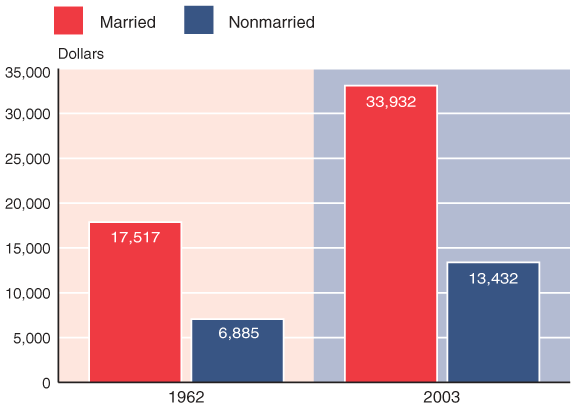
Median annual income for married couples and nonmarried persons (aged 65 or older) has increased markedly since 1962 (the earliest year for which data are available). Even after adjusting for inflation, median income has risen 94% for married couples and 95% for nonmarried persons.
Receipt of Income, 1962 and 2003
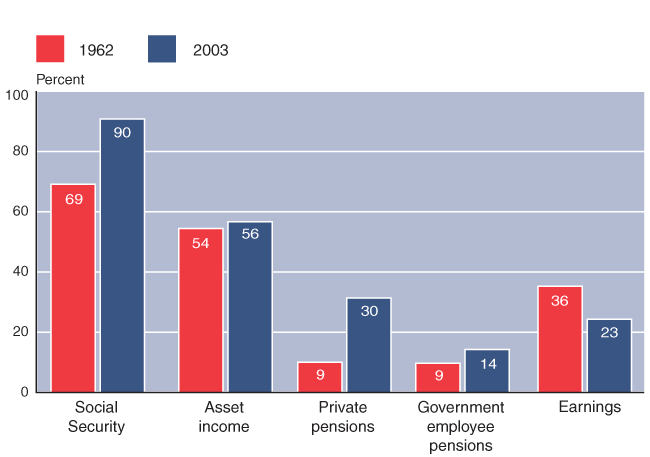
Social Security benefits—the most common source of income in 1962—are now almost universal. The proportion of the aged population with asset income—the next most common source—is similar to that in 1962. Over the 41-year period, receipt of private pensions has tripled, and receipt of government pensions has increased by almost 50%. The proportion of couples and nonmarried persons aged 65 or older who received earnings was smaller in 2003 than in 1962.
| Source of income | 1962 | 2003 |
|---|---|---|
| Social Security | 69 | 90 |
| Asset income | 54 | 56 |
| Private pensions | 9 | 30 |
| Government employee pensions | 9 | 14 |
| Earnings | 36 | 23 |
Shares of Aggregate Income, 2003
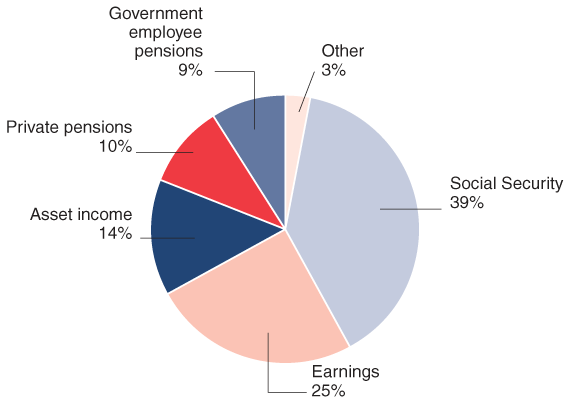
In 1962, Social Security, private and government employee pensions, income from assets, and earnings made up only 84% of the total income of the aged, compared with 97% in 2003. Although private pensions still accounted for only a small proportion of total income in 2003, they more than tripled their share over this period—from 3% to 10%. The share from earnings declined from 28% to 25%.
Reliance on Social Security, 2003
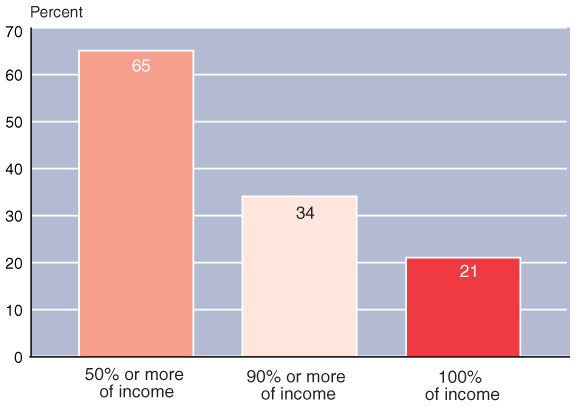
In 2003, 90% of married couples and nonmarried persons (aged 65 or older) received Social Security benefits. Social Security was the major source of income (providing at least 50% of total income) for 65% of aged beneficiaries, and it was the only source of income for 21%.
Poverty Status Based on Family Income, 2003
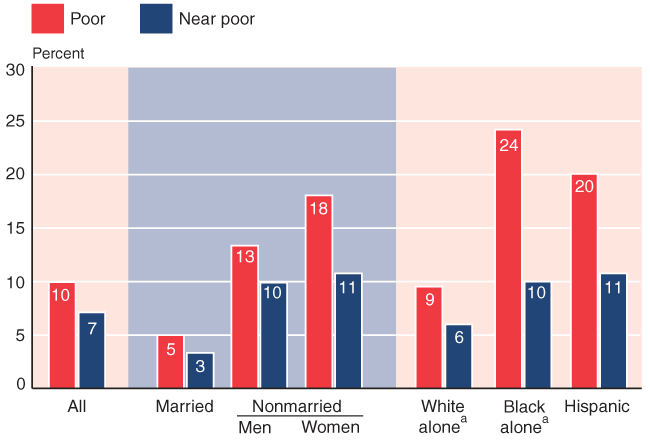
The aged poor are those with income below the poverty line. The near poor have income between the poverty line and 125% of the poverty line. Nonmarried women and minorities have the highest poverty rates, ranging from 18% to 24%. Married persons have the lowest poverty rates, with 5% poor and 3% near poor. Overall, 10% are poor and 7% near poor.
| Characteristic | Percent poor |
Percent near poor |
|---|---|---|
| All persons | 10 | 7 |
| By marital status | ||
| Married | 5 | 3 |
| Nonmarried men | 13 | 10 |
| Nonmarried women | 18 | 11 |
| By race and Hispanic origin | ||
| White alone a | 9 | 6 |
| Black alone a | 24 | 10 |
| Hispanic | 20 | 11 |
OASDI Program
Covered Earnings, 1937–2004
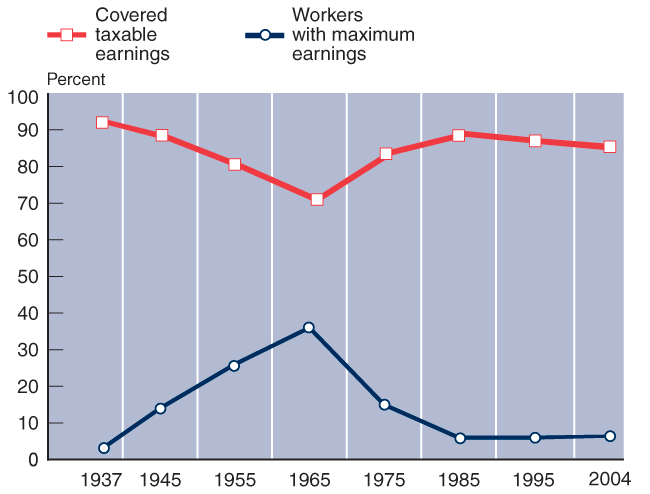
People contribute to Social Security through payroll taxes or self-employment taxes (FICA and SECA), as required by the Federal Insurance Contributions Act. The maximum taxable amount is updated annually based on increases in the average wage. Of the 157 million workers with Social Security taxable earnings in 2004, 6% had earnings that equaled or exceeded the maximum amount subject to taxes, compared with 3% when the program began and a peak of 36% in 1965. About 85% of earnings in covered employment were taxable in 2004, compared with 92% in 1937.
Insured Status, 1970–2005
The percentage of persons aged 20 or older who are insured for benefits has steadily increased over time. The percentage permanently insured (with enough covered work experience to qualify for retired-worker benefits at retirement age—40 quarters for persons born in 1929 or later) rose from 50% in 1970 to 69% in 2005. The percentage fully insured increased from 77% to 87% in 2005. To be fully insured, a worker must have at least one quarter of coverage for each year elapsed after age 21 (but no earlier than 1950) and before the year in which he or she attains age 62 or becomes disabled. To be currently insured for disability at age 20 to full retirement age (FRA), the worker must be fully insured and have at least 20 quarters of coverage during the last 40 quarters. (Requirements for currently insured status are somewhat different for persons younger than age 31.)
| Year | Population aged 20 or older | Population aged 20–FRA | |||
|---|---|---|---|---|---|
| Millions | Percentage permanently insured |
Percentage fully insured |
Millions | Percentage insured for disability |
|
| 1970 | 135.2 | 50 | 77 | 113.2 | 62 |
| 1975 | 147.5 | 50 | 80 | 122.9 | 65 |
| 1980 | 162.0 | 53 | 83 | 133.3 | 70 |
| 1985 | 175.1 | 57 | 84 | 144.1 | 73 |
| 1990 | 186.0 | 63 | 86 | 151.9 | 76 |
| 1995 | 194.7 | 66 | 87 | 160.5 | 78 |
| 2000 | 204.7 | 69 | 88 | 169.2 | 79 |
| 2003 | 216.3 | 68 | 87 | 179.7 | 78 |
| 2004 | 216.9 | 69 | 87 | 180.3 | 79 |
| 2005 | 219.0 | 69 | 87 | 182.0 | 79 |
| SOURCE: Social Security Administration, Office of the Chief Actuary. | |||||
| NOTE: The population in the Social Security area includes residents of the 50 states and the District of Columbia, residents of outlying areas, federal civilian employees and armed forces abroad and their dependents, crew members of merchant vessels, and certain other U.S. citizens residing abroad. | |||||
Insured Status, by Sex, 1970 and 2005
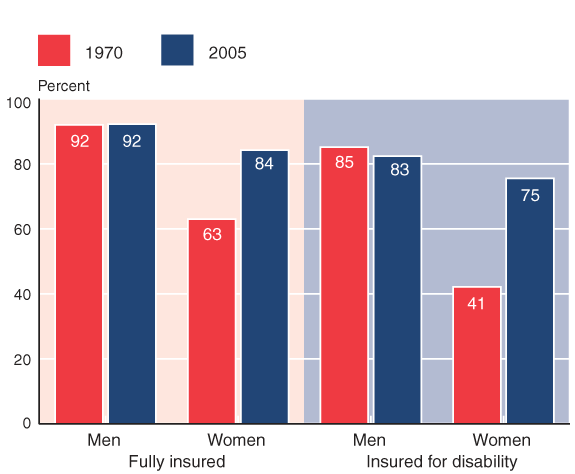
Although men are more likely than women to be insured, the gender gap is shrinking. The proportion of men who are insured has remained essentially stable, with 92% fully insured and 83% insured for disability. By contrast, the proportion of women who are insured has increased dramatically—from 63% to 84% fully insured and from 41% to 75% insured for disability.
| Sex | 1970 | 2005 |
|---|---|---|
| Fully insured | ||
| Men | 92 | 92 |
| Women | 63 | 84 |
| Insured for disability | ||
| Men | 85 | 83 |
| Women | 41 | 75 |
New Benefit Awards, 2004
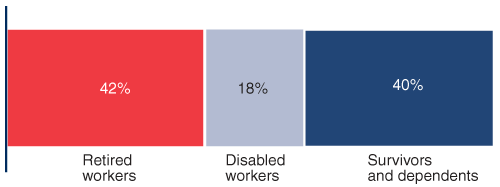
Benefits were awarded to nearly 4.5 million persons: of those, 42% were retired workers and 18% were disabled workers. The remaining 40% were survivors or the spouses and children of retired or disabled workers. These awards represent not only new entrants to the benefit rolls but also persons already on the rolls who become entitled to a different benefit, particularly conversions of disabled-worker benefits to retired-worker benefits at age 65 and 4 months.
| Beneficiary | Number (thousands) |
Percent |
|---|---|---|
| Total | 4,459 | 100 |
| Retired workers and dependents | 2,318 | 52 |
| Workers | 1,883 | 42 |
| Spouses and children | 435 | 10 |
| Disabled workers and dependents | 1,277 | 29 |
| Workers | 796 | 18 |
| Spouses and children | 482 | 11 |
| Survivors of deceased workers | 863 | 19 |
New Awards to Workers, 1960–2004
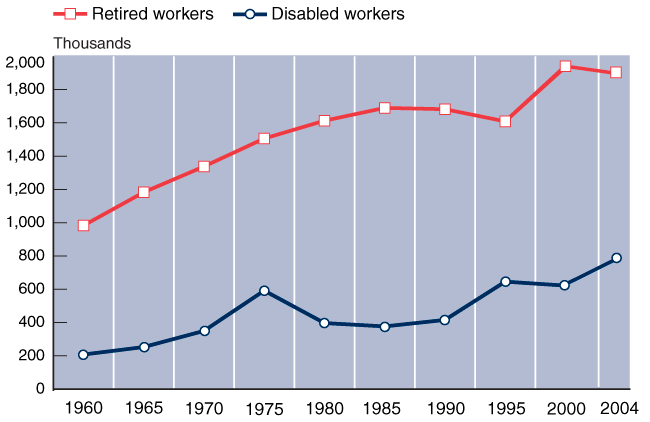
Awards to retired workers have increased considerably since 1960 but proportionately much less than awards to disabled workers. The patterns of growth have also differed. The number of awards to retired workers climbed steadily—from 1 million in 1960 to 1.7 million in 1985. Over the next 10 years, it tapered off slightly, rose to almost 2 million in 2000, then declined to 1.9 million in 2004. Disabled-worker awards increased gradually—from 208,000 in 1960 to 592,000 in the mid-1970s—before falling to 377,000 in 1985. The number then rose, reaching 796,000 in 2004.
| Year | Retired workers |
Disabled workers |
|---|---|---|
| 1968 | 1200.00 | 323.00 |
| 1969 | 1272.78 | 344.74 |
| 1970 | 1338.11 | 350.38 |
| 1971 | 1391.40 | 415.90 |
| 1972 | 1461.40 | 455.44 |
| 1973 | 1493.19 | 491.62 |
| 1974 | 1413.15 | 535.98 |
| 1975 | 1505.75 | 592.05 |
| 1976 | 1475.77 | 551.46 |
| 1977 | 1593.63 | 568.87 |
| 1978 | 1472.79 | 464.42 |
| 1979 | 1590.85 | 416.71 |
| 1980 | 1612.67 | 396.56 |
| 1981 | 1578.99 | 351.85 |
| 1982 | 1618.41 | 297.13 |
| 1983 | 1669.74 | 311.55 |
| 1984 | 1607.37 | 362.00 |
| 1985 | 1690.49 | 377.37 |
| 1986 | 1734.25 | 416.87 |
| 1987 | 1681.72 | 415.85 |
| 1988 | 1654.07 | 409.49 |
| 1989 | 1656.74 | 425.58 |
| 1990 | 1664.75 | 467.98 |
| 1991 | 1695.35 | 536.43 |
| 1992 | 1707.95 | 636.64 |
| 1993 | 1661.28 | 635.24 |
| 1994 | 1625.35 | 631.87 |
| 1995 | 1609.17 | 645.83 |
| 1996 | 1581.45 | 624.34 |
| 1997 | 1718.62 | 587.42 |
| 1998 | 1631.51 | 608.13 |
| 1999 | 1690.02 | 620.49 |
| 2000 | 1960.65 | 621.65 |
| 2001 | 1779.23 | 691.31 |
| 2002 | 1812.55 | 750.00 |
| 2003 | 1791.32 | 777.46 |
| 2004 | 1883.06 | 795.78 |
Beneficiaries in Current-Payment Status, December 2004
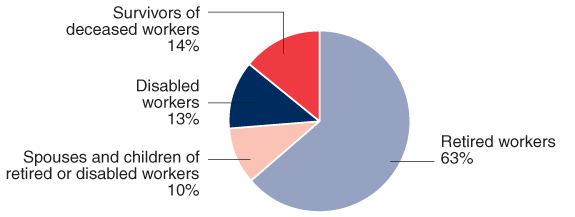
Almost 47.7 million beneficiaries were in current-payment status, that is, they were being paid a benefit. The majority of those beneficiaries (63%) were retired workers, and 13% were disabled workers. The remaining 24% were survivors or the spouses and children of retired or disabled workers.
| Beneficiary | Number (thousands) |
Percent |
|---|---|---|
| Total | 47,688 | 100 |
| Retired workers and dependents | 33,004 | 69 |
| Workers | 29,952 | 63 |
| Spouses and children | 3,052 | 6 |
| Disabled workers and dependents | 7,950 | 17 |
| Workers | 6,198 | 13 |
| Spouses and children | 1,752 | 4 |
| Survivors of deceased workers | 6,734 | 14 |
Average Benefit Amounts, 2004
Benefits payable to workers who retire at the full retirement age and to disabled workers are equal to 100% of the PIA (subject to any applicable deductions). At the full retirement age, widow(er)s' benefits are also payable at 100% of the insured worker's PIA. Nondisabled widow(er)s can receive reduced benefits at age 60. Disabled widow(er)s can receive benefits at age 50. Spouses, children, and parents receive a smaller proportion of the worker's PIA than widow(er)s.
| Beneficiary | New awards | Current-payment status, December |
|---|---|---|
| Total | 782 | 872 |
| Retired workers | 961 | 955 |
| Spouses | 359 | 478 |
| Children | 447 | 465 |
| Disabled workers | 968 | 894 |
| Spouses | 245 | 232 |
| Children | 255 | 265 |
| Survivors | ||
| Nondisabled widow(er)s | 772 | 920 |
| Disabled widow(er)s | 593 | 583 |
| Widowed mothers and fathers | 689 | 689 |
| Surviving children | 639 | 625 |
| Parents | 768 | 810 |
Beneficiaries, by Age, December 2004
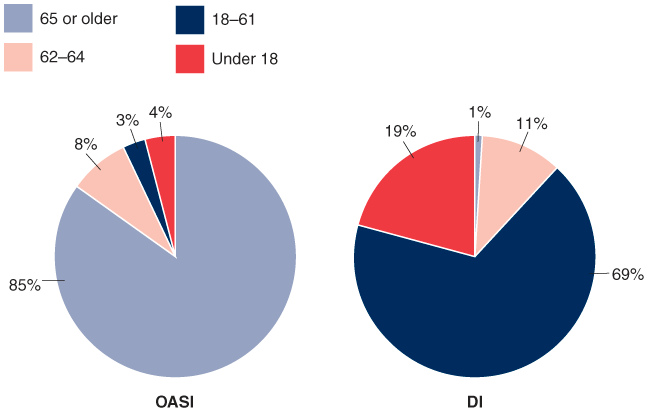
Of all OASI beneficiaries with benefits in current-payment status, 93% were aged 62 or older. Among DI beneficiaries (disabled workers and their spouses and children), 88% were under age 62.
| Age | OASI | DI |
|---|---|---|
| Under 18 | 4 | 19 |
| 18–61 | 3 | 69 |
| 62–64 | 8 | 11 |
| 65 or older | 85 | 1 |
Disabled-Worker Beneficiaries, by Age, 1960–2004
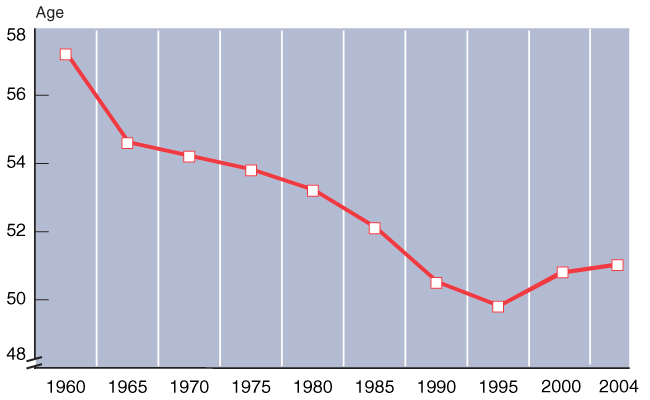
The average age of disabled-worker beneficiaries in current-payment status has declined substantially since 1960, when DI benefits first became available to persons younger than age 50. In that year, the average age of a disabled worker was 57.2 years. The rapid drop in average age in the following years reflects a growing number of awards to workers under 50. By 1995, the average age had fallen to a low of 49.8, and by 2004, it had risen slightly, to 51.5.
| Year | Disabled workers |
|---|---|
| 1960 | 57.2 |
| 1965 | 54.7 |
| 1970 | 54.2 |
| 1975 | 53.8 |
| 1980 | 53.2 |
| 1985 | 52.1 |
| 1990 | 50.5 |
| 1995 | 49.8 |
| 2000 | 50.8 |
| 2004 | 51.5 |
Beneficiaries, by Sex, December 2004
Of all adults receiving monthly Social Security benefits, 43% were men and 56% were women. Eighty percent of the men and 58% of the women received retired-worker benefits. About one-fifth of the women received survivor benefits.
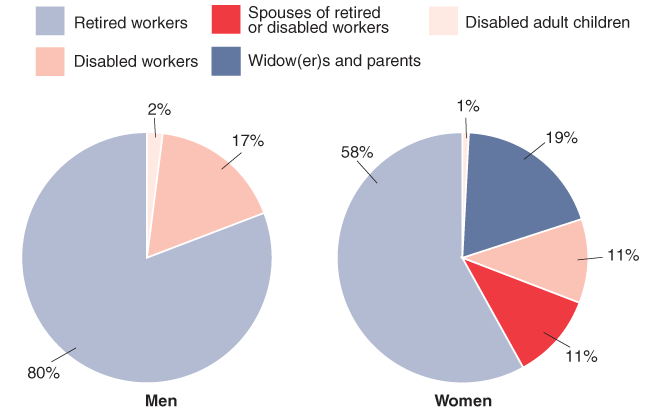
| Type of beneficiary | Men | Women |
|---|---|---|
| Retired workers | 80 | 58 |
| Disabled workers | 17 | 11 |
| Spouses of retired or disabled workers | a | 11 |
| Widow(er)s and parents | a | 19 |
| Disabled adult children | 2 | 1 |
| a. Less than 0.5 percent. | ||
Average Monthly Benefit, by Sex, December 2004
Among retired and disabled workers who collected benefits based on their own work records, men received a higher average monthly benefit than did women. For those with benefits based on another person's work record (spouses and survivors), women had higher average benefits.
| Beneficiary | Men | Women |
|---|---|---|
| Total | 1,050 | 792 |
| Retired workers | 1,076 | 826 |
| Spouses | 273 | 481 |
| Disabled workers | 1,002 | 765 |
| Spouses | 186 | 233 |
| Survivors | ||
| Nondisabled widow(er)s | 736 | 922 |
| Disabled widow(er)s | 417 | 588 |
| Mothers and fathers | 594 | 696 |
Women Beneficiaries, 1940–2004
The proportion of women among retired-worker beneficiaries has quadrupled since 1960. The percentage climbed steadily from 12% in 1940 to 47% in 1980, leveling off at 48% in 1990. The proportion of women among disabled-worker beneficiaries has more than doubled since 1957, when DI benefits first became payable. The percentage rose steadily from 20% in 1957 to 35% in 1990 and 46% in 2004.
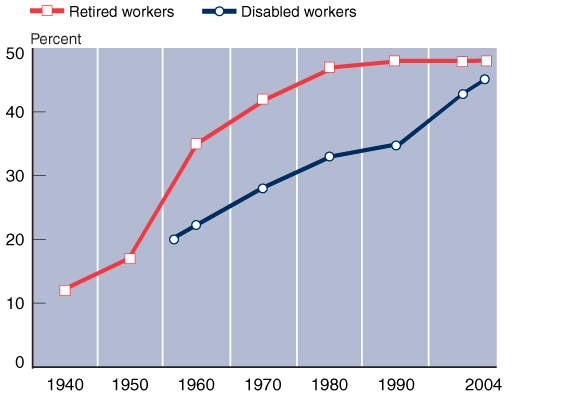
| Year | Retired workers |
Disabled workers |
|---|---|---|
| 1940 | 11.6 | -- |
| 1950 | 17.1 | -- |
| 1957 | -- | 19.1 |
| 1960 | 35.3 | 21.8 |
| 1970 | 42.4 | 28.4 |
| 1980 | 46.5 | 32.6 |
| 1990 | 47.7 | 34.7 |
| 2000 | 48.2 | 43.3 |
| 2004 | 48.5 | 45.5 |
| NOTE: -- = not available. | ||
Women with Dual Entitlement, 1960–2004
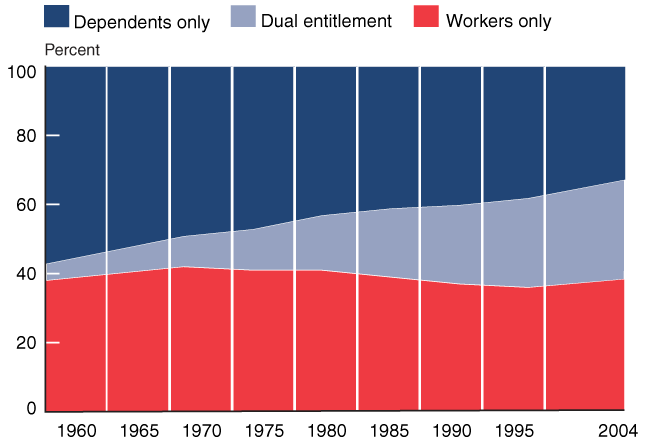
The proportion of women aged 62 or older who are receiving benefits as dependents (that is, on the basis of their husband's earnings record only) has been declining—from 57% in 1960 to 32% in 2004. At the same time, the proportion of women with dual entitlement (that is, paid on the basis of both their own earnings record and that of their husbands) has been increasing—from 5% in 1960 to 28% in 2004.
SSI Program
Beneficiaries, 1974–2004
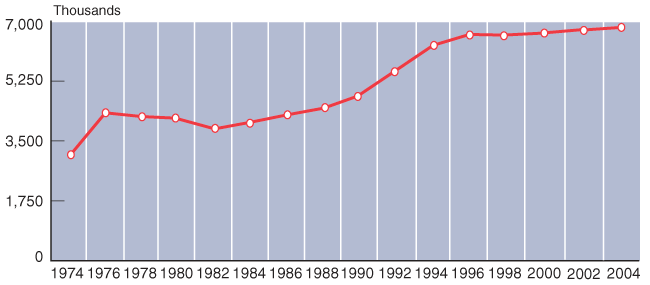
The SSI program began in January 1974 with 3.2 million persons receiving federally administered SSI payments. That number rose to 4 million in 1975 and remained at about that level until the mid-1980s, then rose through the mid-1990s. In 2004, it stood at just under 7 million.
Payment Amounts, by Age, December 2004
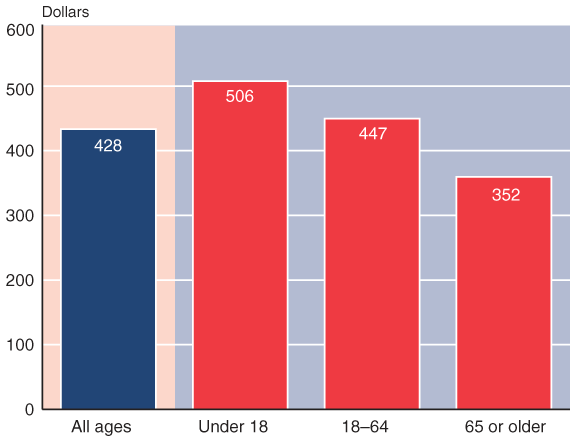
The average federally administered SSI payment was $428. Payments varied by age group, ranging from an average of $506 for beneficiaries under 18 to $352 for those 65 or older. The maximum federal benefit rate in December 2004 was $564 for an individual, $846 for a couple, plus any applicable state supplementation. This maximum amount is reduced by any countable income.
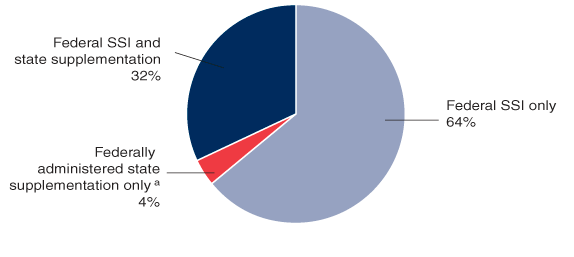
Federally Administered Payments, December 2004
Nearly 7 million persons received federally administered SSI payments. The majority received federal SSI only. States have the option of supplementing the federal benefit rate and are required to do so if that rate is less than the income the beneficiary would have had under the former state program.
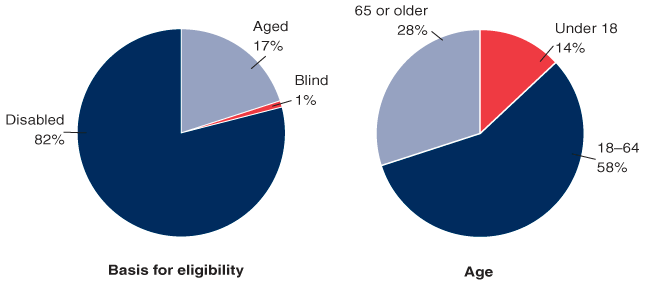
Basis for Eligibility and Age of Beneficiaries, December 2004
Seventeen percent of SSI beneficiaries received benefits on the basis of age, the rest on the basis of disability. Twenty-eight percent of the beneficiaries were aged 65 or older. In the SSI program—unlike the OASDI program—a disabled beneficiary is still classified as "disabled" after reaching full retirement age. DI beneficiaries are converted to the retirement program when they attain full retirement age.
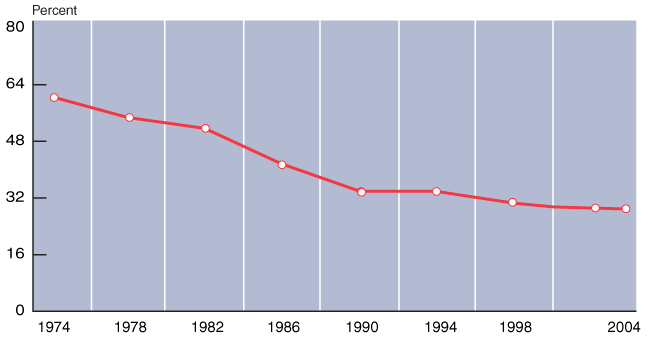
Beneficiaries Aged 65 or Older, 1974–2004
The proportion of SSI beneficiaries aged 65 or older has declined from 61% in January 1974 to 28% in December 2004. The overall long-term growth of the SSI program has occurred because of an increase in the number of disabled beneficiaries, most of whom are under age 65.
Beneficiaries, by Sex and Age, December 2004
Overall, 57% of the nearly 7 million SSI beneficiaries were women, but that percentage varied greatly by age group. Women accounted for 70% of the 2 million beneficiaries aged 65 or older, 56% of the 4 million beneficiaries aged 18–64, and 35% of the 1 million beneficiaries under age 18.
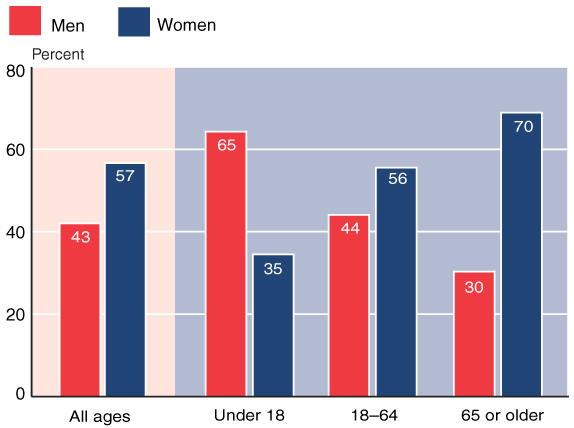
| Age | Men | Women |
|---|---|---|
| All ages | 43 | 57 |
| Under 18 | 65 | 35 |
| 18–64 | 44 | 56 |
| 65 or older | 30 | 70 |
Other Income, December 2004
Fifty-seven percent of SSI beneficiaries aged 65 or older received OASDI benefits, as did 31% of those aged 18–64 and 7% of those under age 18. Other types of unearned income, such as veterans' pensions or income from assets, were reported most frequently among those under age 18 (19%) and those aged 65 or older (15%). Earned income was most prevalent (6%) among those aged 18–64.
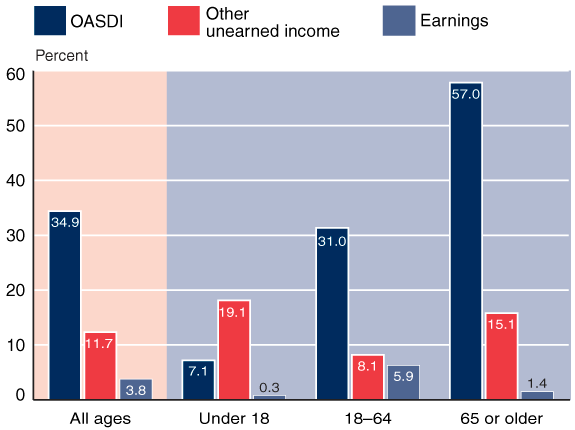
| Age | OASDI | Other unearned income |
Earnings |
|---|---|---|---|
| All ages | 34.9 | 11.7 | 3.8 |
| Under 18 | 7.1 | 19.1 | 0.3 |
| 18–64 | 31.0 | 8.1 | 5.9 |
| 65 or older | 57.0 | 15.1 | 1.4 |
OASDI, SSI, or Both
All Beneficiaries, December 2004
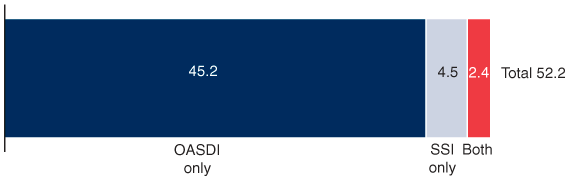
About 52.2 million people received a payment from Social Security. Most (45.2 million) received OASDI benefits only, about 4.5 million received SSI only, and 2.4 million received payments from both programs.
| Beneficiaries receiving OASDI, SSI, or both |
Number (thousands) |
|---|---|
| All beneficiaries | 52,234 |
| Total receiving | |
| OASDI | 47,688 |
| OASDI only | 45,246 |
| SSI | 6,988 |
| SSI only | 4,546 |
| Both OASDI and SSI | 2,441 |
| NOTE: SSI includes federal SSI payments and federally administered state supplementation. | |
Beneficiaries Aged 65 or Older, December 2004
Benefits were paid to 34.5 million people aged 65 or older. About 1.1 million received both OASDI and SSI.
| Beneficiary | Number (thousands) |
|---|---|
| Total (unduplicated) | 34,546 |
| OASDI, total | 33,696 a |
| Retired workers | 27,269 |
| Spouses | 2,292 |
| Nondisabled widow(er)s | 3,983 |
| Disabled workers | 82 |
| Disabled adult children | 67 |
| SSI, total | 1,978 b |
| Receiving SSI only | 850 |
| Receiving both OASDI and SSI | 1,128 |
| NOTE: SSI includes federal SSI payments and federally administered state supplementation. | |
| a. Includes 2,800 persons who received dependent parents' benefits, special age-72 benefits, or mother's and father's benefits. | |
| b. Includes 766,500 SSI beneficiaries aged 65 or older who are disabled or blind. | |
Disabled Beneficiaries Aged 18–64, December 2004
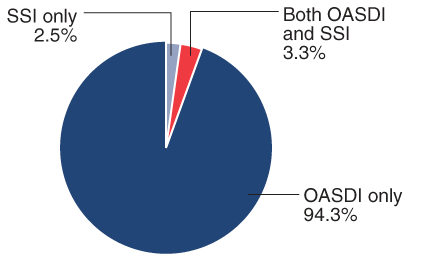
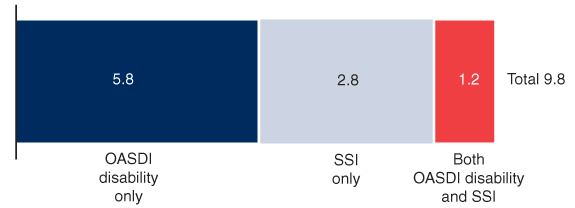
Payments were made to 9.8 million people aged 18–64 on the basis of their own disability. Fifty-nine percent received disability payments from the OASDI program only, 28% received payments from the SSI program only, and 13% received payments from both programs.
| Beneficiary | Number (thousands) |
|---|---|
| Total (unduplicated) | 9,793 |
| OASDI disability, total | 7,019 a |
| Workers aged 64 or younger | 6,116 |
| Disabled adult children | 692 |
| widow(er)s | 211 |
| SSI disability, total | 4,017 |
| Receiving SSI disability only | 2,774 |
| Receiving both OASDI and SSI disability | 1,243 |
| NOTE: SSI includes federal SSI payments and federally administered state supplementation. | |
| a. Includes 5,776,000 beneficiaries receiving OASDI disability only. | |
Children
OASDI Beneficiaries, December 2004
Over 3 million children under age 18 and students aged 18–19 received OASDI benefits. Children of deceased workers had the highest average payments, in part because they are eligible to receive monthly benefits equal to 75% of the worker's PIA, compared with 50% for children of retired or disabled workers. Overall, the average monthly benefit amount for children was $461.
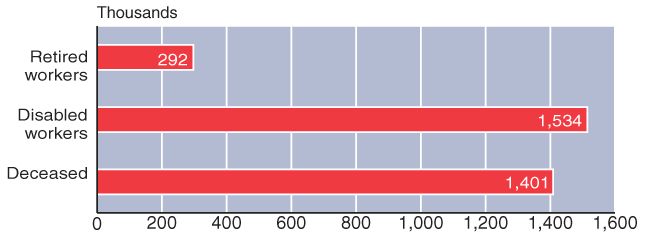
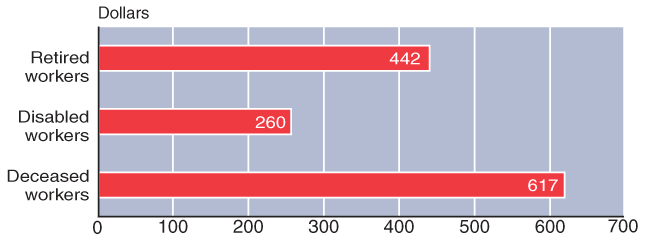
| Type of beneficiary | Number (thousands) |
Average monthly benefit (dollars) |
|---|---|---|
| Children of retired workers | 292 | 442 |
| Children of disabled workers | 1,534 | 260 |
| Children of deceased workers | 1,401 | 617 |
SSI Beneficiaries, 1974–2004
In 1974, when the program began, there were 70,900 blind and disabled children receiving SSI. That number increased to 955,000 in 1996, declined to 847,000 in 2000, and is now 993,100. The relatively high average payment to children (compared with payments made to blind and disabled adults) is due in part to a limited amount of other countable income. The spike in average monthly benefits in 1992 is due to retroactive payments resulting from the Sullivan v. Zebley decision.
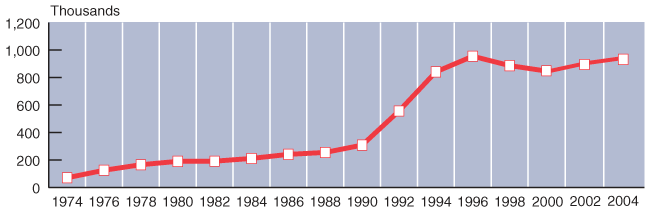
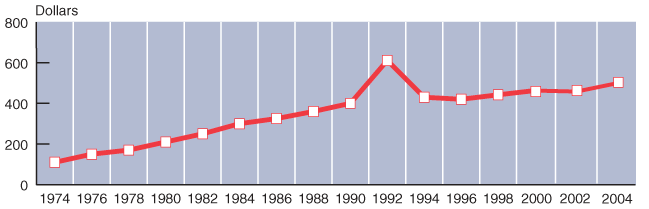
| Year | Number of children receiving SSI (in thousands) |
Average monthly SSI payment (in percent) |
|---|---|---|
| 1974 | 70.90 | 109.15 |
| 1975 | 107.03 | 141.09 |
| 1976 | 125.41 | 154.24 |
| 1977 | 147.36 | 170.03 |
| 1978 | 165.90 | 171.72 |
| 1979 | 177.31 | 193.26 |
| 1980 | 190.39 | 219.08 |
| 1981 | 194.89 | 240.84 |
| 1982 | 191.57 | 263.22 |
| 1983 | 198.32 | 280.96 |
| 1984 | 211.59 | 292.86 |
| 1985 | 227.38 | 301.26 |
| 1986 | 241.20 | 321.34 |
| 1987 | 250.90 | 327.27 |
| 1988 | 255.14 | 343.24 |
| 1989 | 264.89 | 357.64 |
| 1990 | 308.59 | 403.72 |
| 1991 | 397.16 | 446.05 |
| 1992 | 556.47 | 610.98 |
| 1993 | 722.68 | 460.54 |
| 1994 | 841.47 | 448.07 |
| 1995 | 917.05 | 447.57 |
| 1996 | 955.17 | 442.01 |
| 1997 | 879.83 | 433.83 |
| 1998 | 887.07 | 441.75 |
| 1999 | 847.06 | 450.13 |
| 2000 | 846.78 | 463.05 |
| 2001 | 881.84 | 476.09 |
| 2002 | 914.82 | 487.73 |
| 2003 | 959.38 | 490.63 |
| 2004 | 993.13 | 505.98 |
Social Security Financing
How Social Security Is Financed
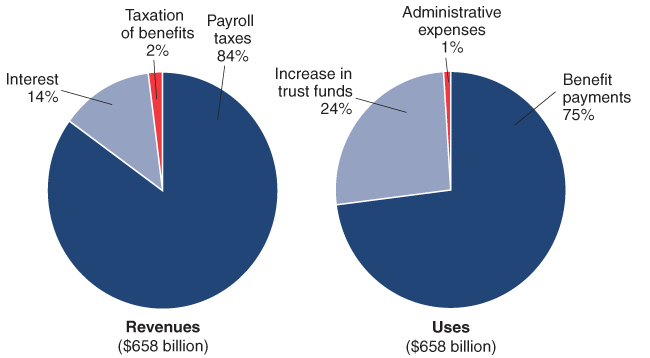
Social Security is largely a pay-as-you-go program. Most of the payroll taxes collected from today's workers are used to pay benefits to today's recipients. In 2004, the Old-Age and Survivors Insurance and Disability Insurance Trust Funds collected $658 billion in revenues. Of that amount, 84% was derived from payroll taxes and 2% from income taxes on Social Security benefits. Interest earned on the government bonds held by the trust funds provided the remaining 14% of income. Assets increased in 2004 because income exceeded expenditures for benefit payments and administrative expenses.
Social Security's Demographic Challenge
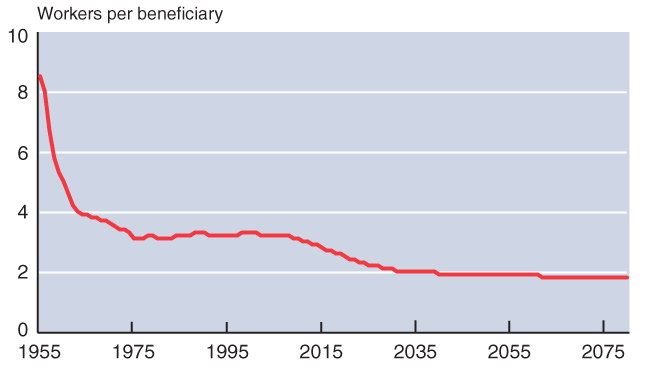
The number of retired workers is projected to grow rapidly starting in 2008, when the members of the post–World War II baby boom begin to reach early retirement age, and will double in less than 30 years. People are also living longer, and the birth rate is low. As a result, the ratio of workers paying Social Security taxes to people collecting benefits will fall from 3.3 to 1 today to 2.1 to 1 by 2031. The Trustees Report projects that in 2017, at which time the ratio will be 2.8, there will not be enough workers to pay scheduled benefits at current tax rates.
The Long-Run Financial Outlook
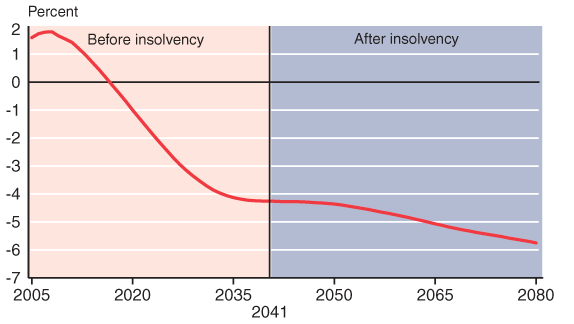
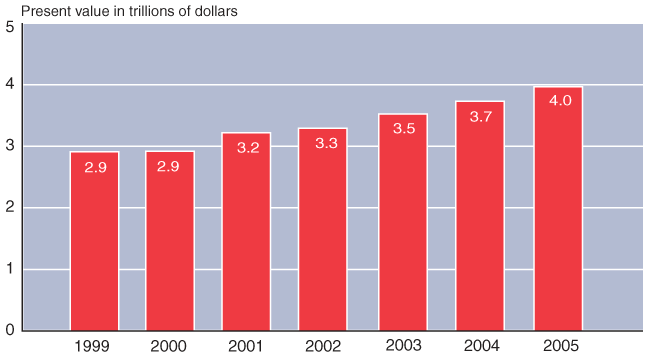
Social Security is not sustainable over the long term at current benefit and tax rates. Within 12 years the program will begin paying more in benefits than it collects in taxes (see the chart below). By 2041 the trust funds will be exhausted. At that point, payroll taxes and other income will flow into the fund but will be sufficient to pay only 74% of program costs. Another way to illustrate the financial shortfall of the Social Security system is to examine the cumulative value of taxes less costs, assuming currently scheduled benefits and tax rates. In present-value terms, the shortfall over the next 75 years is $4 trillion, which is roughly equal to the total U.S. government debt held by the public today.
The Cost of Delay
Each year, Social Security's trustees provide an estimate of the financial status of the program for the next 75 years. In changing from the valuation period of one year's Trustees Report to the next, an additional year with a large imbalance between taxes and benefits is added to the projection. As a result, the estimated cost of meeting Social Security's financial shortfall tends to go up every year.
| Year | Unfunded obligation |
|---|---|
| 1999 | 2.9 |
| 2000 | 2.9 |
| 2001 | 3.2 |
| 2002 | 3.3 |
| 2003 | 3.5 |
| 2004 | 3.7 |
| 2005 | 4.0 |