Characteristics of Noninstitutionalized DI and SSI Program Participants
Research and Statistics Note No. 2008-02 (released January 2008)
Anne DeCesaro is with the Division of Policy Evaluation and Jeffrey Hemmeter is with the Division of SSI Statistics and Analysis, Office of Research, Evaluation, and Statistics, Office of Policy, Social Security Administration.
Acknowledgments: We, the authors, would like to thank Dawn Haines and Todd Williams for their statistical expertise. We would also like to thank Linda Maxfield, Susan Grad, John Kearney, Paul Davies, John Hennessey, and Connie Marion for their helpful comments and suggestions. We also appreciate the help of Howard Iams, Jim Sears, Thuy Ho, and Denise Lewis (of the Census Bureau) for broadening our insight on the data and previous research in this area.
The findings and conclusions presented in this paper are those of the authors and do not necessarily represent the views of the Social Security Administration.
Introduction
The Social Security Administration (SSA) is responsible for administering billions of dollars in benefits to disabled individuals each year. Accordingly, the agency is interested in the characteristics of its program participants, primarily for the enhancement of policy-related discussions. The data SSA routinely collects is administrative, that is, primarily intended for program administration, with limited information on the economic and demographic characteristics of program participants. To obtain additional information on the characteristics of program participants, SSA matches its administrative data with survey data collected by the U.S. Census Bureau in the Survey of Income and Program Participation (SIPP). In particular, these data from the SIPP can provide estimates of demographic and economic characteristics for Social Security Disability Insurance (DI) beneficiaries and Supplemental Security Income (SSI) recipients.
Since 1956, the DI program has paid benefits to disabled individuals who have become insured by working. Benefits are based on previous earnings and are paid from the Disability Insurance Trust Fund when a disabled individual can no longer perform substantial gainful activity. SSA also administers the means-tested SSI program, a federal program that first issued payments in 1974. This program provides cash assistance to the disabled, blind, and aged with limited income and resources. An individual or a couple's monthly payment amount begins at the federally established benefit amount and is then reduced for countable earned and unearned income. Although SSI is a federal program, states may also supplement the payments. Additionally, some DI beneficiaries with low-benefit amounts may also be able to receive SSI payments.1
Estimates presented in this note were formerly published in the SSI Annual Statistical Report and the Annual Statistical Report on the Social Security Disability Insurance Program, two annual SSA publications featuring administrative data. The estimates here are inherently different because they rely on a combination of both administrative and survey data. Although the administrative data contain the information necessary for administering the DI and SSI programs—such as payment amounts, sex, and date of birth—they lack other related information necessary for policy analyses.
Data
The base data for this note come from the public-use file (PUF) associated with the 2001 SIPP—a household survey of the noninstitutionalized resident population of the United States—conducted by the Census Bureau. The SIPP is designed to measure the economic situation of persons, families, and households in the United States as well as provide a tool for managing and evaluating government transfer and service programs.
To increase the number of DI and SSI program participants available for analysis, SSA contracted with the Census Bureau to interview a sample of known DI beneficiaries and SSI recipients identified from SSA administrative records using the SIPP Core questionnaire.2 This resulted in 2,447 additional interviews of known program participants and is defined as an oversample. Adding this oversample of interviews to the 2,575 program participants identified in the 2001 SIPP yields a total of 5,022 interviews of DI beneficiaries and SSI recipients.3
Interview respondents were matched to SSA administrative records based on validated Social Security numbers collected during the interview process or as part of selection into the oversample. When the survey and administrative records were matched, SSA administrative records provided data on the receipt and amount of Old-Age, Survivors, and Disability Insurance (OASDI, or Social Security) and SSI payments.4 For SIPP respondents who did not provide a valid Social Security number, benefit receipt and amounts were taken from the SIPP survey data instead of SSA's administrative records. DI beneficiaries and SSI recipients are identified as individuals who received a benefit in December 2002.
In tabulations of Medicaid coverage for SSI recipients, the SIPP Medicaid variable has been recoded to reflect the fact that SSI recipients in certain states, sometimes referred to as Section 1634 states, are automatically covered by Medicaid. Thirty-two states and the District of Columbia provide automatic Medicaid coverage for SSI recipients, accounting for approximately 80 percent of all SSI recipients.
For the income and poverty estimates in this analysis, we use September, October, November, and December of 2002. These four months correspond to the interview period of the oversample. Depending on the month the household was interviewed, some sample members from the SIPP public-use file had to be present in both waves 6 and 7, while other sample members only had to be present in wave 6. For all sample members, the poverty threshold, taking into account family composition, was provided in the SIPP data. Data for characteristics other than income and poverty—such as age, sex, race, education, marital status, living arrangements, and health insurance—are identified from SIPP survey data for a single month, December 2002.
Discussion of the Estimates
A select number of results are featured in this discussion with the remaining estimates presented in the tables.
Social Security Disability Insurance
The DI beneficiaries featured in Tables 1 through 5 include disabled workers, disabled widow(er)s, and disabled adult children (DAC) aged 18–64. Because disabled workers comprise the largest subpopulation, 87 percent of the total, breakouts for this subcategory have also been provided in the tables but are not discussed below.
DI beneficiaries receive income from a variety of sources. Eighteen percent of beneficiaries receive concurrent SSI payments. Additionally, about 26 percent receive some other form of public assistance. As would be expected from a program designed to help individuals who are unable to work at a substantial level, relatively few DI beneficiaries, about 19 percent, have income from earnings (Table 1).
| Demographic characteristic | Number | Percentage of all beneficiaries | ||
|---|---|---|---|---|
| All disabled beneficiaries |
Disabled workers |
All disabled beneficiaries |
Disabled workers |
|
| All beneficiaries | 6,275,185 | 5,477,436 | 100.0 | 100.0 |
| Sex | ||||
| Male | 3,288,365 | 2,959,829 | 52.4 | 54.0 |
| Female | 2,986,819 | 2,517,607 | 47.6 | 46.0 |
| Race | ||||
| White | 4,960,374 | 4,336,726 | 79.0 | 79.2 |
| Black | 1,161,154 | 1,000,735 | 18.5 | 18.3 |
| American Indian, Alaska Native | 78,881 | 73,377 | 1.3 | 1.3 |
| Asian, Pacific Islander | 74,776 | 66,598 | 1.2 | 1.2 |
| Ethnicity | ||||
| Hispanic | 509,117 | 451,140 | 8.1 | 8.2 |
| Non-Hispanic | 5,766,067 | 5,026,296 | 91.9 | 91.8 |
| Marital status | ||||
| Married | 2,805,538 | 2,746,886 | 44.7 | 50.1 |
| Widowed | 475,002 | 262,420 | 7.6 | 4.8 |
| Divorced or separated | 1,368,266 | 1,340,618 | 21.8 | 24.5 |
| Never married | 1,626,379 | 1,127,512 | 25.9 | 20.6 |
| Years of education | ||||
| 0–8 | 745,653 | 505,489 | 11.9 | 9.2 |
| 9–11 | 867,680 | 741,156 | 13.8 | 13.5 |
| 12 | 2,443,169 | 2,140,872 | 38.9 | 39.1 |
| 13–15 | 1,668,525 | 1,559,176 | 26.6 | 28.5 |
| 16 or more | 550,158 | 530,743 | 8.8 | 9.7 |
| Health insurance a | ||||
| Medicaid | 2,372,060 | 1,923,729 | 37.8 | 35.1 |
| Medicare | 3,828,450 | 3,320,413 | 61.0 | 60.6 |
| Private | 2,624,610 | 2,402,555 | 41.8 | 43.9 |
| None | 474,703 | 437,628 | 7.6 | 8.0 |
| Source of income a | ||||
| Public assistance | ||||
| Supplemental Security Income | 1,134,234 | 873,345 | 18.1 | 15.9 |
| Other public assistance | 1,611,277 | 1,300,590 | 25.7 | 23.7 |
| Earnings | 1,159,091 | 947,479 | 18.5 | 17.3 |
| Property income | 1,973,775 | 1,787,768 | 31.5 | 32.6 |
| Other | 2,195,921 | 2,037,415 | 35.0 | 37.2 |
| Total personal income b (dollars) | ||||
| Less than 500 | 101,386 | 85,284 | 1.6 | 1.6 |
| 500–999 | 58,134 | 58,134 | 0.9 | 1.1 |
| 1,000–1,499 | 116,493 | 98,089 | 1.9 | 1.8 |
| 1,500–1,999 | 233,511 | 212,445 | 3.7 | 3.9 |
| 2,000–2,499 | 1,073,720 | 851,974 | 17.1 | 15.6 |
| 2,500–2,999 | 671,883 | 572,384 | 10.7 | 10.4 |
| 3,000–3,499 | 627,545 | 523,351 | 10.0 | 9.6 |
| 3,500–3,999 | 476,374 | 389,762 | 7.6 | 7.1 |
| 4,000–4,499 | 404,276 | 357,762 | 6.4 | 6.5 |
| 4,500–4,999 | 342,890 | 290,884 | 5.5 | 5.3 |
| 5,000 or more | 2,168,974 | 2,037,369 | 34.6 | 37.2 |
| SOURCES: U.S. Census Bureau 2001 Survey of Income and Program Participation (SIPP), waves 6 and 7, December 2002 and SIPP-based interviews of Social Security Disability Insurance (DI) and Supplemental Security Income program participants, December 2002 matched to Social Security administrative records. | ||||
| NOTES: Individuals receiving disability benefits in the month of December are identified using Social Security administrative data for those who provided a valid Social Security number and using self-reported SIPP data for those who did not provide a valid number. The total unweighted sample is composed of 2,976 disabled beneficiaries, of which 2,690 are disabled workers. Disabled widow(er)s and disabled adult children are not shown separately because the unweighted sample size is too small to support statistically reliable estimates. | ||||
| The sum of individual categories may not equal the total because of rounding. | ||||
| a. Individuals may be counted in more than one category. | ||||
| b. Personal income data are based on September, October, November, and December of 2002. | ||||
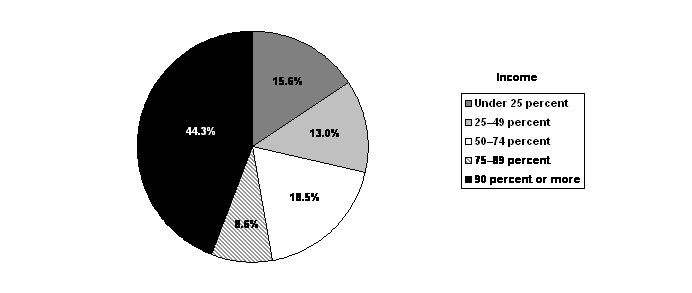
A majority of DI beneficiaries rely on their benefits for 75 percent or more of their personal income (Chart 1). Although more males receive benefits, females receive a greater percentage of total personal income from DI benefits (Table 2). Half of all beneficiaries under age 25 receive less than half of their total personal income from DI, and 75 percent of beneficiaries aged 55 or older receive at least half of their personal income from DI. Beneficiaries with lower levels of education also rely more heavily on DI income. Table 2 shows that four out of five individuals with less than a high school education (0–11 years) rely on DI benefits for at least half of their personal income compared with about three out of five of those with a college degree (16 or more years).
Social Security as a percentage of personal income among DI beneficiaries, December 2002
| Demographic characteristic | Number | Percentage distribution | |||||
|---|---|---|---|---|---|---|---|
| Total | Under 25 percent of income |
25–49 percent of income |
50–74 percent of income |
75–89 percent of income |
90 percent or more of income |
||
| All disabled beneficiaries | |||||||
| Total | 6,275,185 | 100.0 | 15.6 | 13.0 | 18.5 | 8.6 | 44.3 |
| Sex | |||||||
| Male | 3,288,365 | 100.0 | 17.5 | 14.3 | 16.8 | 7.6 | 43.7 |
| Female | 2,986,819 | 100.0 | 13.4 | 11.6 | 20.3 | 9.7 | 45.0 |
| Age group | |||||||
| Under 25 | 149,557 | 100.0 | 23.0 | 27.8 | 16.0 | 7.0 | 26.2 |
| 25–34 | 452,503 | 100.0 | 24.7 | 13.6 | 17.5 | 10.7 | 33.6 |
| 35–44 | 1,218,832 | 100.0 | 19.1 | 13.8 | 18.0 | 8.5 | 40.6 |
| 45–54 | 2,024,338 | 100.0 | 16.3 | 10.3 | 16.2 | 8.0 | 49.2 |
| 55 or older | 2,429,956 | 100.0 | 11.0 | 13.8 | 21.1 | 8.8 | 45.3 |
| Race | |||||||
| White | 4,960,374 | 100.0 | 15.5 | 12.0 | 19.3 | 7.8 | 45.4 |
| Black | 1,161,154 | 100.0 | 16.2 | 16.6 | 15.2 | 10.6 | 41.3 |
| American Indian, Alaska Native | 78,881 | 100.0 | 15.5 | 19.4 | 17.6 | 16.0 | 31.5 |
| Asian, Pacific Islander | 74,776 | 100.0 | 13.0 | 14.8 | 16.0 | 25.2 | 31.1 |
| Ethnicity | |||||||
| Hispanic | 509,117 | 100.0 | 15.1 | 12.8 | 18.0 | 8.3 | 45.8 |
| Non-Hispanic | 5,766,067 | 100.0 | 15.6 | 13.0 | 18.5 | 8.6 | 44.2 |
| Marital status | |||||||
| Married | 2,805,538 | 100.0 | 16.5 | 13.5 | 16.4 | 7.3 | 46.2 |
| Widowed | 475,002 | 100.0 | 11.6 | 13.8 | 29.9 | 4.2 | 40.5 |
| Divorced or separated | 1,368,266 | 100.0 | 15.2 | 11.5 | 17.9 | 10.9 | 44.5 |
| Never married | 1,626,379 | 100.0 | 15.4 | 13.1 | 19.4 | 10.2 | 42.0 |
| Years of education | |||||||
| 0–8 | 745,653 | 100.0 | 10.6 | 8.6 | 21.1 | 7.9 | 51.8 |
| 9–11 | 867,680 | 100.0 | 9.6 | 13.5 | 15.8 | 10.1 | 51.1 |
| 12 | 2,443,169 | 100.0 | 15.9 | 12.9 | 18.6 | 8.1 | 44.5 |
| 13–15 | 1,539,756 | 100.0 | 18.9 | 13.2 | 18.8 | 8.7 | 40.5 |
| 16 or more | 678,927 | 100.0 | 20.2 | 17.2 | 18.1 | 9.1 | 35.4 |
| Living arrangement | |||||||
| Lives alone | 1,770,027 | 100.0 | 13.1 | 11.3 | 20.2 | 8.4 | 46.9 |
| Lives with relatives | 4,287,914 | 100.0 | 16.2 | 13.6 | 18.0 | 8.7 | 43.4 |
| Lives only with nonrelatives | 217,244 | 100.0 | 23.0 | 14.6 | 13.9 | 7.1 | 41.4 |
| Disabled workers | |||||||
| Total | 5,477,436 | 100.0 | 15.1 | 13.2 | 17.3 | 8.8 | 45.6 |
| Sex | |||||||
| Male | 2,959,829 | 100.0 | 16.5 | 14.6 | 16.2 | 7.6 | 45.0 |
| Female | 2,517,607 | 100.0 | 13.5 | 11.7 | 18.5 | 10.2 | 46.2 |
| Age group | |||||||
| Under 25 | 90,504 | 100.0 | 21.8 | 28.2 | 11.3 | 8.2 | 30.5 |
| 25–34 | 334,190 | 100.0 | 24.3 | 15.2 | 15.9 | 7.7 | 37.0 |
| 35–44 | 1,041,641 | 100.0 | 18.4 | 13.5 | 17.6 | 8.7 | 41.8 |
| 45–54 | 1,830,823 | 100.0 | 14.9 | 10.4 | 15.8 | 8.7 | 50.2 |
| 55 or older | 2,180,279 | 100.0 | 12.1 | 14.6 | 18.8 | 9.2 | 45.4 |
| Race | |||||||
| White | 4,336,726 | 100.0 | 15.0 | 12.3 | 17.9 | 8.1 | 46.7 |
| Black | 1,000,735 | 100.0 | 15.9 | 16.8 | 14.5 | 10.4 | 42.4 |
| American Indian, Alaska Native | 73,377 | 100.0 | 16.7 | 15.7 | 16.6 | 17.2 | 33.8 |
| Asian, Pacific Islander | 66,598 | 100.0 | 11.6 | 16.6 | 14.4 | 22.5 | 34.9 |
| Ethnicity | |||||||
| Hispanic | 451,140 | 100.0 | 13.2 | 12.6 | 16.5 | 8.7 | 49.0 |
| Non-Hispanic | 5,026,296 | 100.0 | 15.3 | 13.3 | 17.3 | 8.8 | 45.3 |
| Marital status | |||||||
| Married | 2,746,886 | 100.0 | 15.1 | 13.7 | 16.5 | 7.4 | 47.2 |
| Widowed | 262,420 | 100.0 | 11.4 | 17.0 | 24.5 | 5.0 | 42.1 |
| Divorced or separated | 1,340,618 | 100.0 | 14.6 | 11.6 | 17.9 | 10.7 | 45.2 |
| Never married | 1,127,512 | 100.0 | 16.6 | 13.2 | 16.5 | 10.7 | 43.0 |
| Years of education | |||||||
| 0–8 | 505,489 | 100.0 | 10.7 | 8.6 | 15.3 | 8.7 | 56.6 |
| 9–11 | 741,156 | 100.0 | 6.8 | 13.9 | 13.2 | 11.4 | 54.6 |
| 12 | 2,140,872 | 100.0 | 15.7 | 12.8 | 18.3 | 7.6 | 45.6 |
| 13–15 | 1,437,592 | 100.0 | 17.9 | 13.4 | 18.3 | 9.3 | 41.1 |
| 16 or more | 652,327 | 100.0 | 20.0 | 17.3 | 17.5 | 8.6 | 36.5 |
| Living arrangement | |||||||
| Lives alone | 1,482,233 | 100.0 | 11.8 | 12.2 | 18.1 | 9.3 | 48.6 |
| Lives with relatives | 3,804,303 | 100.0 | 15.9 | 13.5 | 17.2 | 8.6 | 44.8 |
| Lives only with nonrelatives | 190,900 | 100.0 | 26.1 | 16.6 | 12.2 | 8.0 | 37.1 |
| SOURCES: U.S. Census Bureau 2001 Survey of Income and Program Participation (SIPP), waves 6 and 7, December 2002 and SIPP-based interviews of Social Security Disability Insurance (DI) and Supplemental Security Income program participants, December 2002 matched to Social Security administrative records. | |||||||
| NOTES: Individuals receiving disability benefits in the month of December are identified using Social Security administrative data for those who provided a valid Social Security number and using self-reported SIPP data for those who did not provide a valid number. The total unweighted sample is composed of 2,976 disabled beneficiaries, of which 2,690 are disabled workers. Disabled widow(er)s and disabled adult children are not shown separately because the unweighted sample size is too small to support statistically reliable estimates. | |||||||
| The sum of individual categories may not equal the total because of rounding. | |||||||
| Personal income data are based on September, October, November, and December of 2002. | |||||||
Family and other household members may also have resources of which DI beneficiaries have access. About 31 percent of beneficiaries live in households with a 4-month income of less than $5,000 (Table 3). Family income closely matches household income because two-thirds of beneficiaries live in a one- or two-person household. The prime source of family income is Social Security, accounting for roughly half of the average beneficiary's family income; earnings account for over a quarter of the family's income (Table 4).
| Household and family characteristic | Number | Percentage of all beneficiaries | ||
|---|---|---|---|---|
| All disabled beneficiaries |
Disabled workers | All disabled beneficiaries |
Disabled workers | |
| All beneficiaries | 6,275,185 | 5,477,436 | 100.0 | 100.0 |
| Household type | ||||
| Family | ||||
| Married couple present | 2,834,483 | 2,703,392 | 45.2 | 49.4 |
| No married couple, male householder | 382,226 | 301,718 | 6.1 | 5.5 |
| No married couple, female householder | 921,575 | 668,067 | 14.7 | 12.2 |
| Nonfamily | ||||
| Male householder | 1,039,643 | 933,374 | 16.6 | 17.0 |
| Female householder | 1,025,278 | 826,906 | 16.3 | 15.1 |
| Group quarters | 71,980 | 43,980 | 1.1 | 0.8 |
| Ownership status of living quarters | ||||
| Owned | 3,808,152 | 3,411,608 | 60.7 | 62.3 |
| Not owned | 2,467,032 | 2,065,828 | 39.3 | 37.7 |
| Residence in public housing | 370,495 | 301,104 | 5.9 | 5.5 |
| Household receipt of a— | ||||
| Energy assistance | 414,273 | 344,414 | 6.6 | 6.3 |
| Housing assistance | 301,503 | 243,783 | 4.8 | 4.5 |
| Food stamps | 1,057,433 | 880,839 | 16.9 | 16.1 |
| Household size | ||||
| 1 person | 1,770,027 | 1,482,233 | 28.2 | 27.1 |
| 2 persons | 2,400,297 | 2,185,426 | 38.3 | 39.9 |
| 3–4 persons | 1,604,733 | 1,374,346 | 25.6 | 25.1 |
| 5 or more persons | 500,128 | 435,431 | 8.0 | 7.9 |
| Family size | ||||
| 1 person | 2,177,025 | 1,833,511 | 34.7 | 33.5 |
| 2 persons | 2,165,289 | 1,983,207 | 34.5 | 36.2 |
| 3–4 persons | 1,483,653 | 1,264,994 | 23.6 | 23.1 |
| 5 or more persons | 449,217 | 395,724 | 7.2 | 7.2 |
| Under age 18 in family | ||||
| None | 4,982,690 | 4,310,169 | 79.4 | 78.7 |
| 1 person | 701,005 | 613,149 | 11.2 | 11.2 |
| 2 persons | 369,267 | 341,608 | 5.9 | 6.2 |
| 3–4 persons | 200,994 | 191,283 | 3.2 | 3.5 |
| 5 or more persons | 21,228 | 21,228 | 0.3 | 0.4 |
| Total household income b (dollars) | ||||
| Less than 2,500 | 571,318 | 472,909 | 9.1 | 8.6 |
| 2,500–4,999 | 1,350,626 | 1,126,851 | 21.5 | 20.6 |
| 5,000–7,499 | 908,393 | 780,986 | 14.5 | 14.3 |
| 7,500–9,999 | 778,920 | 658,943 | 12.4 | 12.0 |
| 10,000–14,999 | 1,081,890 | 998,187 | 17.2 | 18.2 |
| 15,000–19,999 | 695,181 | 614,469 | 11.1 | 11.2 |
| 20,000 or more | 888,858 | 825,091 | 14.2 | 15.1 |
| Total family income b (dollars) | ||||
| Less than 2,500 | 668,991 | 550,869 | 10.7 | 10.1 |
| 2,500–4,999 | 1,491,715 | 1,242,378 | 23.8 | 22.7 |
| 5,000–7,499 | 924,785 | 795,760 | 14.7 | 14.5 |
| 7,500–9,999 | 738,875 | 636,673 | 11.8 | 11.6 |
| 10,000–14,999 | 1,004,409 | 927,443 | 16.0 | 16.9 |
| 15,000–19,999 | 657,416 | 583,848 | 10.5 | 10.7 |
| 20,000 or more | 788,995 | 740,464 | 12.6 | 13.5 |
| SOURCES: U.S. Census Bureau 2001 Survey of Income and Program Participation (SIPP), waves 6 and 7, December 2002 and SIPP-based interviews of Social Security Disability Insurance (DI) and Supplemental Security Income program participants, December 2002 matched to Social Security administrative records. | ||||
| NOTES: Individuals receiving disability benefits in the month of December are identified using Social Security administrative data for those who provided a valid Social Security number and using self-reported SIPP data for those who did not provide a valid number. The total unweighted sample is composed of 2,976 disabled beneficiaries, of which 2,690 are disabled workers. Disabled widow(er)s and disabled adult children are not shown separately because the unweighted sample size is too small to support statistically reliable estimates. | ||||
| A family is a group of two or more persons residing together related by birth, marriage, or adoption. A household includes related family members and all the unrelated persons, if any, such as lodgers, foster children, wards, or employees who share the housing unit. A person living alone in a housing unit or a group of unrelated persons sharing a housing unit as partners is also counted as a household. | ||||
| The sum of individual categories may not equal the total because of rounding. | ||||
| a. Individuals may be counted in more than one category. | ||||
| b. Household and family data are based on September, October, November, and December of 2002. | ||||
| Demographic characteristic | Total | Social Security |
Public assistance | Earnings | Property income |
Other | |
|---|---|---|---|---|---|---|---|
| Supplemental Security Income |
Other public assistance |
||||||
| All disabled beneficiaries | |||||||
| Total | 100.0 | 51.8 | 5.0 | 0.9 | 28.8 | 0.9 | 12.6 |
| Sex | |||||||
| Male | 100.0 | 52.2 | 4.3 | 0.6 | 28.7 | 0.9 | 13.3 |
| Female | 100.0 | 51.4 | 5.8 | 1.2 | 28.8 | 0.9 | 11.9 |
| Age group | |||||||
| Under 25 | 100.0 | 35.2 | 12.8 | 2.6 | 43.8 | 0.2 | 5.4 |
| 25–34 | 100.0 | 39.1 | 10.9 | 1.7 | 39.9 | 0.5 | 7.9 |
| 35–44 | 100.0 | 48.7 | 6.8 | 1.5 | 32.5 | 0.6 | 9.9 |
| 45–54 | 100.0 | 52.4 | 4.3 | 0.7 | 30.3 | 0.8 | 11.5 |
| 55 or older | 100.0 | 56.2 | 3.1 | 0.5 | 22.6 | 1.3 | 16.3 |
| Race | |||||||
| White | 100.0 | 52.0 | 4.1 | 0.7 | 29.0 | 1.1 | 13.1 |
| Black | 100.0 | 51.7 | 8.7 | 1.8 | 27.6 | 0.2 | 10.0 |
| American Indian, Alaska Native | 100.0 | 43.4 | 6.9 | 3.0 | 29.9 | 1.5 | 15.3 |
| Asian, Pacific Islander | 100.0 | 46.5 | 5.7 | 1.2 | 31.8 | 1.0 | 13.8 |
| Ethnicity | |||||||
| Hispanic | 100.0 | 49.5 | 6.6 | 1.0 | 32.9 | 0.4 | 9.6 |
| Non-Hispanic | 100.0 | 52.0 | 4.9 | 0.9 | 28.4 | 1.0 | 12.8 |
| Marital status | |||||||
| Married | 100.0 | 40.7 | 2.4 | 0.5 | 41.1 | 1.2 | 14.1 |
| Widowed | 100.0 | 60.4 | 5.1 | 0.4 | 15.2 | 0.5 | 18.4 |
| Divorced or separated | 100.0 | 63.9 | 6.8 | 1.5 | 14.3 | 0.5 | 13.0 |
| Never married | 100.0 | 58.2 | 7.9 | 1.2 | 23.6 | 0.9 | 8.2 |
| Years of education | |||||||
| 0–8 | 100.0 | 61.2 | 8.5 | 0.6 | 21.5 | 0.6 | 7.6 |
| 9–11 | 100.0 | 57.4 | 8.0 | 0.8 | 22.4 | 0.6 | 10.8 |
| 12 | 100.0 | 51.2 | 5.2 | 1.2 | 29.5 | 0.9 | 12.0 |
| 13–15 | 100.0 | 46.7 | 2.8 | 0.7 | 33.5 | 1.1 | 15.2 |
| 16 or more | 100.0 | 48.0 | 1.6 | 0.8 | 31.5 | 1.4 | 16.7 |
| Living arrangement | |||||||
| Lives alone | 100.0 | 71.3 | 6.4 | 0.7 | 9.0 | 0.5 | 12.1 |
| Lives with relatives | 100.0 | 43.2 | 4.3 | 1.0 | 37.4 | 1.1 | 13.0 |
| Lives only with nonrelatives | 100.0 | 62.2 | 7.7 | 0.7 | 18.7 | 0.1 | 10.6 |
| Disabled workers | |||||||
| Total | 100.0 | 51.4 | 4.0 | 0.9 | 29.9 | 1.0 | 12.8 |
| Sex | |||||||
| Male | 100.0 | 52.8 | 3.1 | 0.6 | 28.8 | 0.9 | 13.8 |
| Female | 100.0 | 49.8 | 5.0 | 1.2 | 31.2 | 1.0 | 11.8 |
| Age group | |||||||
| Under 25 | 100.0 | 31.4 | 7.9 | 3.1 | 54.0 | 0.2 | 3.4 |
| 25–34 | 100.0 | 38.6 | 7.9 | 1.7 | 42.4 | 0.6 | 8.8 |
| 35–44 | 100.0 | 48.2 | 5.3 | 1.5 | 34.3 | 0.6 | 10.1 |
| 45–54 | 100.0 | 52.4 | 3.7 | 0.7 | 31.1 | 0.8 | 11.3 |
| 55 or older | 100.0 | 55.0 | 2.8 | 0.5 | 24.0 | 1.3 | 16.4 |
| Race | |||||||
| White | 100.0 | 51.4 | 3.3 | 0.7 | 30.2 | 1.1 | 13.3 |
| Black | 100.0 | 52.2 | 7.0 | 1.7 | 28.2 | 0.2 | 10.7 |
| American Indian, Alaska Native | 100.0 | 44.9 | 5.8 | 3.2 | 28.6 | 1.5 | 16.0 |
| Asian, Pacific Islander | 100.0 | 44.2 | 3.3 | 0.6 | 35.3 | 1.0 | 15.6 |
| Ethnicity | |||||||
| Hispanic | 100.0 | 51.0 | 5.3 | 1.1 | 32.9 | 0.4 | 9.3 |
| Non-Hispanic | 100.0 | 51.4 | 3.9 | 0.9 | 29.7 | 1.0 | 13.1 |
| Marital status | |||||||
| Married | 100.0 | 41.3 | 1.9 | 0.4 | 41.1 | 1.2 | 14.1 |
| Widowed | 100.0 | 62.0 | 5.2 | 0.5 | 14.6 | 0.7 | 17.0 |
| Divorced or separated | 100.0 | 64.5 | 6.1 | 1.4 | 14.4 | 0.5 | 13.1 |
| Never married | 100.0 | 57.9 | 6.4 | 1.4 | 24.8 | 0.9 | 8.6 |
| Years of education | |||||||
| 0–8 | 100.0 | 60.4 | 7.1 | 0.6 | 24.6 | 0.3 | 7.0 |
| 9–11 | 100.0 | 59.1 | 6.2 | 0.7 | 22.7 | 0.6 | 10.7 |
| 12 | 100.0 | 51.2 | 4.3 | 1.2 | 29.8 | 0.9 | 12.6 |
| 13–15 | 100.0 | 46.1 | 2.4 | 0.7 | 35.1 | 1.2 | 14.5 |
| 16 or more | 100.0 | 48.1 | 1.5 | 0.9 | 31.3 | 1.5 | 16.7 |
| Living arrangement | |||||||
| Lives alone | 100.0 | 72.6 | 5.7 | 0.7 | 8.4 | 0.5 | 12.1 |
| Lives with relatives | 100.0 | 42.8 | 3.1 | 1.0 | 38.8 | 1.2 | 13.1 |
| Lives only with nonrelatives | 100.0 | 58.4 | 8.3 | 0.8 | 20.3 | 0.1 | 12.1 |
| SOURCES: U.S. Census Bureau 2001 Survey of Income and Program Participation (SIPP), waves 6 and 7, December 2002 and SIPP-based interviews of Social Security Disability Insurance (DI) and Supplemental Security Income program participants, December 2002 matched to Social Security administrative records. | |||||||
| NOTES: Individuals receiving disability benefits in the month of December are identified using Social Security administrative data for those who provided a valid Social Security number and using self-reported SIPP data for those who did not provide a valid number. The total unweighted sample is composed of 2,976 disabled beneficiaries, of which 2,690 are disabled workers. Disabled widow(er)s and disabled adult children are not shown separately because the unweighted sample size is too small to support statistically reliable estimates. | |||||||
| The sum of individual categories may not equal the total because of rounding. | |||||||
| A family is a group of two or more persons residing together related by birth, marriage, or adoption. | |||||||
| Family income data are based on September, October, November, and December of 2002. | |||||||
Table 5 shows that less than a quarter of all DI beneficiaries have family income below the poverty threshold. In addition, over a quarter of beneficiaries are estimated to have income at or above 300 percent of the poverty threshold for their living arrangement.5 Female beneficiaries are more likely than males to be in a family in poverty (27 percent versus 19 percent). Conversely, about 43 percent of beneficiaries with a college degree are at or above 300 percent of the poverty line and only 15 percent of beneficiaries with less than a ninth grade education are at that level of income.
| Demographic characteristic |
Total | Family income relative to poverty threshold | |||||||
|---|---|---|---|---|---|---|---|---|---|
| Under 100 percent | 100–124 percent |
125–149 percent |
150–199 percent |
200–299 percent |
300 percent or more |
||||
| Subtotal | Under 50 percent |
50–99 percent |
|||||||
| All disabled beneficiaries | |||||||||
| Total | 6,275,185 | 22.8 | 2.4 | 20.4 | 8.9 | 9.2 | 14.4 | 16.7 | 27.9 |
| Sex | |||||||||
| Male | 3,288,365 | 19.1 | 1.7 | 17.4 | 8.5 | 8.7 | 16.1 | 17.7 | 30.0 |
| Female | 2,986,819 | 27.1 | 3.3 | 23.8 | 9.4 | 9.8 | 12.5 | 15.6 | 25.6 |
| Age group | |||||||||
| Under 25 | 149,557 | 20.5 | 2.4 | 18.1 | 6.7 | 10.0 | 17.6 | 18.6 | 26.5 |
| 25–34 | 452,503 | 26.4 | 5.9 | 20.5 | 10.2 | 10.8 | 11.4 | 16.2 | 24.9 |
| 35–44 | 1,218,832 | 25.8 | 3.0 | 22.8 | 8.8 | 9.0 | 16.6 | 16.7 | 23.1 |
| 45–54 | 2,024,338 | 23.7 | 2.7 | 21.0 | 8.4 | 9.4 | 14.5 | 16.5 | 27.6 |
| 55 or older | 2,429,956 | 20.2 | 1.3 | 18.9 | 9.3 | 8.9 | 13.6 | 16.8 | 31.1 |
| Race | |||||||||
| White | 4,960,374 | 20.5 | 2.2 | 18.3 | 9.0 | 9.4 | 14.1 | 17.2 | 29.7 |
| Black | 1,161,154 | 32.8 | 3.4 | 29.4 | 9.2 | 9.5 | 14.9 | 14.1 | 19.5 |
| American Indian, Alaska Native | 78,881 | 23.1 | 4.8 | 18.3 | 4.9 | 3.3 | 27.7 | 12.9 | 27.9 |
| Asian, Pacific Islander | 74,776 | 24.2 | 0.0 | 24.2 | 5.1 | 1.4 | 11.0 | 25.1 | 33.2 |
| Ethnicity | |||||||||
| Hispanic | 509,117 | 26.7 | 4.6 | 22.1 | 11.5 | 9.7 | 15.9 | 13.8 | 22.4 |
| Non-Hispanic | 5,766,067 | 22.6 | 2.3 | 20.3 | 8.7 | 9.2 | 14.3 | 16.9 | 28.4 |
| Marital status | |||||||||
| Married | 2,805,538 | 11.4 | 1.9 | 9.5 | 6.1 | 7.4 | 14.2 | 19.5 | 41.4 |
| Widowed | 475,002 | 25.4 | 0.3 | 25.1 | 14.4 | 19.1 | 6.9 | 19.1 | 15.2 |
| Divorced or separated | 1,368,266 | 38.2 | 4.1 | 34.1 | 11.1 | 10.4 | 14.1 | 12.2 | 14.1 |
| Never married | 1,626,379 | 29.2 | 2.6 | 26.6 | 10.4 | 8.4 | 17.3 | 14.8 | 19.8 |
| Years of education | |||||||||
| 0–8 | 745,653 | 35.3 | 3.2 | 32.1 | 10.3 | 9.5 | 16.0 | 14.4 | 14.6 |
| 9–11 | 867,680 | 30.6 | 3.8 | 26.8 | 10.9 | 8.8 | 16.1 | 19.0 | 14.6 |
| 12 | 2,443,169 | 22.1 | 2.1 | 20.0 | 8.9 | 10.7 | 15.4 | 14.7 | 28.2 |
| 13–15 | 1,539,756 | 16.3 | 2.2 | 14.1 | 8.3 | 9.0 | 11.6 | 20.0 | 34.8 |
| 16 or more | 678,927 | 16.9 | 1.5 | 15.4 | 6.5 | 4.9 | 13.4 | 15.8 | 42.5 |
| Disabled workers | |||||||||
| Total | 5,477,436 | 22.1 | 2.5 | 19.6 | 8.6 | 8.4 | 14.5 | 17.0 | 29.4 |
| Sex | |||||||||
| Male | 2,959,829 | 17.8 | 1.5 | 16.3 | 8.6 | 8.6 | 15.8 | 18.4 | 30.7 |
| Female | 2,517,607 | 27.2 | 3.7 | 23.5 | 8.6 | 8.1 | 12.9 | 15.3 | 28.0 |
| Age group | |||||||||
| Under 25 | 90,504 | 19.2 | 0.0 | 19.2 | 4.9 | 5.8 | 13.8 | 20.4 | 36.0 |
| 25–34 | 334,190 | 25.3 | 5.4 | 19.9 | 10.8 | 12.4 | 9.8 | 13.1 | 28.6 |
| 35–44 | 1,041,641 | 27.2 | 3.6 | 23.6 | 8.7 | 8.0 | 14.8 | 18.2 | 23.2 |
| 45–54 | 1,830,823 | 23.3 | 2.9 | 20.4 | 7.7 | 8.8 | 14.9 | 17.4 | 27.9 |
| 55 or older | 2,180,279 | 18.5 | 1.4 | 17.1 | 9.1 | 7.7 | 14.7 | 16.5 | 33.5 |
| Race | |||||||||
| White | 4,336,726 | 19.9 | 2.3 | 17.6 | 8.5 | 8.4 | 14.0 | 17.6 | 31.5 |
| Black | 1,000,735 | 31.6 | 3.4 | 28.2 | 9.5 | 9.1 | 15.5 | 14.2 | 20.1 |
| American Indian, Alaska Native | 73,377 | 21.1 | 5.2 | 15.9 | 5.3 | 3.6 | 29.8 | 13.9 | 26.4 |
| Asian, Pacific Islander | 66,598 | 27.2 | 0.0 | 27.2 | 2.2 | 1.6 | 9.4 | 22.4 | 37.2 |
| Ethnicity | |||||||||
| Hispanic | 451,140 | 26.4 | 4.6 | 21.8 | 11.4 | 10.4 | 16.4 | 13.9 | 21.5 |
| Non-Hispanic | 5,026,296 | 21.7 | 2.3 | 19.4 | 8.4 | 8.2 | 14.3 | 17.2 | 30.1 |
| Marital status | |||||||||
| Married | 2,746,886 | 11.1 | 1.7 | 9.4 | 6.2 | 7.0 | 14.2 | 20.0 | 41.6 |
| Widowed | 262,420 | 25.0 | 0.5 | 24.5 | 14.0 | 12.0 | 11.5 | 18.2 | 19.3 |
| Divorced or separated | 1,340,618 | 37.6 | 4.2 | 33.4 | 11.0 | 10.6 | 14.1 | 12.4 | 14.3 |
| Never married | 1,127,512 | 30.1 | 2.9 | 27.2 | 10.4 | 8.0 | 16.3 | 14.8 | 20.3 |
| Years of education | |||||||||
| 0–8 | 505,489 | 33.8 | 2.6 | 31.2 | 12.1 | 8.3 | 17.2 | 15.7 | 12.9 |
| 9–11 | 741,156 | 29.4 | 3.9 | 25.5 | 11.1 | 9.0 | 16.8 | 18.6 | 15.2 |
| 12 | 2,140,872 | 22.8 | 2.5 | 20.3 | 8.4 | 9.9 | 14.7 | 14.8 | 29.5 |
| 13–15 | 1,437,592 | 15.8 | 2.3 | 13.5 | 7.2 | 7.4 | 12.2 | 20.8 | 36.7 |
| 16 or more | 652,327 | 17.0 | 1.6 | 15.4 | 6.8 | 5.1 | 13.9 | 14.9 | 42.3 |
| SOURCES: U.S. Census Bureau 2001 Survey of Income and Program Participation (SIPP), waves 6 and 7, December 2002 and SIPP-based interviews of Social Security Disability Insurance (DI) and Supplemental Security Income program participants, December 2002 matched to Social Security administrative records. | |||||||||
| NOTES: Individuals receiving disability benefits in the month of December are identified using Social Security administrative data for those who provided a valid Social Security number and using self-reported SIPP data for those who did not provide a valid number. The total unweighted sample is composed of 2,976 disabled beneficiaries, of which 2,690 are disabled workers. Disabled widow(er)s and disabled adult children are not shown separately because the unweighted sample size is too small to support statistically reliable estimates. | |||||||||
| The sum of individual categories may not equal the total because of rounding. | |||||||||
| A family is a group of two or more persons residing together related by birth, marriage, or adoption. | |||||||||
| Family income data are based on September, October, November, and December of 2002. | |||||||||
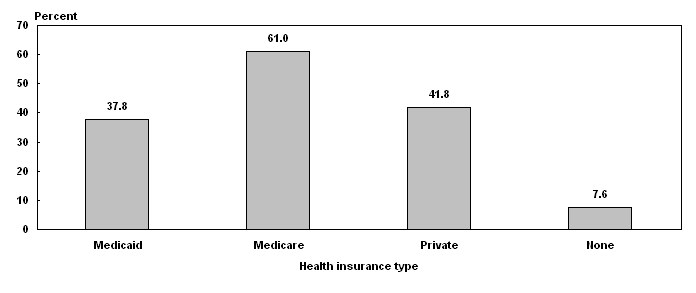
For disabled beneficiaries, medical costs can be considerable thereby increasing the importance of health insurance. About 8 percent of DI beneficiaries report having no health insurance coverage at all; the remaining beneficiaries report having one or more types of coverage (Chart 2). Over 60 percent of beneficiaries report having Medicare coverage. Nearly 42 percent of beneficiaries have some form of private health insurance, while 38 percent report having Medicaid coverage.
Health insurance coverage for DI beneficiaries, December 2002
Supplemental Security Income
The SSI recipients featured in Tables 6 through 12 include aged, blind, and disabled individuals of all ages. Breakouts by age subgroups have been provided for children (under age 18), the working aged (18–64), and the aged (65 or older). The federal government sets the maximum monthly SSI payment amount, known as the federal benefit rate (FBR), which is reduced when an individual has countable earned and unearned income. In 2002, when these data were collected, the FBR was $545 for an individual and $817 for a couple.
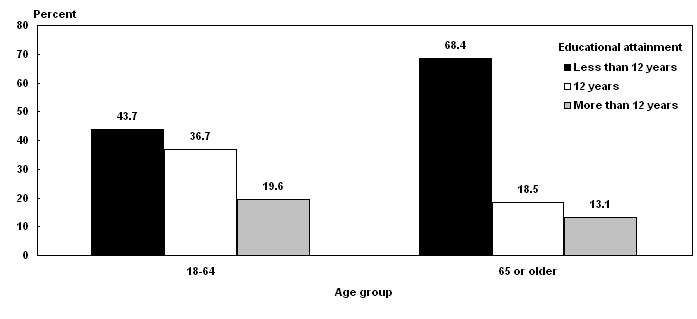
There are stark generational differences in the educational attainment of SSI recipients. Approximately 56 percent of working-age recipients have at least 12 years of education and only about 32 percent of aged recipients are similarly educated (Chart 3 and Table 6). Only about 21 percent of working-age recipients compared with about 53 percent of aged recipients have 8 or less years of education.
Education among SSI recipients, by age group, December 2002
| Demographic characteristic | Number | Percentage of all recipients | ||||||
|---|---|---|---|---|---|---|---|---|
| Total | Under 18 |
18–64 | 65 or older |
Total | Under 18 |
18–64 | 65 or older |
|
| All recipients | 6,537,289 | 894,924 | 3,707,490 | 1,934,875 | 100.0 | 100.0 | 100.0 | 100.0 |
| Sex | ||||||||
| Male | 2,785,278 | 577,115 | 1,600,870 | 607,292 | 42.6 | 64.5 | 43.2 | 31.4 |
| Female | 3,752,012 | 317,809 | 2,106,620 | 1,327,583 | 57.4 | 35.5 | 56.8 | 68.6 |
| Race | ||||||||
| White | 4,029,801 | 512,899 | 2,434,561 | 1,082,342 | 61.6 | 57.3 | 65.7 | 55.9 |
| Black | 1,881,924 | 356,775 | 1,058,883 | 466,266 | 28.8 | 39.9 | 28.6 | 24.1 |
| American Indian, Alaska Native | 147,799 | 11,611 | 98,615 | 37,573 | 2.3 | 1.3 | 2.7 | 1.9 |
| Asian, Pacific Islander | 477,765 | 13,639 | 115,432 | 348,694 | 7.3 | 1.5 | 3.1 | 18.0 |
| Ethnicity | ||||||||
| Hispanic | 1,276,321 | 195,600 | 569,369 | 511,352 | 19.5 | 21.9 | 15.4 | 26.4 |
| Non-Hispanic | 5,260,968 | 699,324 | 3,138,121 | 1,423,523 | 80.5 | 78.1 | 84.6 | 73.6 |
| Marital status | ||||||||
| Married | 1,305,490 | . . . | 720,535 | 584,955 | 20.0 | . . . | 19.4 | 30.2 |
| Widowed | 1,034,499 | . . . | 220,833 | 813,666 | 15.8 | . . . | 6.0 | 42.1 |
| Divorced or separated | 1,409,835 | . . . | 1,047,700 | 362,136 | 21.6 | . . . | 28.3 | 18.7 |
| Never married | 2,787,465 | 894,924 | 1,718,422 | 174,118 | 42.6 | 100.0 | 46.4 | 9.0 |
| Years of education | ||||||||
| 0–8 | 1,938,638 | 131,205 | 783,649 | 1,023,784 | 29.7 | 14.7 | 21.1 | 52.9 |
| 9–11 | 1,352,379 | 215,820 | 837,224 | 299,335 | 20.7 | 24.1 | 22.6 | 15.5 |
| 12 | 1,720,756 | 4,125 | 1,359,610 | 357,021 | 26.3 | 0.5 | 36.7 | 18.5 |
| 13–15 | 727,097 | . . . | 590,743 | 136,354 | 11.1 | . . . | 15.9 | 7.0 |
| 16 or more | 254,645 | . . . | 136,264 | 118,381 | 3.9 | . . . | 3.7 | 6.1 |
| Unknown | 543,775 | 543,775 | 0 | 0 | 8.3 | 60.8 | 0 | 0 |
| Health insurance a | ||||||||
| Medicaid | 6,255,651 | 833,576 | 3,539,396 | 1,882,679 | 95.7 | 93.1 | 95.5 | 97.3 |
| Medicare | 2,259,370 | 0 | 910,440 | 1,348,930 | 34.6 | 0 | 24.6 | 69.7 |
| Private | 769,128 | 227,739 | 366,239 | 175,150 | 11.8 | 25.4 | 9.9 | 9.1 |
| None | 114,415 | 27,248 | 75,570 | 11,597 | 1.8 | 3.0 | 2.0 | 0.6 |
| Source of income a | ||||||||
| Social Security | 2,336,310 | 45,165 | 1,115,273 | 1,175,873 | 35.7 | 5.0 | 30.1 | 60.8 |
| Public assistance other than SSI | 5,279,947 | 276,152 | 3,306,915 | 1,696,880 | 80.8 | 30.9 | 89.2 | 87.7 |
| Earnings | 460,560 | 25,497 | 383,666 | 51,397 | 7.0 | 2.8 | 10.3 | 2.7 |
| Property income | 683,006 | 26,770 | 406,685 | 249,550 | 10.4 | 3.0 | 11.0 | 12.9 |
| Other | 645,845 | 11,449 | 419,097 | 215,299 | 9.9 | 1.3 | 11.3 | 11.1 |
| Total personal income b (dollars) | ||||||||
| Less than 500 | 91,477 | 42,462 | 40,539 | 8,476 | 1.4 | 4.7 | 1.1 | 0.4 |
| 500–999 | 216,718 | 140,011 | 54,663 | 22,044 | 3.3 | 15.6 | 1.5 | 1.1 |
| 1,000–1,499 | 341,368 | 86,098 | 153,061 | 102,209 | 5.2 | 9.6 | 4.1 | 5.3 |
| 1,500–1,999 | 628,136 | 129,445 | 272,257 | 226,434 | 9.6 | 14.5 | 7.3 | 11.7 |
| 2,000–2,499 | 3,031,649 | 385,602 | 1,765,428 | 880,619 | 46.4 | 43.1 | 47.6 | 45.5 |
| 2,500–2,999 | 714,906 | 66,714 | 389,990 | 258,202 | 10.9 | 7.5 | 10.5 | 13.3 |
| 3,000–3,499 | 608,484 | 23,278 | 344,301 | 240,905 | 9.3 | 2.6 | 9.3 | 12.5 |
| 3,500–3,999 | 203,491 | 2,151 | 154,201 | 47,139 | 3.1 | 0.2 | 4.2 | 2.4 |
| 4,000–4,499 | 147,945 | 6,126 | 104,183 | 37,636 | 2.3 | 0.7 | 2.8 | 1.9 |
| 4,500–4,999 | 86,421 | 0 | 55,196 | 31,225 | 1.3 | 0 | 1.5 | 1.6 |
| 5,000 or more | 466,696 | 13,038 | 373,671 | 79,987 | 7.1 | 1.5 | 10.1 | 4.1 |
| SOURCES: U.S. Census Bureau 2001 Survey of Income and Program Participation (SIPP), waves 6 and 7, December 2002 and SIPP-based interviews of Social Security Disability Insurance and Supplemental Security Income (SSI) program participants, December 2002 matched to Social Security administrative records. | ||||||||
| NOTES: Individuals receiving SSI payments in the month of December are identified using Social Security administrative data for those with a valid Social Security number and using self-reported SIPP data for those without a valid number. The total unweighted sample is composed of 2,535 SSI recipients: 223 recipients aged 17 or younger; 1,614 recipients aged 18 to 64; and 698 recipients aged 65 or older. | ||||||||
| The sum of individual categories may not equal the total because of rounding. | ||||||||
| . . . = not applicable | ||||||||
| a. Individuals may be counted in more than one category. | ||||||||
| b. Personal income data are based on September, October, November, and December of 2002. | ||||||||
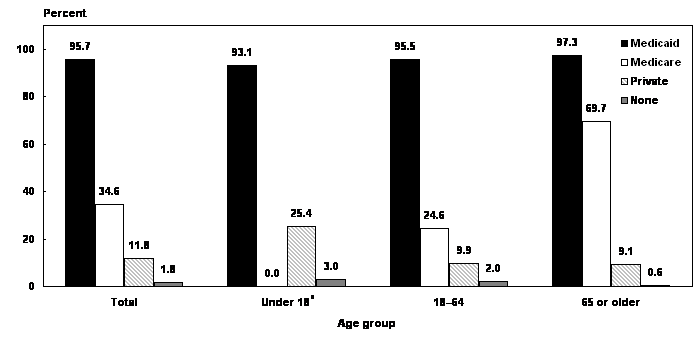
Health insurance coverage is almost universal for the SSI population. Nearly 96 percent of all SSI recipients have Medicaid coverage while only 2 percent of all SSI recipients do not have any health insurance coverage (Chart 4). One out of four working-age recipients and seven out of ten aged recipients have Medicare coverage.6 One out of four children is estimated to have private health insurance while only one out of ten SSI recipients aged 18 or older has private health insurance.
Health insurance coverage among SSI recipients, by age group, December 2002
Family income indicates the resources of which an SSI recipient may have access in addition to his or her personal income. Most recipients only have a 4-month total personal income in the $2,000–$2,499 category (Table 6); this is the same value as four times the monthly federal benefit rate of $545 for an individual in 2002. While most recipients have more family income than personal income, family income levels are still relatively low, below $5,000 for 4 months (Table 7). However, SSI is an important contributor to income; over half of the recipients rely on SSI for at least 90 percent of their personal income (Table 8). Recipients aged 65 or older, with between 13 and 15 years of education, or widowed report the lowest reliance on SSI, with less than 40 percent of those subgroups relying on SSI for 90 percent or more of personal income. Although family income is greater than personal income, SSI still represents nearly half of the recipient's total family income (Table 9). The remainder of the family's income is primarily divided between earnings and Social Security benefits. Those SSI recipients with a relatively large proportion of family income from Social Security benefits tend to be aged, widow(er)s, or living alone. Earnings are a relatively larger percentage of family income for recipients who live with relatives and families where the SSI recipient is a child.
| Household and family characteristic | Number | Percentage of all recipients | ||||||
|---|---|---|---|---|---|---|---|---|
| Total | Under 18 |
18–64 | 65 or older |
Total | Under 18 |
18–64 | 65 or older |
|
| All recipients | 6,537,289 | 894,924 | 3,707,490 | 1,934,875 | 100.0 | 100.0 | 100.0 | 100.0 |
| Household type | ||||||||
| Family | ||||||||
| Married couple present | 1,823,870 | 291,380 | 951,713 | 580,777 | 27.9 | 32.6 | 25.7 | 30.0 |
| No married couple, male householder | 562,682 | 130,516 | 325,031 | 107,135 | 8.6 | 14.6 | 8.8 | 5.5 |
| No married couple, female householder | 1,792,952 | 457,344 | 978,318 | 357,290 | 27.4 | 51.1 | 26.4 | 18.5 |
| Nonfamily | ||||||||
| Male householder | 857,022 | 11,706 | 615,662 | 229,654 | 13.1 | 1.3 | 16.6 | 11.9 |
| Female householder | 1,407,968 | 3,978 | 787,498 | 616,492 | 21.5 | 0.4 | 21.2 | 31.9 |
| Group quarters | 92,795 | 0 | 49,268 | 43,527 | 1.4 | 0 | 1.3 | 2.2 |
| Ownership status of living quarters | ||||||||
| Owned | 2,568,180 | 396,889 | 1,351,669 | 819,622 | 39.3 | 44.3 | 36.5 | 42.4 |
| Not owned | 3,969,110 | 498,036 | 2,355,821 | 1,115,253 | 60.7 | 55.7 | 63.5 | 57.6 |
| Residence in public housing | 900,057 | 94,897 | 492,404 | 312,756 | 13.8 | 10.6 | 13.3 | 16.2 |
| Household receipt of a — | ||||||||
| Energy assistance | 845,858 | 92,509 | 558,367 | 194,982 | 12.9 | 10.3 | 15.1 | 10.1 |
| Housing assistance | 587,092 | 60,502 | 404,539 | 122,051 | 9.0 | 6.8 | 10.9 | 6.3 |
| Food stamps | 2,639,649 | 266,874 | 1,612,194 | 760,581 | 40.4 | 29.8 | 43.5 | 39.3 |
| Household size | ||||||||
| 1 person | 2,012,592 | 10,666 | 1,168,993 | 832,933 | 30.8 | 1.2 | 31.5 | 43.0 |
| 2 persons | 1,659,818 | 95,042 | 1,008,874 | 555,901 | 25.4 | 10.6 | 27.2 | 28.7 |
| 3–4 persons | 1,698,301 | 378,930 | 988,920 | 330,451 | 26.0 | 42.3 | 26.7 | 17.1 |
| 5 or more persons | 1,166,579 | 410,287 | 540,703 | 215,589 | 17.8 | 45.8 | 14.6 | 11.1 |
| Family size | ||||||||
| 1 person | 2,407,208 | 27,105 | 1,489,110 | 890,994 | 36.8 | 3.0 | 40.2 | 46.0 |
| 2 persons | 1,472,381 | 102,934 | 843,991 | 525,455 | 22.5 | 11.5 | 22.8 | 27.2 |
| 3–4 persons | 1,573,085 | 374,948 | 890,041 | 308,096 | 24.1 | 41.9 | 24.0 | 15.9 |
| 5 or more persons | 1,084,616 | 389,938 | 484,348 | 210,330 | 16.6 | 43.6 | 13.1 | 10.9 |
| Under age 18 in family | ||||||||
| None | 4,414,924 | . . . | 2,764,987 | 1,649,937 | 67.5 | . . . | 74.6 | 85.3 |
| 1 person | 884,630 | 278,576 | 464,762 | 141,292 | 13.5 | 31.1 | 12.5 | 7.3 |
| 2–3 persons | 568,220 | 238,114 | 233,072 | 97,034 | 8.7 | 26.6 | 6.3 | 5.0 |
| 4 persons | 538,669 | 291,046 | 202,627 | 44,996 | 8.2 | 32.5 | 5.5 | 2.3 |
| 5 or more persons | 130,846 | 87,188 | 42,042 | 1,616 | 2.0 | 9.7 | 1.1 | 0.1 |
| Total household income b (dollars) | ||||||||
| Less than 2,500 | 1,650,376 | 61,675 | 971,619 | 617,082 | 25.2 | 6.9 | 26.2 | 31.9 |
| 2,500–4,999 | 1,670,612 | 138,718 | 931,235 | 600,660 | 25.6 | 15.5 | 25.1 | 31.0 |
| 5,000–7,499 | 797,341 | 175,504 | 419,023 | 202,814 | 12.2 | 19.6 | 11.3 | 10.5 |
| 7,500–9,999 | 626,538 | 190,643 | 354,184 | 81,711 | 9.6 | 21.3 | 9.6 | 4.2 |
| 10,000–14,999 | 763,068 | 197,454 | 418,955 | 146,659 | 11.7 | 22.1 | 11.3 | 7.6 |
| 15,000–19,999 | 415,858 | 91,671 | 225,183 | 99,005 | 6.4 | 10.2 | 6.1 | 5.1 |
| 20,000 or more | 613,496 | 39,259 | 387,292 | 186,945 | 9.4 | 4.4 | 10.4 | 9.7 |
| Total family income b (dollars) | ||||||||
| Less than 2,500 | 1,850,592 | 78,114 | 1,147,688 | 624,790 | 28.3 | 8.7 | 31.0 | 32.3 |
| 2,500–4,999 | 1,768,508 | 158,626 | 990,465 | 619,417 | 27.1 | 17.7 | 26.7 | 32.0 |
| 5,000–7,499 | 753,430 | 166,315 | 381,672 | 205,443 | 11.5 | 18.6 | 10.3 | 10.6 |
| 7,500–9,999 | 612,554 | 191,183 | 332,899 | 88,472 | 9.4 | 21.4 | 9.0 | 4.6 |
| 10,000–14,999 | 687,997 | 199,072 | 354,340 | 134,585 | 10.5 | 22.2 | 9.6 | 7.0 |
| 15,000–19,999 | 338,837 | 71,103 | 185,626 | 82,108 | 5.2 | 7.9 | 5.0 | 4.2 |
| 20,000 or more | 525,371 | 30,511 | 314,801 | 180,059 | 8.0 | 3.4 | 8.5 | 9.3 |
| SOURCES: U.S. Census Bureau 2001 Survey of Income and Program Participation (SIPP), waves 6 and 7, December 2002 and SIPP-based interviews of Social Security Disability Insurance and Supplemental Security Income (SSI) program participants, December 2002 matched to Social Security administrative records. | ||||||||
| NOTES: Individuals receiving SSI payments in the month of December are identified using Social Security administrative data for those with a valid Social Security number and using self-reported SIPP data for those without a valid number. The total unweighted sample is composed of 2,535 SSI recipients: 223 recipients aged 17 or younger; 1,614 recipients aged 18 to 64; and 698 recipients aged 65 or older. | ||||||||
| The sum of individual categories may not equal the total because of rounding. | ||||||||
| A family is a group of two or more persons residing together related by birth, marriage, or adoption. A household includes related family members and all the unrelated persons, if any, such as lodgers, foster children, wards, or employees who share the housing unit. A person living alone in a housing unit or a group of unrelated persons sharing a housing unit as partners is also counted as a household. | ||||||||
| . . . = not applicable | ||||||||
| a. Individuals may be counted in more than one category. | ||||||||
| b. Household and family data are based on September, October, November, and December of 2002. | ||||||||
| Demographic characteristic | Number | Percentage of all recipients |
Percentage distribution | |||||
|---|---|---|---|---|---|---|---|---|
| Total | Under 25 percent of income |
25–49 percent of income |
50–74 percent of income |
75–89 percent of income |
90 percent or more of income |
|||
| All recipients | 6,537,289 | 100.0 | 100.0 | 20.2 | 15.1 | 8.2 | 3.6 | 52.8 |
| Sex | ||||||||
| Male | 2,785,278 | 42.6 | 100.0 | 19.8 | 12.1 | 5.0 | 3.3 | 59.8 |
| Female | 3,752,012 | 57.4 | 100.0 | 20.5 | 17.3 | 10.6 | 3.8 | 47.7 |
| Age group | ||||||||
| Under 18 | 894,924 | 13.7 | 100.0 | 1.7 | 2.6 | 1.8 | 1.6 | 92.4 |
| 18—64 | 3,707,490 | 56.7 | 100.0 | 19.0 | 14.2 | 9.8 | 4.6 | 52.6 |
| 65 or older | 1,934,875 | 29.6 | 100.0 | 31.2 | 22.7 | 8.2 | 2.7 | 35.1 |
| Race | ||||||||
| White | 4,029,801 | 61.6 | 100.0 | 22.1 | 15.8 | 8.6 | 3.2 | 50.2 |
| Black | 1,881,924 | 28.8 | 100.0 | 18.9 | 15.4 | 7.7 | 4.4 | 53.8 |
| American Indian, Alaska Native | 147,799 | 2.3 | 100.0 | 25.6 | 5.7 | 7.4 | 3.6 | 57.7 |
| Asian, Pacific Islander | 477,765 | 7.3 | 100.0 | 7.6 | 11.0 | 6.9 | 4.2 | 70.4 |
| Ethnicity | ||||||||
| Hispanic | 1,276,321 | 19.5 | 100.0 | 19.0 | 15.2 | 9.5 | 3.7 | 52.8 |
| Non-Hispanic | 5,260,968 | 80.5 | 100.0 | 20.5 | 15.1 | 7.9 | 3.1 | 53.2 |
| Marital status | ||||||||
| Married | 1,305,490 | 20.0 | 100.0 | 18.8 | 14.7 | 7.2 | 4.7 | 54.7 |
| Widowed | 1,034,499 | 15.8 | 100.0 | 34.8 | 24.3 | 8.8 | 2.1 | 30.1 |
| Divorced or separated | 1,409,835 | 21.6 | 100.0 | 22.7 | 16.5 | 10.9 | 2.8 | 47.0 |
| Never married | 2,787,465 | 42.6 | 100.0 | 14.2 | 11.2 | 7.1 | 4.1 | 63.4 |
| Years of education | ||||||||
| 0–8 | 1,938,638 | 29.7 | 100.0 | 22.7 | 19.0 | 9.2 | 2.9 | 46.2 |
| 9–11 | 1,352,379 | 20.7 | 100.0 | 17.8 | 13.0 | 8.3 | 3.8 | 57.2 |
| 12 | 1,720,756 | 26.3 | 100.0 | 19.9 | 16.2 | 9.8 | 4.6 | 49.5 |
| 13–15 | 683,816 | 10.5 | 100.0 | 30.1 | 16.8 | 8.3 | 5.8 | 39.0 |
| 16 or more | 297,926 | 4.6 | 100.0 | 29.3 | 15.2 | 6.1 | 2.5 | 46.9 |
| Unknown | 543,775 | 8.3 | 100.0 | 1.0 | 1.0 | 0.3 | 0.5 | 97.2 |
| Living arrangement | ||||||||
| Lives alone | 2,012,592 | 30.8 | 100.0 | 28.3 | 18.5 | 7.6 | 2.1 | 43.4 |
| Lives with relatives | 4,298,987 | 65.8 | 100.0 | 16.6 | 13.3 | 8.4 | 4.3 | 57.3 |
| Lives only with nonrelatives | 225,711 | 3.5 | 100.0 | 17.1 | 20.1 | 8.8 | 2.9 | 51.1 |
| SOURCES: U.S. Census Bureau 2001 Survey of Income and Program Participation (SIPP), waves 6 and 7, December 2002 and SIPP-based interviews of Social Security Disability Insurance and Supplemental Security Income (SSI) program participants, December 2002 matched to Social Security administrative records. | ||||||||
| NOTES: Individuals receiving SSI payments in the month of December are identified using Social Security administrative data for those with a valid Social Security number and using self-reported SIPP data for those without a valid number. The total unweighted sample is composed of 2,535 SSI recipients: 223 recipients aged 17 or younger; 1,614 recipients aged 18 to 64; and 698 recipients aged 65 or older. | ||||||||
| The sum of individual categories may not equal the total because of rounding. | ||||||||
| Personal income data are based on September, October, November, and December of 2002. | ||||||||
| Demographic characteristic | Total | Social Security |
Public assistance | Earnings | Other a | |
|---|---|---|---|---|---|---|
| Supplemental Security Income |
Other public assistance |
|||||
| All recipients | 100.0 | 23.0 | 45.8 | 1.9 | 22.4 | 6.9 |
| Sex | ||||||
| Male | 100.0 | 19.8 | 45.5 | 1.5 | 25.6 | 7.6 |
| Female | 100.0 | 25.4 | 46.1 | 2.2 | 20.0 | 6.3 |
| Age | ||||||
| Under 18 | 100.0 | 9.0 | 36.9 | 1.7 | 43.5 | 8.9 |
| 18–64 | 100.0 | 19.8 | 50.7 | 2.4 | 19.7 | 7.4 |
| 65 or older | 100.0 | 35.6 | 40.6 | 1.1 | 17.7 | 5.0 |
| Race | ||||||
| White | 100.0 | 24.9 | 43.7 | 1.5 | 22.2 | 7.7 |
| Black | 100.0 | 22.4 | 48.2 | 2.5 | 21.0 | 5.9 |
| American Indian, Alaska Native | 100.0 | 20.8 | 54.5 | 3.3 | 18.6 | 2.8 |
| Asian, Pacific Islander | 100.0 | 9.8 | 51.9 | 3.2 | 30.8 | 4.3 |
| Ethnicity | ||||||
| Hispanic | 100.0 | 22.0 | 43.1 | 1.5 | 27.2 | 6.2 |
| Non-Hispanic | 100.0 | 23.2 | 46.5 | 2.0 | 21.2 | 7.1 |
| Marital status | ||||||
| Married | 100.0 | 19.4 | 47.5 | 2.0 | 24.2 | 6.9 |
| Widowed | 100.0 | 37.5 | 37.6 | 1.5 | 16.6 | 6.8 |
| Divorced or separated | 100.0 | 26.6 | 55.8 | 2.0 | 10.2 | 5.4 |
| Never married | 100.0 | 17.5 | 43.0 | 2.0 | 29.8 | 7.7 |
| Years of education | ||||||
| 0–8 | 100.0 | 28.9 | 47.1 | 1.3 | 17.4 | 5.3 |
| 9–11 | 100.0 | 21.9 | 49.5 | 2.7 | 19.7 | 6.2 |
| 12 | 100.0 | 21.0 | 46.3 | 2.1 | 23.6 | 7.0 |
| 13–15 | 100.0 | 26.1 | 44.5 | 2.4 | 17.0 | 10.0 |
| 16 or more | 100.0 | 23.0 | 46.0 | 1.4 | 22.3 | 7.3 |
| Unknown | 100.0 | 6.9 | 32.2 | 1.5 | 50.0 | 9.4 |
| Living arrangement | ||||||
| Lives alone | 100.0 | 34.1 | 59.0 | 1.1 | 2.3 | 3.5 |
| Lives with relatives | 100.0 | 18.2 | 38.5 | 2.4 | 32.6 | 8.3 |
| Lives only with nonrelatives | 100.0 | 15.5 | 68.0 | 0.6 | 7.7 | 8.2 |
| SOURCES: U.S. Census Bureau 2001 Survey of Income and Program Participation (SIPP), waves 6 and 7, December 2002 and SIPP-based interviews of Social Security Disability Insurance and Supplemental Security Income (SSI) program participants, December 2002 matched to Social Security administrative records. | ||||||
| NOTES: Individuals receiving SSI payments in the month of December are identified using Social Security administrative data for those with a valid Social Security number and using self-reported SIPP data for those without a valid number. The total unweighted sample is composed of 2,535 SSI recipients: 223 recipients aged 17 or younger; 1,614 recipients aged 18 to 64; and 698 recipients aged 65 or older. | ||||||
| The sum of individual categories may not equal the total because of rounding. | ||||||
| A family is a group of two or more persons residing together related by birth, marriage, or adoption. | ||||||
| Family income data are based on September, October, November, and December of 2002. | ||||||
| a. Very few SSI recipients have property income. Because of concerns about statistical reliability of the estimates, the property income data have been collapsed into "Other." | ||||||
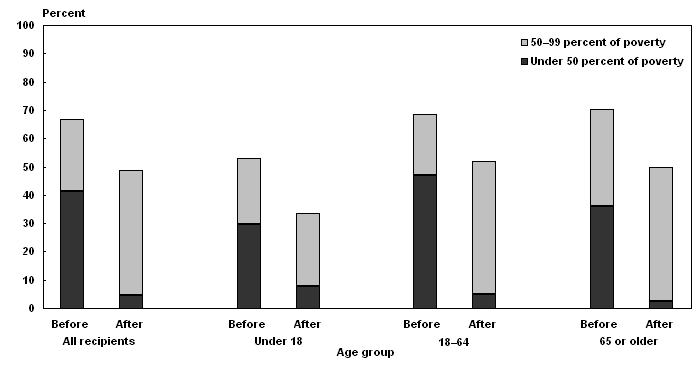
Nearly half of SSI recipients live in families with income below their poverty threshold, even after receiving an SSI payment (Table 10). However, SSI does serve an important role as a social safety net moving many recipients out of extreme poverty, when the family's income is below 50 percent of the poverty threshold (Chart 5). The fraction of SSI recipients in extreme poverty is reduced from 41 percent to 5 percent when SSI payments are included, a trend that continues across all age subgroups (Table 11). Overall, SSI is also responsible for reducing the aggregate difference between the poverty threshold and family income of those below their poverty threshold—the aggregate poverty gap—by 66 percent, with similar results across all sex, age, race, and ethnic subgroups (Table 12).
| Demographic characteristic | Total | Family income relative to poverty threshold | |||||||
|---|---|---|---|---|---|---|---|---|---|
| Under 100 percent | 100–124 percent |
125–149 percent |
150–199 percent |
200–299 percent |
300 percent or more |
||||
| Subtotal | Under 50 percent |
50–99 percent |
|||||||
| All recipients | 6,537,289 | 48.9 | 4.7 | 44.2 | 11.6 | 7.5 | 10.7 | 10.1 | 11.2 |
| Sex | |||||||||
| Male | 2,785,278 | 43.7 | 5.1 | 38.6 | 12.3 | 7.6 | 12.2 | 12.0 | 12.3 |
| Female | 3,752,011 | 52.8 | 4.4 | 48.4 | 11.1 | 7.5 | 9.5 | 8.8 | 10.4 |
| Age group | |||||||||
| Under 18 | 894,924 | 33.5 | 7.9 | 25.6 | 15.6 | 8.6 | 23.6 | 14.5 | 4.2 |
| 18–64 | 3,707,490 | 52.1 | 5.1 | 47.0 | 9.7 | 6.0 | 9.8 | 10.0 | 12.5 |
| 65 or older | 1,934,875 | 49.8 | 2.3 | 47.5 | 13.3 | 10.1 | 6.3 | 8.4 | 12.1 |
| Race | |||||||||
| White | 4,029,801 | 47.8 | 4.5 | 43.3 | 12.3 | 6.5 | 11.0 | 11.0 | 11.5 |
| Black | 1,881,924 | 54.2 | 5.4 | 48.8 | 9.8 | 8.4 | 12.0 | 7.2 | 8.5 |
| American Indian, Alaska Native | 147,799 | 64.1 | 8.8 | 55.3 | 16.3 | 4.9 | 5.2 | 3.4 | 6.0 |
| Asian, Pacific Islander | 477,765 | 32.6 | 2.2 | 30.4 | 10.7 | 13.9 | 4.9 | 16.6 | 21.2 |
| Ethnicity | |||||||||
| Hispanic | 1,276,321 | 44.7 | 5.3 | 39.4 | 12.8 | 7.3 | 13.7 | 9.4 | 11.0 |
| Non-Hispanic | 5,260,968 | 49.9 | 4.5 | 45.4 | 11.3 | 7.6 | 9.9 | 10.3 | 12.2 |
| Marital status | |||||||||
| Married | 1,305,490 | 42.7 | 5.6 | 37.1 | 11.9 | 12.1 | 10.1 | 11.6 | 11.6 |
| Widowed | 1,034,499 | 53.0 | 3.6 | 49.4 | 12.6 | 8.0 | 5.0 | 8.7 | 12.7 |
| Divorced or separated | 1,409,835 | 67.0 | 3.5 | 63.5 | 11.2 | 3.3 | 5.8 | 5.9 | 6.9 |
| Never married | 2,787,465 | 41.0 | 5.2 | 35.8 | 11.3 | 7.4 | 15.5 | 12.1 | 12.7 |
| Years of education | |||||||||
| 0–8 | 1,938,638 | 52.2 | 4.8 | 47.4 | 12.2 | 7.9 | 9.5 | 8.1 | 10.2 |
| 9–11 | 1,352,379 | 53.5 | 5.9 | 47.6 | 10.3 | 8.2 | 10.8 | 9.2 | 7.8 |
| 12 | 1,720,756 | 46.0 | 3.3 | 42.7 | 11.2 | 6.2 | 9.8 | 13.0 | 13.8 |
| 13–15 | 683,816 | 51.2 | 4.5 | 46.7 | 12.1 | 7.2 | 7.1 | 7.7 | 14.6 |
| 16 or more | 297,926 | 49.7 | 2.3 | 47.4 | 6.0 | 6.6 | 4.3 | 9.6 | 23.8 |
| Unknown | 543,774 | 31.0 | 6.7 | 24.3 | 16.2 | 9.7 | 25.3 | 13.9 | 3.8 |
| SOURCES: U.S. Census Bureau 2001 Survey of Income and Program Participation (SIPP), waves 6 and 7, December 2002 and SIPP-based interviews of Social Security Disability Insurance and Supplemental Security Income (SSI) program participants, December 2002 matched to Social Security administrative records. | |||||||||
| NOTES: Individuals receiving SSI payments in the month of December are identified using Social Security administrative data for those with a valid Social Security number and using self-reported SIPP data for those without a valid number. The total unweighted sample is composed of 2,535 SSI recipients: 223 recipients aged 17 or younger; 1,614 recipients aged 18 to 64; and 698 recipients aged 65 or older. | |||||||||
| The sum of individual categories may not equal the total because of rounding. | |||||||||
| A family is a group of two or more persons residing together related by birth, marriage, or adoption. | |||||||||
| Family income data and poverty thresholds are based on September, October, November, and December of 2002. | |||||||||
Family income relative to the poverty threshold before SSI and after SSI payments, by age group or recipient, December 2002
| Family income relative to poverty threshold before SSI payments (percents) |
Total | Family income relative to poverty threshold after SSI payments | |||||||
|---|---|---|---|---|---|---|---|---|---|
| Number | Percent | Under 50 percent |
50–99 percent |
100–124 percent |
125–149 percent |
150–199 percent |
200–299 percent |
300 percent or more |
|
| All recipients | |||||||||
| Total | 6,537,289 | 100.0 | 4.7 | 44.2 | 11.6 | 7.5 | 10.7 | 10.1 | 11.2 |
| Under 50 | 2,703,141 | 41.3 | 11.3 | 73.4 | 9.4 | 3.4 | 2.2 | 0.3 | 0.1 |
| 50–99 | 1,665,943 | 25.5 | . . . | 54.3 | 26.4 | 11.4 | 6.0 | 1.9 | 0.0 |
| 100–124 | 402,486 | 6.2 | . . . | . . . | 16.3 | 35.9 | 40.4 | 7.0 | 0.4 |
| 125–149 | 300,336 | 4.6 | . . . | . . . | . . . | 22.0 | 69.4 | 7.6 | 1.0 |
| 150–199 | 434,410 | 6.6 | . . . | . . . | . . . | . . . | 38.5 | 59.8 | 1.7 |
| 200–299 | 449,222 | 6.9 | . . . | . . . | . . . | . . . | . . . | 69.5 | 30.5 |
| 300 or more | 581,751 | 8.9 | . . . | . . . | . . . | . . . | . . . | . . . | 100.0 |
| Under age 18 | |||||||||
| Total | 894,924 | 100.0 | 7.9 | 25.6 | 15.6 | 8.6 | 23.6 | 14.5 | 4.2 |
| Under 50 | 266,846 | 29.8 | 26.6 | 61.9 | 8.7 | 2.8 | 0.0 | 0.0 | 0.0 |
| 50–99 | 208,348 | 23.3 | . . . | 30.6 | 41.7 | 15.1 | 12.5 | 0.0 | 0.0 |
| 100–124 | 130,544 | 14.6 | . . . | . . . | 22.5 | 23.6 | 41.9 | 12.0 | 0.0 |
| 125–149 | 83,229 | 9.3 | . . . | . . . | . . . | 8.7 | 84.8 | 6.6 | 0.0 |
| 150–199 | 130,444 | 14.6 | . . . | . . . | . . . | . . . | 46.2 | 53.8 | 0.0 |
| 200–299 | 54,326 | 6.1 | . . . | . . . | . . . | . . . | . . . | 70.4 | 29.6 |
| 300 or more | 21,189 | 2.4 | . . . | . . . | . . . | . . . | . . . | . . . | 100.0 |
| Aged 18–64 | |||||||||
| Total | 3,707,490 | 100.0 | 5.1 | 47.0 | 9.7 | 6.0 | 9.8 | 10.0 | 12.5 |
| Under 50 | 1,740,898 | 47.0 | 10.8 | 76.8 | 7.3 | 1.7 | 2.7 | 0.4 | 0.1 |
| 50–99 | 794,390 | 21.4 | . . . | 50.8 | 27.2 | 12.5 | 6.6 | 2.9 | 0.0 |
| 100–124 | 177,717 | 4.8 | . . . | . . . | 9.2 | 36.5 | 49.9 | 3.3 | 1.0 |
| 125–149 | 146,412 | 3.9 | . . . | . . . | . . . | 18.2 | 68.0 | 11.8 | 2.0 |
| 150–199 | 221,030 | 6.0 | . . . | . . . | . . . | . . . | 34.2 | 62.5 | 3.3 |
| 200–299 | 265,283 | 7.2 | . . . | . . . | . . . | . . . | . . . | 67.4 | 32.6 |
| 300 or more | 361,760 | 9.8 | . . . | . . . | . . . | . . . | . . . | . . . | 100.0 |
| Aged 65 or older | |||||||||
| Total | 1,934,875 | 100.0 | 2.3 | 47.5 | 13.3 | 10.1 | 6.3 | 8.4 | 12.1 |
| Under 50 | 695,398 | 35.9 | 6.5 | 69.4 | 14.7 | 7.8 | 1.6 | 0.0 | 0.0 |
| 50–99 | 663,206 | 34.3 | . . . | 65.9 | 20.6 | 8.9 | 3.3 | 1.3 | 0.0 |
| 100–124 | 94,226 | 4.9 | . . . | . . . | 20.9 | 51.8 | 20.4 | 6.9 | 0.0 |
| 125–149 | 70,695 | 3.7 | . . . | . . . | . . . | 45.8 | 54.2 | 0.0 | 0.0 |
| 150–199 | 82,935 | 4.3 | . . . | . . . | . . . | . . . | 37.8 | 62.2 | 0.0 |
| 200–299 | 129,613 | 6.7 | . . . | . . . | . . . | . . . | . . . | 73.4 | 26.6 |
| 300 or more | 198,802 | 10.3 | . . . | . . . | . . . | . . . | . . . | . . . | 100.0 |
| SOURCES: U.S. Census Bureau 2001 Survey of Income and Program Participation (SIPP), waves 6 and 7, December 2002 and SIPP-based interviews of Social Security Disability Insurance and Supplemental Security Income (SSI) program participants, December 2002 matched to Social Security administrative records. | |||||||||
| NOTES: Individuals receiving SSI payments in the month of December are identified using Social Security administrative data for those with a valid Social Security number and using self-reported SIPP data for those without a valid number. The total unweighted sample is composed of 2,535 SSI recipients: 223 recipients aged 17 or younger; 1,614 recipients aged 18 to 64; and 698 recipients aged 65 or older. | |||||||||
| The sum of individual categories may not equal the total because of rounding. | |||||||||
| A family is a group of two or more persons residing together related by birth, marriage, or adoption. | |||||||||
| Family income data and poverty thresholds are based on September, October, November, and December of 2002. | |||||||||
| . . . = not applicable | |||||||||
| Demographic characteristic | Aggregate poverty gap (thousands of dollars) | Percentage reduction in poverty gap |
|
|---|---|---|---|
| Before SSI |
After SSI |
||
| Total | 11,244,091 | 3,761,204 | 66.55 |
| Sex | |||
| Male | 4,764,873 | 1,538,289 | 67.72 |
| Female | 6,479,218 | 2,222,915 | 65.69 |
| Age group | |||
| Under 18 | 1,587,556 | 672,933 | 57.61 |
| 18–64 | 6,970,380 | 2,315,095 | 66.79 |
| 65 or older | 2,686,155 | 773,176 | 71.22 |
| Race | |||
| White | 6,402,952 | 2,149,580 | 66.43 |
| Black | 3,661,459 | 1,326,190 | 63.78 |
| American Indian, Alaska Native | 342,016 | 114,929 | 66.40 |
| Asian, Pacific Islander | 837,664 | 170,505 | 79.65 |
| Ethnicity | |||
| Hispanic | 2,139,240 | 726,424 | 66.04 |
| Non-Hispanic | 9,104,851 | 3,034,780 | 66.67 |
| SOURCES: U.S. Census Bureau 2001 Survey of Income and Program Participation (SIPP), waves 6 and 7, December 2002 and SIPP-based interviews of Social Security Disability Insurance and Supplemental Security Income (SSI) program participants, December 2002 matched to Social Security administrative records. | |||
| NOTES: Individuals receiving SSI payments in the month of December are identified using Social Security administrative data for those with a valid Social Security number and using self-reported SIPP data for those without a valid number. The total unweighted sample is composed of 2,535 SSI recipients: 223 recipients aged 17 or younger; 1,614 recipients aged 18 to 64; and 698 recipients aged 65 or older. | |||
| When a beneficiary's family income is below the poverty threshold, the difference between the poverty threshold and family income is referred to as the poverty gap. The smallest individual poverty gap is zero if family income is equal to or greater than the poverty threshold. The largest poverty gap is equal to the poverty threshold for those with no family income at all. The aggregate poverty gap is the sum of the individual poverty gaps for all SSI recipients. | |||
| A family is a group of two or more persons residing together related by birth, marriage, or adoption. | |||
| Family income data and poverty thresholds are based on September, October, November, and December of 2002. | |||
Notes
1. Additional information about the DI and SSI programs can be found on the Social Security Administration's Web site at http://www.socialsecurity.gov/disability/.
2. The Core questionnaire includes questions on basic demographics, labor force and program participation, and income designed to measure a person's economic situation. Additional information on the SIPP can be found in the SIPP User's Guide, 2001, available at http://www.sipp.census.gov/sipp/usrguide/sipp2001.pdf.
3. Information on the underlying methodology for combining public-use file data with that from the oversample of beneficiaries is available upon request from the authors.
4. Consistent with the definition used in other SSA publications, SSI recipients are identified on the basis of the monthly benefit actually received, rather than the amount for which they are eligible (Pickett and Scott 1996). Also consistent with the definition used in other SSA publications, DI beneficiaries are identified on the basis of the monthly benefit due before the deductions for Medicare premiums.
5. In 2002, the poverty threshold for an individual was $9,183 and for a family of four it was $18,392 (U.S. Census Bureau, Poverty 2002, http://www.census.gov/hhes/www/poverty/povdef.html#2).
6. Almost all persons aged 65 or older are automatically entitled to Medicare Part A for hospital expenses. Part A also provides coverage, after a 24-month waiting period, for persons under age 65 who are receiving Social Security cash benefits on the basis of disability (Committee on Ways and Means 2004).
References
Committee on Ways and Means, U.S. House of Representatives. 2004. Green Book. Washington, DC: U.S. Government Printing Office.
Pickett, Clark, and Charles G. Scott. 1996. Reinventing SSI statistics: SSA's new longitudinal file. Social Security Bulletin 59(2): 31–56.
U.S. Census Bureau. 2003. Current Population Survey: Annual Social and Economic Supplements. Washington, DC: U.S. Department of Commerce. Available at http://www.census.gov/hhes/www/poverty/povdef.html#2.