Applying Aspects of Disability Determination Methods from the Netherlands in the United States
Social Security Bulletin, Vol. 86 No. 1, 2026 (released February 2026)
In contrast to the disability determination process in the United States, the Netherlands uses a unique method that directly measures an applicant's residual work capacity following the onset of a health condition. Standardized measures of functional abilities are linked to the requirements of actual jobs in the Netherlands, allowing for direct computation of a set of feasible jobs and the resulting estimated residual earnings capacity of an applicant, conditional on skills. In this article, we explain the measurement of work capacity in the Netherlands and then apply aspects of that method to estimate work capacity in a representative sample of U.S. working-age adults. We find that 11.8 percent of U.S. adults aged 18–65 have estimated earnings capacity below the substantial gainful activity threshold for U.S. Disability Insurance benefits. On average, compared with individuals with at least a bachelor's degree, individuals with less education have more functional limitations, a smaller set of feasible occupations, and lower estimated earnings capacity.
Nicole Maestas is the John D. MacArthur Professor of Economics and Health Care Policy and chair of the Department of Health Care Policy at Harvard Medical School and a research associate at the National Bureau of Economic Research (NBER). Kathleen Mullen is an associate professor and Petrone Chair in Economics at the University of Oregon, a research associate at NBER, and a research fellow at the Institute of Labor Economics (IZA). Bastian Ravesteijn is an assistant professor at the School of Economics of Erasmus University Rotterdam and a research fellow at the Tinbergen Institute.
Acknowledgments: The research reported herein was derived in whole or in part from research activities performed pursuant to a grant from SSA funded as part of the Retirement and Disability Research Consortium. Methodological and data development for the research were supported by grants from the National Institute on Aging (R01AG056238 and R01AG078301). Data on job requirements and information on disability determination in the Netherlands were provided by the UWV. We thank Hailey Clark and Alexandra Rome for their excellent research assistance.
Contents of this publication are not copyrighted; any items may be reprinted, but citation of the Social Security Bulletin as the source is requested. The findings and conclusions presented in the Bulletin are those of the authors and do not necessarily represent the views of the Social Security Administration or any author-affiliated institutions.
Introduction
| DI | Disability Insurance (U.S. program) |
| FML | Functional Abilities Questionnaire (Functionele Mogelijkheden Lijst) |
| HFCS | Health and Functional Capacity Survey |
| SD | standard deviation |
| SGA | substantial gainful activity |
| SSA | Social Security Administration |
| SSI | Supplemental Security Income |
| UWV | Dutch employee insurance agency (Uitvoeringsinstituut Werknemersverzekeringen) |
| WIA | Work and Income According to Labour Capacity Act (Wet werk en inkomen naar arbeidsvermogen) |
In recent years, there has been policy debate about whether the disability determination process for federal Disability Insurance (DI) benefits in the United States should be revised to more accurately reflect the multidimensional relationship between individuals' functional abilities and the functional requirements of work in a modern economy (Institute of Medicine 2007; Brandt and others 2011; National Academies of Sciences, Engineering, and Medicine 2019, 2023). Moreover, some policymakers have expressed interest in incorporating aspects of other countries' disability insurance1 programs into potential reforms of the U.S. system (Mitra 2009; Autor and Duggan 2010; Burkhauser and Daly 2011; Fultz 2015). The disability determination system in the Netherlands is one such potential model.
Under the Work and Income According to Labour Capacity Act (Wet werk en inkomen naar arbeidsvermogen, or WIA),2 the Dutch employee insurance agency (Uitvoeringsinstituut Werknemersverzekeringen, or UWV) uses a direct method of measuring an applicant's residual work capacity following the onset of a health condition. The assessment focuses first on identifying specific residual functional abilities. These standardized functional abilities are then directly linked to standardized requirements of existing jobs in the Netherlands, allowing direct computation of a set of feasible jobs (that is, those jobs that an individual has the functional ability to perform) and the associated residual earnings capacity of an applicant, conditional on educational attainment. Next, the assessor calculates the estimated degree of disability-related loss in earnings capacity, defined as one minus the ratio of estimated residual earnings capacity to prior earnings. This degree of work incapacity is used to determine eligibility for WIA benefits, which can be received as full benefits or as partial benefits combined with part-time work.
By contrast, DI applicants in the United States are deemed to have no work capacity if they have one or more specific health conditions or if they fall into certain categories under medical-vocational guidelines based on age, education, prior work experience, and an aggregate measure of residual functional capacity. The DI guidelines were originally intended to identify as disabled only those applicants with minimal remaining capacity for physically demanding work, who had limited job prospects because of their low education, narrow skills, or advanced age. However, the guidelines have not been substantially modified since 1978 and have only ever comprised a coarse mapping between health status and alternative job prospects (Maestas 2019).
The goal of our study is to explain how work capacity is measured in the Netherlands and then to apply aspects of that method to estimate work capacity in a representative survey sample of U.S. adults aged 18–65, the population generally covered under the DI program.3 We adapt the Dutch assessment tool to measure functional abilities in the U.S. sample and then apply the Dutch algorithm that matches individuals' functional abilities to occupational requirements of actual jobs in the Netherlands. We explore the sensitivity of the methodology to different assumptions about which job profiles are deemed feasible based on individuals' functional abilities and educational credentials, as well as assumptions about how feasible job profiles are used to calculate estimated earnings capacity. We perform a decomposition exercise in which we simulate estimated earnings capacity at three different education levels to examine the relative importance of educational attainment versus functional abilities as determinants of estimated earnings capacity. Finally, we compare the characteristics of individuals identified by the Dutch method as having low earnings capacity with those of current DI and Supplemental Security Income (SSI) beneficiaries in our sample.
We find that 11.8 percent of U.S. adults aged 18–65 have estimated earnings capacity below the substantial gainful activity (SGA) threshold defined by the U.S. Social Security Administration (SSA). Among those unable to perform SGA, most (72.5 percent, or 8.5 percent of the full sample) have zero estimated earnings capacity. By comparison, 5.4 percent of our sample report receiving DI benefits or SSI. Earnings capacity is positively associated with educational attainment: among individuals with less than a high school diploma, 28.5 percent have estimated earnings capacity below SGA, compared with 15.5 percent of high school graduates and 2.1 percent of college graduates.
These findings are robust to several different assumptions about how individuals from our sample are matched to feasible job profiles and how these job profiles are combined to estimate earnings capacity. The assumption that most affects estimated disability prevalence is the treatment of functional ability requirements flagged by the Dutch algorithm. The algorithm produces a flag when additional information is needed to evaluate whether an individual meets a functional ability requirement for a given job profile. In actual Dutch disability determinations, disability assessors resolve flags using information from an individual's medical records or from a structured interview with the applicant. Because we are unable to mimic this part of the Dutch process, we estimate upper and lower bounds on earnings capacity by either accepting all job profiles with flagged requirements (our baseline specification) or rejecting all such job profiles. Rejecting job profiles with flagged requirements results in 25.3 percent of the sample being identified as having earnings capacity below SGA (compared with 11.8 percent when accepting all job profiles with flagged requirements) and 23.1 percent of the sample identified as having zero earnings capacity (compared with 8.5 percent when accepting all such job profiles).
Our data and methodology allow us to simulate potential earnings under hypothetical conditions, including changes in individuals' educational credentials or functional abilities. We find that, when comparing high school graduates and college graduates, having a college degree has a larger effect on potential earnings than the difference in average functional abilities between the groups. By contrast, when comparing potential earnings for people with and without at least a high school education, the difference in average functional abilities matters about as much as having a diploma (or equivalent).
Finally, within our sample, we compare characteristics of current DI and SSI beneficiaries with those of individuals identified by the Dutch method as having low earnings capacity. We find that individuals with low earnings capacity report fewer health conditions but more functional limitations than DI and SSI beneficiaries report. The two groups have similar employment rates and educational distributions, but they differ markedly in age—specifically, individuals identified as having low earnings capacity tend to be much younger than DI and SSI beneficiaries.
This article contributes to the literature on disability insurance systems around the world (Wise 2017). The Dutch system—which, among other distinctions, requires employers to bear some of the costs of disability claims—has notably been proposed as a model for other countries, including the United States (Autor and Duggan 2010; Burkhauser and Daly 2011; Fultz 2015; Koning and Lindeboom 2015). Although there are important structural differences between the disability insurance systems in the Netherlands and the United States, both experienced rapid caseload growth during the 20th century, raising broad concerns about long-run sustainability. The Netherlands achieved a substantial reduction in its disability insurance caseload following a series of reforms. The U.S. caseload has also fallen, but for different reasons (Maestas, Mullen, and Strand 2021; Hoynes, Maestas, and Strand 2022).
This article focuses on the process for determining eligibility for disability insurance benefits. The Dutch method of direct disability assessment is widely regarded as an international best practice for rigorously measuring work capacity (Bolderson, Mabbett, and Hvinden 2002; Wright and de Boer 2002; Bickenbach and others 2015; Geiger and others 2018). Whereas other studies primarily survey and critique varying approaches to disability assessment, we go a step further by applying aspects of the Dutch disability determination process—specifically, the algorithm used to identify feasible job profiles based on applicants' functional abilities—to a representative sample of U.S. adults aged 18–65.
There are significant advantages to our approach. Although the Netherlands uses a relative disability standard (earnings loss relative to prior earnings) while the United States uses an absolute disability standard (income below the SGA threshold), modeling the Dutch system using U.S. data allows calculation of alternative outcomes or implementation of other standards because the model produces counterfactual estimates using comparisons of individuals' functional abilities to harmonized measures of occupational requirements for a set of jobs characterized by wages and other requirements (such as hours and education). As a result, this approach allows calculation of individual work capacity and comparison against the absolute SGA standard in the United States. Furthermore, understanding the explicit link between functional abilities and occupational requirements can provide valuable information for other uses, such as for SSA's work incentive programs and state vocational rehabilitation services, because it identifies specific jobs an individual may be capable of performing.
We believe there are valuable lessons to be learned from evaluating U.S. workers against job requirements in the Dutch economy. Two prior studies compare job information across multiple countries, including the United States, and find that job requirements are broadly similar across countries despite substantial cultural and size differences. Taylor and others (2008) compare data from the Occupational Information Network (O*NET) Generalized Work Activities, Basic and Cross-Functional Skills, and Work Style survey instruments in China, Hong Kong, New Zealand, and the United States, concluding that “job information is likely to transport quite well across countries.” Similarly, Ryan and Sinning (2011) compare literacy skills in Australia, Canada, New Zealand, and the United States and “find the broad match of workers with skills to jobs that use them to be quite similar” across the four countries. Although the U.S. workforce is nearly 17 times larger than the Dutch workforce (164.5 million U.S. workers in 2022 versus 9.8 million Dutch workers in 2020), their industry breakdowns are quite similar. In the Netherlands in 2020, 16.6 percent of all jobs were in goods production (for example, manufacturing, construction, agriculture); 56.2 percent were in commercial services; and 27.2 percent were in public services, including health care, welfare, education, public administration, and government (Statistics Netherlands 2022). In the United States in 2022, the corresponding shares were 14.1 percent, 57.7 percent, and 28.2 percent (Bureau of Labor Statistics 2023a).
It is important to note that the goal of this article is to consider aspects of the Dutch disability determination process but not to advocate for the wholesale adoption of the Dutch disability insurance system in the United States. Addressing aspects of the disability insurance system unrelated to disability determination is outside the scope of this article.
Background
This section explores the disability insurance programs in the United States and the Netherlands, highlighting both their operational parallels and their distinct approaches to disability determination.
Similarities and Differences Between the U.S. and Dutch Contexts
There are many similarities between how the United States and the Netherlands insure workers' earnings against the risk of experiencing a career-ending disability, as well as some notable differences. Both countries have public disability insurance for people with sufficient prior work experience—DI in the United States, and WIA benefits4 in the Netherlands—and for people with limited or no prior work experience—SSI in the United States, and Invalidity Insurance Act (Young Disabled Persons) (Wet arbeidsongeschiktheidsvoorziening jonggehandicapten, or Wajong) benefits in the Netherlands. Both U.S. programs use the same disability determination process based on medical-vocational criteria. In the Netherlands, the Wajong program uses a simplified four-item checklist to assess disability (that is, whether the applicant can execute a task in a work environment, follow through on commitments, work at least 1 hour without interruption, and work at least 4 hours per day), while WIA programs use the procedure described in the next section.
In the United States, DI benefits totaled about $143 billion in 2022—less than 1 percent of gross domestic product (GDP) (Center on Budget and Policy Priorities 2023). In October 2023, there were approximately 7.4 million disabled-worker beneficiaries in current-payment status in the United States, or about 3.7 percent of the population aged 18–64 (Bureau of Labor Statistics 2023b). Half of the disabled-worker beneficiaries in the United States in 2022 were men, and two-thirds were age 55 or older (SSA 2023). In the Netherlands, total spending on DI-equivalent benefits was €12.3 billion in 2020 (UWV 2021), or about 1.5 percent of GDP. Approximately 564,000 individuals, or 5.3 percent of the Dutch working-age population, received the Dutch equivalent of DI benefits. About 46 percent were men and 56.5 percent were age 55 or older (Statistics Netherlands 2024).
There are some differences in how disability insurance claimants enter and progress through the application process in the United States versus the Netherlands. The DI program has a 5-month waiting period beginning from disability onset, whereas, since 2002, the Netherlands requires a 2-year waiting period during which the applicant usually receives temporary sickness payments and the applicant's employer is obligated to implement a return-to-work plan (Koning and Lindeboom 2015).5 Unlike U.S. employers, who pay a single DI contribution rate, Dutch employers are incentivized to limit disability insurance inflows because their program premiums are affected by experience ratings (measures of past benefit costs for their workers). Because experience ratings affect their future expenses, Dutch employers can appeal disability determinations favorable to workers or request later reassessments to determine whether workers have recovered to some extent. In practice, Dutch employers do not appeal determinations for workers found to be fully and permanently disabled with no prospect of improvement (that is, those with no “durable capabilities for work”) because such cases do not contribute to employer experience ratings. As is the case in the United States, individual applicants in the Netherlands can also object to their determination if they think a mistake was made, and if they disagree with the UWV response to their objection, they can appeal the determination in court.
Both countries use a two-part process that effectively triages the most severe cases based on medical criteria alone. The United States does so by determining whether applicants have one or more specified health conditions that automatically qualify them for benefits. The Netherlands uses a five-item screener to automatically award benefits to individuals who have no “durable capabilities for work.”
Most relevant to the current study is how the two countries define disability. In the United States, the disability standard is the same for all adults: whether the applicant is unable to engage in SGA, which is operationalized as an annually updated monetary threshold ($1,470 per month in 2023 for nonblind individuals) that differs only by blind or nonblind status. By contrast, the Dutch programs insure against earnings loss caused by health deterioration, therefore eligibility is relative to the individual's earnings before disability onset. In the United States, only those individuals assessed as completely unable to perform SGA are eligible for DI benefits, whereas in the Netherlands, individuals are eligible for partial or full WIA benefits depending on the extent of their health-related loss in earnings capacity. Because eligibility for full or partial WIA benefits depends on Dutch applicants' prior earnings, the disability determination procedure focuses on estimating applicants' current (post-onset) earnings capacity rather than using a binary indicator of disability set at fixed level, such as the U.S. SGA threshold. Importantly, there is nothing about the U.S. definition of disability that precludes using the Dutch method to ascertain whether an applicant's potential earnings capacity is above or below the SGA threshold. The assessment of individual earnings capacity is our focus in this article.
Though both countries conceptually relate applicants' functional abilities to job requirements in the national economy to determine disability status, the United States does so using more aggregated measures than the Dutch use. Specifically, for nonexpedited cases, the U.S. procedure sorts applicants into one of five broad levels of residual functional capacity (RFC) (that is, the ability to do exertional work that is sedentary, light, medium, heavy, or very heavy) and then applies medical-vocational guidelines (often called the “grid”) that determine disability status based on combinations of RFC, age, education, and type of skills gained in prior work experience. The guidance for these medical-vocational determinations was first published in 1979 in Appendix 2 to Subpart P of Part 404 in Title 20 of the Code of Federal Regulations, with only a few minor updates in 1991, 2003, 2008 and 2020. For example, the last update in 2020 removed inability to communicate in English as an education category, and the previous update in 2008 revised the definition of “closely approaching retirement age” from “60–64” to “60 or older” to reflect changes in the Social Security full retirement age.
Additionally, the U.S. Dictionary of Occupational Titles, which underpins the medical-vocational grid rules used to determine disability, has not been updated since 1991. In response to widespread concerns about using outdated job requirements to make disability determinations, SSA entered into an interagency agreement with the Bureau of Labor Statistics in 2012 to develop a modern national database of job requirements, called the Occupational Requirements Survey (ORS) (SSA n.d.). In 2022, the agencies collaborated on a survey redesign based on findings from the first and second waves of data collection (published in 2019 and 2022, respectively). In 2023, the Office of Management and Budget approved a third wave of data collection, but the ORS has yet to be incorporated into SSA procedures. By contrast, the Dutch job profile database used to support disability determinations is updated regularly.
Relevant Aspects of the Dutch Disability Determination Process
WIA applications for individuals with recent work history in the Netherlands are processed by the UWV after 2 years of uninterrupted (partial) sickness absence. During these 2 years, mandatory sick pay is paid by the employer for the remainder of the employment contract and by a public short-term disability scheme thereafter. The employer must also implement an individualized return-to-work plan. If, after 2 years, the individual is still unable to work, they may apply for WIA benefits. Benefit eligibility depends on the applicant's degree of disability-related loss in earnings capacity, defined as one minus the ratio of the applicant's estimated residual earnings capacity (calculated using the procedure outlined below) to his or her actual earnings prior to disability onset. An estimated earnings loss of less than 35 percent disqualifies the applicant for disability benefits. A loss from 35 percent to less than 80 percent qualifies the applicant for partial WIA benefits, and a loss of at least 80 percent entitles the applicant to full WIA benefits as long as medical improvement is not expected. In 2020, the UWV received 64,458 applications for WIA benefits; of these, 32 percent resulted in no benefits awarded, 17 percent were awarded partial benefits, and 51 percent were awarded full benefits (UWV 2021).
An applicant's residual earnings capacity is defined by the highest-earning job profiles for which the applicant's abilities and skills meet all requirements. These job profiles describe the age,6 education, experience, and functional ability requirements as well as tasks and earnings of actual jobs in the Netherlands. The UWV maintains a database of approximately 5,500 job profiles (described in more detail in the Data section), which are unique in their duties and characteristics and can be aggregated into nearly 300 occupations (approximately equivalent to the four-digit level of Standard Occupation Classification in the United States) defined by up to three generalized tasks (“werktypes”). Each job profile can include multiple positions (workers who do the same job with the exact same characteristics at the same employer). Job profiles are “active,” meaning they are used for disability determination, if they relate to an occupation that currently exists in all five regions of the country.
Chart 1 summarizes how two types of UWV specialists—a physician with specialized training in insurance medicine and a disability assessor who has a specialized nonmedical postgraduate degree—collaborate to determine an applicant's residual earnings capacity. First, the physician records up to three health conditions, starting with the diagnoses most responsible for the limitation of the applicant's productive capacities. Next, the physician immediately deems “fully disabled” those applicants with no “durable capabilities for work.” These are applicants who meet any of the following conditions: (1) are severely limited in their ability to function at a personal or social level because of a mental disorder; (2) reside in a long-term care facility; (3) are currently, and expected to continue to be, bedridden for most of the day; (4) are highly dependent in activities of daily living (ADL) and require assistance from another person for basic functions of normal life; or (5) have highly fluctuating capabilities, are expected to lose ADL independence within 3 months, or are expected to die within 1 year. These applicants are automatically eligible for full WIA benefits. In 2010, 23 percent of individuals awarded WIA benefits met one of these five criteria and therefore did not receive a review by a disability assessor; of those, 24 percent had severe problems with personal or social functioning; 21 percent resided in a long-term care facility; 3 percent were bedridden; 8 percent were ADL dependent; and 44 percent had highly fluctuating capacities or were expected to lose ADL independence or die soon (de Jong, Everhardt, and Schrijvershof 2013).
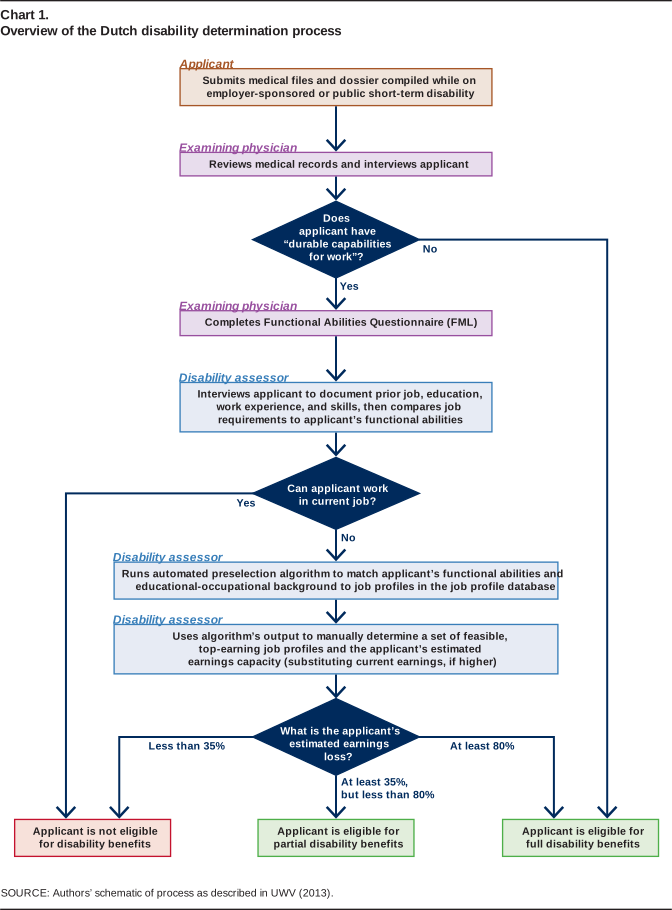
For the remaining applicants, the physician completes a standardized Functional Abilities Questionnaire (Functionele Mogelijkheden Lijst, or FML) based on a review of the applicant's medical records and a 1-hour interview with the applicant (but not a physical examination). Functional abilities are measured using binary, ordinal, or check-all-that-apply scales. If an applicant's actual ability falls between two levels of an ordinal scale, the physician is expected to assign the lower capacity and note the actual level with an open-ended remark.
Next, the physician transmits the FML responses and overall conclusions to the second UWV specialist, the disability assessor. Assessors are not medical professionals and do not receive information about medical diagnoses. Instead, the disability assessor collects from the applicant key information—job prior to disability onset (that is, the last job held), education, work experience, and skills—and uses this information, along with the FML responses, to determine the applicant's work capacity. The assessor first evaluates whether the applicant can perform the last job held for the same number of hours per week. If so, the applicant is not eligible for WIA benefits because there is no loss in earnings capacity. For jobs with unfamiliar requirements (that is, jobs that do not correspond to a job profile in the UWV database), the assessor will investigate the job's requirements, possibly visiting the applicant's former workplace in person.
If the applicant is not capable of performing the last job held, the disability assessor enters the applicant's educational credentials into the UWV system, which then classifies the education into one of seven aggregated levels. The disability assessor can also select a field of education from a list of seven options: administration, agriculture, art and culture, commercial, health care, services, and technical. If no field is selected, the UWV system assumes the field is “general.” The disability assessor also records the applicant's language skills, possession of a driver's license, typing skills, computer skills, any experience with text processing, and full employment history (including employers and periods).
Next, the disability assessor runs an automated preselection algorithm that accepts, flags, or rejects job profiles in the database by comparing each job profile's functional ability and educational requirements to the applicant's specific functional abilities and educational credentials. The functional abilities of applicants and the functional requirements of jobs measure the same underlying constructs, and UWV manuals define in detail how abilities and requirements are measured (UWV 2013). Appendix Table A-1 outlines the relationship between the functional abilities and job requirements used in the algorithm.
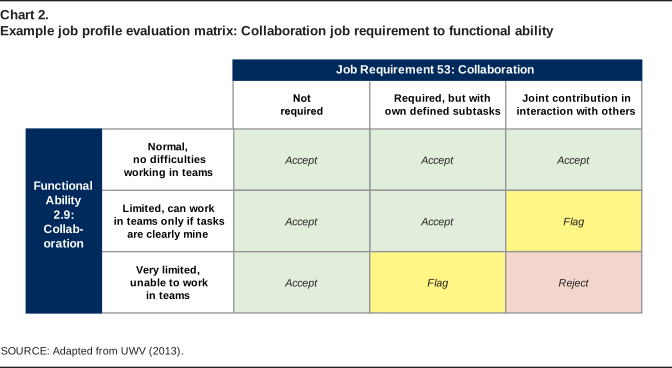
Chart 2 represents how ability levels and job requirements are compared to determine whether applicants have the ability to perform an example requirement—collaboration with others—measured on corresponding three-value ordinal scales for both ability level and requirement. As shown, for applicants with “very limited” collaboration ability, the algorithm rejects all job profiles requiring “joint contribution in interaction with others,” flags any job profiles requiring collaboration “but with own defined subtasks,” and accepts job profiles for which no level of collaboration is required. Flags are intended to trigger a manual review by the disability assessor to confirm that the applicant can meet the requirements, and a written explanation is required for the selection of any job profiles with flagged requirements.
Finally, the automated preselection algorithm produces a preliminary list of job profiles for which all functional and educational requirements are met by the applicant, grouped by occupation and ranked by the hourly wage of the median selected job profile within each occupation. The ranking excludes occupations with fewer than three positions across all selected job profiles. The disability assessor verifies that the applicant possesses all required functional abilities and educational credentials of the preselected job profiles and removes any job profiles for which this is not the case. For certain jobs, the employer may require that the employee obtain additional education within a specified period after starting the job; the job profile is considered acceptable only if the disability assessor can demonstrate that the applicant is capable of obtaining that additional education within the required period, based on prior training and skills.
An applicant's residual earnings capacity is then calculated as the product of estimated hourly earnings capacity and weekly work hours capacity, derived from the job profiles selected by the disability assessor. An applicant's hourly earnings capacity is estimated using the median hourly wage of the second-highest-earning occupation among the selected job profiles. To determine an applicant's estimated weekly work hours capacity, each occupation is assigned the highest weekly working hours across all selected job profiles within that occupation, and the applicant is assigned the lowest number of weekly working hours across all selected occupations, capped at the working hours of the last job held (because WIA applicants are not expected to work more hours than in their previous job). Note that residual earnings capacity is replaced by current earnings if the applicant is currently working and earning more than the estimated residual earnings capacity. Furthermore, an applicant's residual earnings capacity is zero if fewer than three occupations are represented among the job profiles selected by the disability assessor from the list of preselected job profiles.
Finally, one minus the ratio of estimated residual earnings capacity to prior earnings then determines the estimated degree of disability-related loss in earnings capacity, and therefore whether the applicant qualifies for partial or full WIA benefits and, if awarded partial benefits, the corresponding benefit level.
Data on Functional Abilities and Occupational Requirements
In this article, we use U.S. data on functional abilities in combination with Dutch data on job requirements to estimate work capacity using an algorithm based on the Dutch disability determination procedure. To illustrate how the Dutch earnings capacity determination process works when applied to a random sample of U.S. working-age adults, we use two data sources. The first is individual-level data on functional abilities obtained by fielding an adapted version of the FML to the nationally representative RAND American Life Panel. The second is administrative job profile data provided by the UWV. We describe each database in turn below.
The Dutch FML in the RAND American Life Panel
The FML is a standardized instrument used by the UWV to record the functional ability levels of WIA applicants for the purpose of determining their residual earnings capacity. The FML measures functional abilities that include tolerance for ambient environment; movements of arm, body, hand and finger, head and neck, and knee; mobility; pace; sitting and standing; upper body strength and torso range of motion; immune system; memory, attention, and cognition; sensory abilities; social skills and emotional regulation; and verbal and written communications. The FML was developed in 2002 to address concerns about the reliability and validity of earlier assessment methods (UWV 2003). In contrast to subjective assessments of general work ability, like that used in the United States and other countries, the FML quantifies work capacity by linking applicant capabilities to actual job requirements in the national economy. A hallmark of the method is that FML item scales correspond to the scales used to rate job profiles.
In April 2019, we invited 3,396 English-speaking participants in the RAND American Life Panel (ALP) to complete the FML, adapted for self-administration over the internet and translated to English, as a survey entitled the Health and Functional Capacity Survey (HFCS; ALP survey module 522) (RAND Corporation 2019). The ALP is a nationally representative (when weighted) sample of U.S. adults aged 18 or older who have agreed to participate in regular online social science surveys. To ensure the respondent sample is representative of all U.S. adults, including individuals with functional limitations, panel members are recruited using a variety of methods (such as mail, telephone, and in-person contact) and provided a tablet computer and internet subscription, if needed. All ALP surveys are accessible for people with disabilities (Section 508 compliant and meeting Web Content Accessibility Guidelines). The panel is refreshed periodically by recruiting new members (Pollard and Baird 2017). All surveys become publicly available and can be linked to one another using a pseudonymized respondent ID. 7
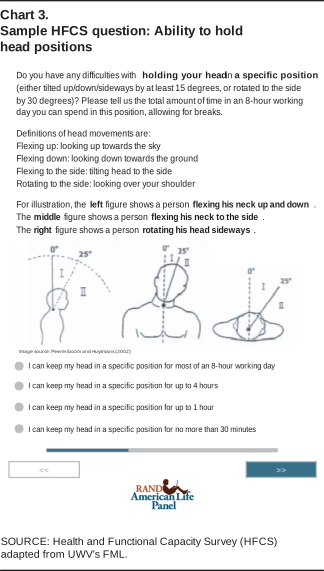
The HFCS was completed by 2,657 panelists, a completion rate of 78 percent, which is similar to completion rates achieved in other ALP surveys. The HFCS began with screening questions corresponding to the five conditions under which WIA applicants in the Netherlands are automatically eligible for full benefits and are therefore excluded from the FML assessment (see previous section). We screened out 196 respondents and then administered the complete FML to the remaining participants. Chart 3 displays a screenshot of an HFCS question, adapted from the FML, about ability to hold head positions. In this example, the FML measures durational capacity and uses a diagram for clarity. The HFCS also included questions on educational attainment and the presence of health conditions to capture information recorded by the UWV specialists in the Dutch model. To align our analysis sample with the age range for DI-covered workers, we exclude responses from panelists older than age 65.
Text description for Chart 3.
Sample HFCS question: Ability to hold head positions
The screenshot shows the following text:
Do you have any difficulties with holding your head in a specific position (either tilted up/down/sideways by at least 15 degrees, or rotated to the side by 30 degrees)? Please tell us the total amount of time in an 8-hour working day you can spend in this position, allowing for breaks.
Definitions of head movements are:
Flexing up: looking up towards the sky
Flexing down: looking down towards the ground
Flexing to the side: tilting head to the side
Rotating to the side: looking over your shoulder
For illustration, the left figure shows a person flexing his neck up and down. The middle figure shows a person flexing his neck to the side. The right figure shows a person rotating his head sideways.
The screenshot shows the illustration just described here.
Image source: Peerenboom and Huysmans (2002)
The screenshot shows the following response options:
- I can keep my head in a specific position for most of an 8-hour working day
- I can keep my head in a specific position for up to 4 hours
- I can keep my head in a specific position for up to 1 hour
- I can keep my head in a specific position for no more than 30 minutes
The screenshot shows the survey progress bar and next/previous buttons as well as the RAND American Life Panel logo.
SOURCE: Health and Functional Capacity Survey (HFCS) adapted from UWV's FML.
Table 1 presents the characteristics of our final analysis sample of 1,751 respondents aged 18–65 who passed the screening questions and subsequently completed the FML (hereafter, the HFCS sample). All statistics are weighted to match the March 2018 Annual and Social Economic Supplement to the Current Population Survey population distributions by age, sex, race and ethnicity, education, household income, and number of household members. The mean age in the HFCS sample is 44.2 (standard deviation [SD] 12.3), and 50 percent are female. Approximately 71 percent of the sample identify as White, 14 percent identify as Black, and 4 percent identify as Asian or Pacific Islander; 27 percent report Hispanic or Latino ethnicity. Educational attainment was initially measured by the HFCS using 12 U.S. classifications, which we then aggregated into three broader groups (see Appendix Table A-2). Six percent of the HFCS sample had not graduated high school, 60 percent had a high school diploma or some college, and 34 percent had a bachelor's degree or higher. Most respondents (83 percent) reported a specific field of education, with the most common being health care (28 percent), technical (20 percent), and services (17 percent).
| Characteristic | Mean |
|---|---|
| Age (years) | 44.2 (12.3) |
| By education level | |
| Less than high school | 46.4 |
| High school or some college | 44.5 |
| Bachelor's degree or higher | 43.2 |
| Women (%) | 50 |
| Race and ethnicity (%) | |
| White or Caucasian | 71 |
| Black or African American | 14 |
| Asian or Pacific Islander | 4 |
| Hispanic or Latino | 27 |
| Education level (%) | |
| Less than high school | 6 |
| High school or some college | 60 |
| Bachelor's degree or higher | 34 |
| Education field (%) | |
| Administration | 8 |
| Agriculture | 1 |
| Art and culture | 1 |
| Commercial | 8 |
| Health care | 28 |
| Services | 17 |
| Technical | 20 |
| Currently working (%) | 75 |
| Receiving U.S. disability benefits (%) | 5 |
| Number of health conditions (Maximum: 57) |
2.2 (2.6) |
| Number of functional limitations (Maximum: 97) |
7.3 (9.0) |
| By education level | |
| Less than high school | 12.5 |
| High school or some college | 8.6 |
| Bachelor's degree or higher | 4.1 |
| SOURCE: 2019 Health and Functional Capacity Survey (HFCS) fielded in the RAND American Life Panel (April and May). | |
| NOTES: The HFCS was completed by 2,657 respondents (a 78 percent completion rate). Our final sample is limited to 1,751 respondents aged 18–65 who passed screening questions.
Observations are weighted to match the March 2018 Annual and Social Economic Supplement to the Current Population Survey population distributions by age, sex, race and ethnicity, educational level, household income, and number of household members.
Standard errors are shown in parentheses where applicable.
|
|
Three-quarters of the HFCS sample were working around the time of the survey and 5 percent reported receiving disability benefits (DI or SSI). On average, respondents reported 2.2 (SD 2.6) health conditions and 7.3 (SD 9.0) functional limitations (defined as “below normal” or “limited” levels for the functional abilities listed in the questionnaire).
Job Profile Data
We obtained comprehensive, proprietary data from the UWV on the training and functional requirements of 5,479 active job profiles at 1,553 employers as of May 1, 2018 (UWV 2018), through a restricted data use agreement. The UWV job profile database is maintained by occupational analysts employed by the UWV. The descriptive content and requirements for each job profile are collected by an analyst during a multi-hour, in-person workplace visit. During this visit, the occupational analyst interviews the worker(s) performing the job, their supervisor, and a human resources employee. In addition, the analyst observes the worker(s) performing their activities and asks questions for clarification. Because the job profile database is designed to aid in identifying jobs that individuals not currently working in them could perform (potentially after additional education), it only includes jobs that do not require prior work experience in other jobs within the same firm. The database also only includes profiles for jobs with high employment security, or “open-ended employment agreements.” Temporary jobs and alternative work arrangements, held by 36 percent of all working individuals in the Netherlands (Flexbarometer n.d.), are excluded, as are certain occupations requiring specific beliefs, such as military, religious, or sex work occupations. Each job profile is updated with current information from the employer approximately every 18 months. If an update has not occurred for more than 24 months, the job profile is considered inactive and is no longer used in the disability determination procedure.
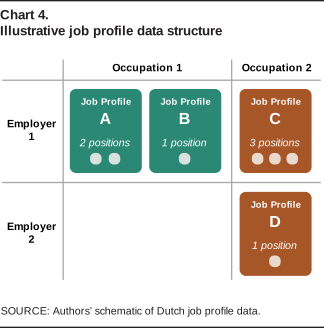
Chart 4 represents the structure of the job profile data, based on seven employees at two employers. Employer 1 employs six employees, each of whom hold a single position: three are in Occupation 1 and three are in Occupation 2. The three employees in Occupation 1 share the same generalized tasks, but the two employees in Job Profile A differ from the employee in Job Profile B in some key characteristic, such as weekly work hours or shift work. In this hypothetical example, four employees work in Occupation 2: three for Employer 1 and one for Employer 2. Even if these four employees in Occupation 2 share the exact same tasks and work characteristics, their positions are described by two different job profiles (C and D), corresponding to their respective employers.
The job profile data contain information on 114 generalized tasks and 284 occupations defined by the six-digit Dutch Standard Occupational Classification (Standaard BeroepenClassificatie). Chart 5 depicts the job profile data for a hypothetical job profile of a “breakfast staff” member, classified in the “waiter” occupational category. This profile has two generalized tasks: handling customer payments and serving drinks and meals. Across all job profiles in the database, the three most common generalized tasks (those with the most associated job profiles) are cleaning or tidying (488 job profiles, 11 occupations), handling customer payments (311 job profiles, 9 occupations), and carrying out sales activities (279 job profiles, 12 occupations).
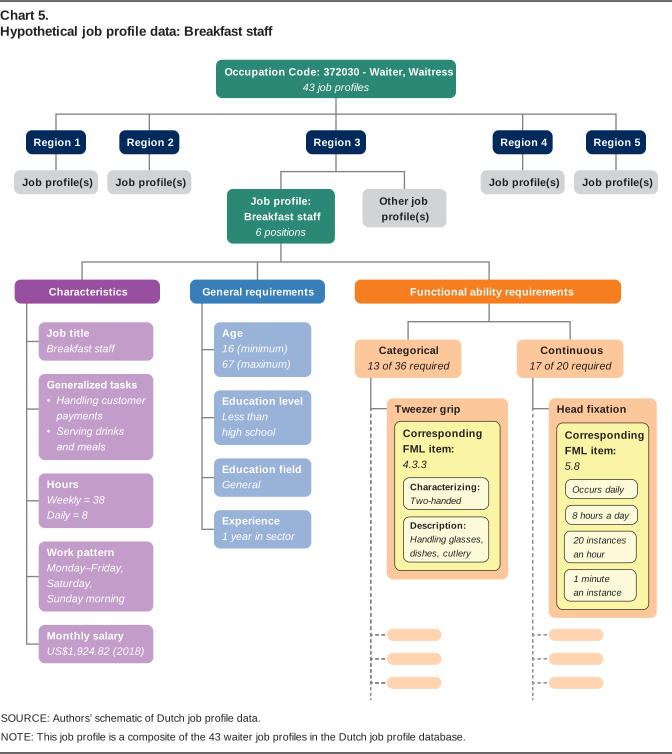
Text description for Chart 5.
Hypothetical job profile data: Breakfast staff
This schematic is formatted like an organizational chart with hierarchical relationships as outlined below.
- Occupation Code: 372030 - Waiter, Waitress; 43 job profiles
- Region 1
- Job profile(s)
- Region 2
- Job profile(s)
- Region 3
- Job profile: Breakfast staff; 6 positions
- Characteristics
- Job title: Breakfast staff
- Generalized tasks: Handling customer payments and Serving drinks and meals
- Hours: Weekly = 38; Daily = 8
- Work pattern: Monday–Friday, Saturday, Sunday morning
- Monthly salary: US$1,924.82 (2018)
- General requirements
- Age: 16 (minimum); 67 (maximum)
- Education level: Less than high school
- Education field: General
- Experience: 1 year in sector
- Functional ability requirements
- Categorical: 13 of 36 required
- Tweezer grip—Corresponding FML item: 4.3.3; Characterizing: Two-handed; Description: Handling glasses, dishes, cutlery
- [Blank boxes indicating additional categorical items]
- Continuous: 17 of 20 required
- Head fixation—Corresponding FML item: 5.8; Occurs daily; 8 hours a day; 20 instances an hour; 1 minute an instance
- [Blank boxes indicating additional continuous items]
- Categorical: 13 of 36 required
- Characteristics
- Other job profile(s)
- Job profile: Breakfast staff; 6 positions
- Region 4
- Job profile(s)
- Region 5
- Job profile(s)
- Region 1
SOURCE: Authors' schematic of Dutch job profile data.
NOTE: This job profile is a composite of the 43 waiter job profiles in the Dutch job profile database.
The 5,479 individual job profiles in the UWV dataset reflect diverse occupations and work requirements (Table 2). Within each occupation-employer combination, the mean number of job profiles is 2.7 (SD 2.9). The majority of job profiles have only one or two positions, yet the 95th percentile has 20 positions. The mean number of positions per job profile is 5.5 (SD 16.1), and the mean number of positions per occupation is 106.9 (SD 179.0).
| Characteristic | Mean | Standard deviation | Percentile | ||
|---|---|---|---|---|---|
| 5th | 50th | 95th | |||
| Job profile structure | |||||
| Job profiles per occupation-employer | 2.7 | 2.9 | 1 | 2 | 8 |
| Positions per job profile | 5.5 | 16.1 | 1 | 2 | 20 |
| Positions per occupation | 106.9 | 179.0 | 6 | 53 | 342 |
| Work hours | |||||
| Regular hours worked per day | 7.5 | 1.4 | 4 | 8 | 9 |
| Hours worked per week | 27.3 | 9.8 | 9 | 28 | 40 |
| Earnings (2018 US$) | |||||
| Hourly | 14.57 | 3.29 | 11.27 | 13.55 | 20.89 |
| Monthly | 1,761.11 | 809.63 | 514.48 | 1,767.17 | 3,068.42 |
| Education level (%) | |||||
| Less than high school | 55 | . . . | . . . | . . . | . . . |
| High school or some college | 30 | . . . | . . . | . . . | . . . |
| Bachelor's degree or higher | 15 | . . . | . . . | . . . | . . . |
| Education field (%) | |||||
| Administration | 5 | . . . | . . . | . . . | . . . |
| Agriculture | 1 | . . . | . . . | . . . | . . . |
| Art and culture | a | . . . | . . . | . . . | . . . |
| Commercial | 1 | . . . | . . . | . . . | . . . |
| Health care | 14 | . . . | . . . | . . . | . . . |
| Services | 4 | . . . | . . . | . . . | . . . |
| Technical | 12 | . . . | . . . | . . . | . . . |
| General | 62 | . . . | . . . | . . . | . . . |
| General qualifications | |||||
| No prior experience needed (%) | 75 | . . . | . . . | . . . | . . . |
| Minimum age | 16.8 | 1.1 | 16 | 16 | 18 |
| Maximum age | 67.0 | 0.3 | 67 | 67 | 67 |
| Functional job requirements b | |||||
| Total (Maximum: 53) | 27.9 | 5.4 | 19 | 28 | 37 |
| Unidimensional (Maximum: 35) | 14.5 | 4.0 | 8 | 14 | 22 |
| Multidimensional (Maximum: 18) | 13.4 | 2.1 | 10 | 14 | 16 |
| SOURCE: 2018 Dutch job profile data from UWV. | |||||
| NOTES: Based on all 5,479 Dutch job profiles active on May 1, 2018.
. . . = not applicable.
|
|||||
| a. Less than 1 percent. | |||||
| b. See Appendix Table A-1 for a listing of all functional job requirements by dimensionality. | |||||
The mean daily work hours are 7.5 (SD 1.4), with more than half of the job profiles requiring workdays of 8 hours or more. While the mean weekly work hours are 27.3 (SD 9.8), the 5th to 95th percentiles range from 9 to 40, reflecting substantial variation among job profiles. Differing weekly work hours contribute to much of the variation in earnings across job profiles. In 2018 U.S. dollars, the mean hourly wage for all job profiles is $14.57 (SD $3.29) and the mean monthly earnings, calculated as the product of hourly wage and monthly work hours, are $1,761 (SD $810).
The UWV job profiles map to seven Dutch education levels, which we aggregate into three broad U.S. levels (Appendix Table A-2): less than high school (required by 55 percent of job profiles), high school or some college (30 percent), and bachelor's degree or higher (15 percent). In our data, no occupation includes job profiles with more than two different (though always adjacent) education levels. Job profiles may require a single specific field of training, out of seven available options: administration (required by 5 percent of job profiles), agriculture (1 percent), art and culture (less than 1 percent), commercial (1 percent), health care (14 percent), services (4 percent), and technical (12 percent). Most job profiles (62 percent) do not require a specific field of education and are therefore classified in the data with a “general” field. Additional educational requirements are recorded in an open-ended text entry, typically describing the field of education in greater detail. Job profiles requiring specific fields are uncommon at lower educational requirement levels.
Required work experience is described in open-ended text. We use text matching on variants of “not required” or the absence of open-ended text to create a binary indicator for required prior work experience. Approximately 75 percent of the job profiles do not require prior work experience. There is little variation in the minimum and maximum ages required by job profiles. The mean minimum age is 16.8 (SD 1.1); the mean maximum age is 67 (SD 0.3), reflecting the statutory retirement age of 67 in the Netherlands in 2018.
Finally, each job profile contains all the functional requirements that must be accounted for by the job matching procedure. The mean number of functional requirements captured by the job profiles is 27.9 (SD 5.4), out of a total of 53 possible requirements. While some functional requirements are relatively simple and can be characterized by a single scale, other requirements require a more complex scale with multiple dimensions. After recoding the check-all-that apply variables, there are a total of 35 possible functional job requirements that consist of only a single dimension. Typically, these are binary variables indicating whether a certain functional ability is required for a specific job profile, or ordinal categorical variables. Hours worked per week and per day are measured on a continuous scale. The mean number of unidimensional functional requirements per job profile is 14.5 (SD 4.0). The 18 remaining functional job requirements are multidimensional combinations of characteristics, such as distance, duration, angle, and frequency, with potentially multiple combinations per requirement and job profile. The mean number of multidimensional requirements with at least one recorded combination per job profile is 13.4 (SD 2.1). Appendix Table A-1 lists all functional job requirements by dimensionality.
Measuring Work Capacity in a Sample of U.S. Working-Age Adults
In this section, we estimate work capacity in the HFCS sample by applying the UWV automated preselection algorithm described above to the FML data on functional abilities obtained from HFCS respondents. Recall that the UWV algorithm deems feasible only those job profiles for which a respondent's functional abilities, educational attainment, and field of education meet all job requirements. Our replication of the automated preselection procedure accounts for 58 functional abilities corresponding to 50 functional job requirements (Appendix Table A-1). Because our research process does not include disability assessors, we include all job profiles with flagged functional requirements. In an actual disability determination procedure, disability assessors exclude some of the flagged items, eliminating some job profiles in the feasible set, which may decrease estimated work and earnings capacity. (We examine the importance of this assumption later in this section.) Additionally, because we do not know the number of years of past work experience for individuals in the HFCS sample, we use an estimate of this measure calculated as age minus five minus years of completed schooling through college. Finally, to allow algorithmic matching between the 7 education levels in the Dutch job profile data and the 12 education levels captured in the HFCS, we aggregate both sets to align with 3 broad U.S. education levels (Appendix Table A-2).
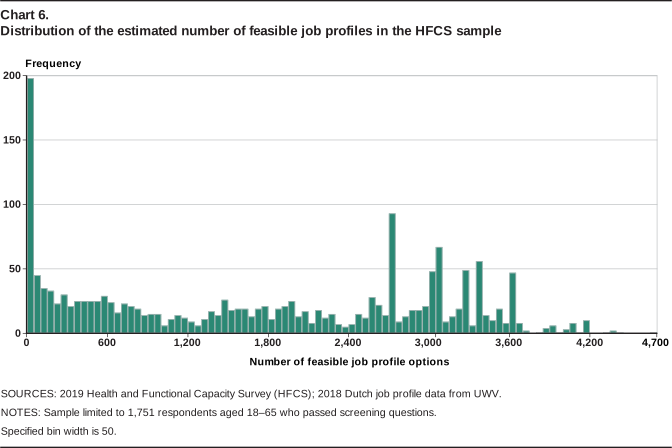
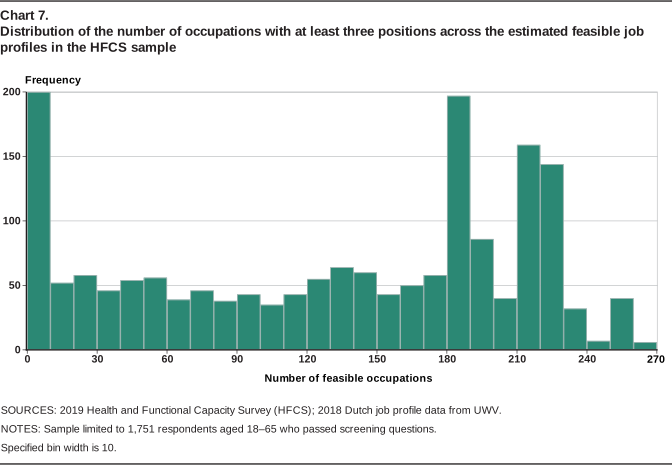
Chart 6 illustrates the distribution of the estimated number of feasible job profiles in the HFCS sample, and Table 3 displays corresponding summary statistics. Sixty-two respondents (5.4 percent of the weighted sample) were estimated to have zero feasible job profile options. Beyond that, variation in the estimated number of feasible job profiles is driven by two important factors. First, recall that two employees working in the same occupation for the same employer may have different job profiles if their jobs differ in some key characteristic, such as weekly work hours or shift work; as a result, weekly work hours drive much of the variation in the number of feasible job profiles. Second, education level and field determine the theoretical maximum number of feasible job profiles, even in the absence of functional limitations. Chart 7 shows the distribution of the number of occupations with at least three positions across the feasible job profiles. Seventy-one respondents (5.9 percent, weighted) were estimated to have zero feasible occupation options. As shown in Table 3, the mean number of feasible job profiles per respondent is 1,701 (SD 1,282), and the mean number of feasible occupations per respondent is 126 (SD 80).
| Number of feasible job profile options | Frequency |
|---|---|
| 0–49 | 198 |
| 50–99 | 45 |
| 100–149 | 35 |
| 150–199 | 33 |
| 200–249 | 23 |
| 250–299 | 30 |
| 300–349 | 21 |
| 350–399 | 25 |
| 400–449 | 25 |
| 450–499 | 25 |
| 500–549 | 25 |
| 550–599 | 29 |
| 600–649 | 24 |
| 650–699 | 16 |
| 700–749 | 23 |
| 750–799 | 21 |
| 800–849 | 19 |
| 850–899 | 14 |
| 900–949 | 15 |
| 950–999 | 15 |
| 1,000–1,049 | 6 |
| 1,050–1,099 | 11 |
| 1,100–1,149 | 14 |
| 1,150–1,199 | 12 |
| 1,200–1,249 | 9 |
| 1,250–1,299 | 6 |
| 1,300–1,349 | 11 |
| 1,350–1,399 | 17 |
| 1,400–1,449 | 14 |
| 1,450–1,499 | 26 |
| 1,500–1,549 | 18 |
| 1,550–1,599 | 19 |
| 1,600–1,649 | 19 |
| 1,650–1,699 | 13 |
| 1,700–1,749 | 19 |
| 1,750–1,799 | 21 |
| 1,800–1,849 | 11 |
| 1,850–1,899 | 19 |
| 1,900–1,949 | 21 |
| 1,950–1,999 | 25 |
| 2,000–2,049 | 13 |
| 2,050–2,099 | 17 |
| 2,100–2,149 | 8 |
| 2,150–2,199 | 18 |
| 2,200–2,249 | 12 |
| 2,250–2,299 | 15 |
| 2,300–2,349 | 7 |
| 2,350–2,399 | 5 |
| 2,400–2,449 | 7 |
| 2,450–2,499 | 15 |
| 2,500–2,549 | 12 |
| 2,550–2,599 | 28 |
| 2,600–2,649 | 22 |
| 2,650–2,699 | 14 |
| 2,700–2,749 | 93 |
| 2,750–2,799 | 9 |
| 2,800–2,849 | 13 |
| 2,850–2,899 | 18 |
| 2,900–2,949 | 18 |
| 2,950–2,999 | 21 |
| 3,000–3,049 | 48 |
| 3,050–3,099 | 67 |
| 3,100–3,149 | 9 |
| 3,150–3,199 | 13 |
| 3,200–3,249 | 19 |
| 3,250–3,299 | 49 |
| 3,300–3,349 | 6 |
| 3,350–3,399 | 56 |
| 3,400–3,449 | 14 |
| 3,450–3,499 | 10 |
| 3,500–3,549 | 19 |
| 3,550–3,599 | 8 |
| 3,600–3,649 | 47 |
| 3,650–3,699 | 8 |
| 3,700–3,749 | 2 |
| 3,750–3,799 | 0 |
| 3,800–3,849 | 1 |
| 3,850–3,899 | 4 |
| 3,900–3,949 | 6 |
| 3,950–3,999 | 1 |
| 4,000–4,049 | 3 |
| 4,050–4,099 | 8 |
| 4,100–4,149 | 1 |
| 4,150–4,199 | 10 |
| 4,200–4,249 | 0 |
| 4,250–4,299 | 0 |
| 4,300–4,349 | 1 |
| 4,350–4,399 | 2 |
| 4,400–4,449 | 1 |
| 4,450–4,499 | 0 |
| 4,500–4,549 | 0 |
| 4,550–4,599 | 0 |
| 4,600–4,649 | 0 |
| 4,650–4,699 | 1 |
| SOURCES: 2019 Health and Functional Capacity Survey (HFCS); 2018 Dutch job profile data from UWV. | |
| NOTES: Sample limited to 1,751 respondents aged 18–65 who passed screening questions. | |
| Specified bin width is 50. | |
| Estimate and education level | Mean | Standard deviation | Percentile | ||
|---|---|---|---|---|---|
| 5th | 50th | 95th | |||
| Number of feasible— | |||||
| Job profiles per respondent | |||||
| All | 1,701 | 1,282 | 0 | 1,781 | 3,557 |
| Less than high school | 737 | 896 | 0 | 285 | 2,485 |
| High school or some college | 1,405 | 1,186 | 0 | 1,321 | 3,011 |
| Bachelor's degree or higher | 2,399 | 1,187 | 243 | 2,859 | 4,049 |
| Occupations per respondent | |||||
| All | 126 | 80 | 0 | 144 | 226 |
| Less than high school | 53 | 49 | 0 | 44 | 129 |
| High school or some college | 106 | 75 | 0 | 121 | 193 |
| Bachelor's degree or higher | 175 | 66 | 33 | 209 | 251 |
| Monthly earnings capacity (2018 US$) | |||||
| All | 3,514 | 1,643 | 0 | 3,724 | 5,817 |
| Less than high school | 2,031 | 1,188 | 0 | 2,345 | 3,128 |
| High school or some college | 2,818 | 1,264 | 0 | 3,484 | 3,756 |
| Bachelor's degree or higher | 5,012 | 1,170 | 2,897 | 5,817 | 5,817 |
| Percentage with earnings capacity— | |||||
| Below the SGA threshold a | |||||
| All | 11.8 | . . . | . . . | . . . | . . . |
| Less than high school | 28.5 | . . . | . . . | . . . | . . . |
| High school or some college | 15.5 | . . . | . . . | . . . | . . . |
| Bachelor's degree or higher | 2.1 | . . . | . . . | . . . | . . . |
| Equal to zero | |||||
| All | 8.5 | . . . | . . . | . . . | . . . |
| Less than high school | 18.7 | . . . | . . . | . . . | . . . |
| High school or some college | 11.5 | . . . | . . . | . . . | . . . |
| Bachelor's degree or higher | 1.4 | . . . | . . . | . . . | . . . |
| SOURCES: 2019 Health and Functional Capacity Survey (HFCS); 2018 Dutch job profile data from UWV. | |||||
| NOTES: Sample limited to 1,751 respondents aged 18–65 who passed screening questions.
Observations are weighted to match the March 2018 Annual and Social Economic Supplement to the Current Population Survey population distributions by age, sex, race and ethnicity, educational level, household income, and number of household members.
SGA = substantial gainful activity; . . . = not applicable.
|
|||||
| a. US$1,180 in 2018 for nonblind individuals. | |||||
| Number of feasible occupations | Frequency |
|---|---|
| 0–9 | 200 |
| 10–19 | 52 |
| 20–29 | 58 |
| 30–39 | 46 |
| 40–49 | 54 |
| 50–59 | 56 |
| 60–69 | 39 |
| 70–79 | 46 |
| 80–89 | 38 |
| 90–99 | 43 |
| 100–109 | 35 |
| 110–119 | 43 |
| 120–129 | 55 |
| 130–139 | 64 |
| 140–149 | 60 |
| 150–159 | 43 |
| 160–169 | 50 |
| 170–179 | 58 |
| 180–189 | 197 |
| 190–199 | 86 |
| 200–209 | 40 |
| 210–219 | 159 |
| 220–229 | 144 |
| 230–239 | 32 |
| 240–249 | 7 |
| 250–259 | 40 |
| 260–269 | 6 |
| SOURCES: 2019 Health and Functional Capacity Survey (HFCS); 2018 Dutch job profile data from UWV. | |
| NOTES: Sample limited to 1,751 respondents aged 18–65 who passed screening questions. | |
| Specified bin width is 10. | |
To determine earnings capacity, we develop a simulation procedure that approximates the UWV procedure. The simulation begins by identifying and eliminating strictly dominated job profiles (that is, job profiles that would never appear in any individual's feasible job set because of their low earnings or hours), starting from the feasible job profiles with the highest hourly wages and dropping job profiles that should never be selected by a disability assessor because they cannot increase earnings capacity according to the UWV formula. Next, we make 2,500 random draws of job profile sets (where the size of the set also varies randomly) from the reduced set of feasible job profiles. Within each drawn set, we collapse the job profiles by occupation, assigning each occupation the maximum weekly work hours and the median hourly wage of its associated job profiles. Occupations are then ranked by the median hourly wage, and all but the top three are discarded. The estimated earnings for each drawn set are the product of the median hourly wage of the second-highest-earning occupation and the minimum weekly work hours across the three occupations. Finally, each respondent's estimated earnings capacity is the maximum value of earnings across the 2,500 draws.
This simulation approach approximates the job profile selection process that maximizes estimated earnings capacity according to UWV rules. It is possible that the job profile set maximizing estimated earnings capacity for a respondent was not drawn in the simulation procedure. Therefore, our simulation provides a lower bound for the estimated earnings capacity for any given set of feasible job profiles. With this probabilistic method, our earnings estimates are more accurate for respondents with smaller feasible job profile sets, because a larger share of the available combinations will have been drawn in the simulation.
As shown in Table 3, the mean estimated monthly earnings capacity (in 2018 U.S. dollars) in the HFCS sample is $3,514 (SD $1,643). In addition to calculating earnings capacity for each respondent, we also compare their estimated earnings capacity to the 2018 SGA threshold. We find that 11.8 percent of the HFCS sample has an estimated earnings capacity below the SGA threshold. Among those unable to perform SGA, the vast majority (72.5 percent, or 8.5 percent of the full sample) have zero estimated earnings capacity. (Note that the estimate of zero earnings capacity is less sensitive to the assumption that earnings levels in the Netherlands are comparable to U.S. earnings levels8 because it is driven entirely by the presence or absence of matched job profiles.) For comparison, 11.6 percent of U.S. adults aged 16–64 in the 2019 Current Population Survey report missing work in 2018 because of either a disability or having difficulty with one or more of the following: hearing, vision, memory, mobility, a physical difficulty, or a personal care limitation (Flood and others 2025). Earnings capacity is positively associated with education: among individuals with less than a high school education, 28.5 percent have estimated earnings capacity below SGA, and 18.7 percent have estimated earnings capacity of zero, compared with 2.1 percent and 1.4 percent, respectively, of respondents with at least a bachelor's degree.
We tested the sensitivity of our baseline estimates (Table 3) to possible specification changes (Table 4). As discussed in the Background, the UWV algorithm flags some matched job profiles with functional ability requirements that require follow up by a disability assessor, a step we are unable to replicate. Our baseline specification accepts all such flagged profiles, representing an upper bound of the size of the feasible job set. In the actual UWV procedure, disability assessors would likely resolve some of the flagged items, so excluding all flagged items represents a lower bound of feasible job set size. Indeed, we find that excluding all flagged job profiles eliminates 470 feasible job profiles (28 percent) and 31 occupations (25 percent), on average. When profiles with flagged requirements are excluded, we estimate that 25.3 percent of HFCS respondents would earn less than the SGA threshold and 23.1 percent would have an estimated earnings capacity of zero dollars.
| Estimate and education level | Baseline (accept flagged profiles) a | Alternative assumptions | ||||
|---|---|---|---|---|---|---|
| Exclude flagged profiles b | Relax three- occupation minimum c | Relax education field restriction | Restrict to current education level | Use maximum earnings d | ||
| Number of feasible— | ||||||
| Job profiles per respondent | ||||||
| All | 1,701 | 1,231 | 1,701 | 2,469 | 314 | 1,701 |
| Less than high school | 737 | 427 | 737 | 869 | 737 | 737 |
| High school or some college | 1,405 | 960 | 1,405 | 2,076 | 261 | 1,405 |
| Bachelor's degree or higher | 2,399 | 1,857 | 2,399 | 3,455 | 330 | 2,399 |
| Occupations per respondent | ||||||
| All | 126 | 95 | 126 | 160 | 34 | 126 |
| Less than high school | 53 | 28 | 53 | 59 | 53 | 53 |
| High school or some college | 106 | 76 | 106 | 137 | 33 | 106 |
| Bachelor's degree or higher | 175 | 141 | 175 | 219 | 32 | 175 |
| Monthly earnings capacity (2018 US$) | ||||||
| All | 3,514 | 2,899 | 3,584 | 3,787 | 3,322 | 4,887 |
| Less than high school | 2,031 | 1,234 | 2,139 | 2,177 | 2,030 | 2,228 |
| High school or some college | 2,818 | 2,256 | 2,896 | 3,188 | 2,585 | 3,151 |
| Bachelor's degree or higher | 5,012 | 4,337 | 5,025 | 5,141 | 4,857 | 8,434 |
| Percentage with earnings capacity— | ||||||
| Below the SGA threshold e | ||||||
| All | 11.8 | 25.3 | 9.7 | 11.4 | 18.7 | 10.8 |
| Less than high school | 28.5 | 53.9 | 23.4 | 28.5 | 28.5 | 28.5 |
| High school or some college | 15.5 | 32.2 | 12.7 | 15.0 | 24.4 | 14.1 |
| Bachelor's degree or higher | 2.1 | 7.8 | 1.6 | 1.7 | 6.7 | 1.5 |
| Equal to zero | ||||||
| All | 8.5 | 23.1 | 6.3 | 8.2 | 17.7 | 8.5 |
| Less than high school | 18.7 | 50.3 | 13.6 | 18.7 | 18.7 | 18.7 |
| High school or some college | 11.5 | 29.9 | 8.5 | 11.0 | 23.8 | 11.5 |
| Bachelor's degree or higher | 1.4 | 6.2 | 0.9 | 1.2 | 6.7 | 1.4 |
| SOURCES: 2019 Health and Functional Capacity Survey (HFCS); 2018 Dutch job profile data from UWV. | ||||||
| NOTES: Sample limited to 1,751 respondents aged 18–65 who passed screening questions.
Observations are weighted to match the March 2018 Annual and Social Economic Supplement to the Current Population Survey population distributions by age, sex, race and ethnicity, educational level, household income, and number of household members.
SGA = substantial gainful activity.
|
||||||
| a. Reproduces baseline specification (Table 3) in which we accepted all job profiles with flagged functional ability requirements. | ||||||
| b. Excludes all job profiles with flagged functional ability requirements. | ||||||
| c. Relaxes restriction that at least three occupations must be matched. | ||||||
| d. Calculates estimated earnings capacity using maximum (rather than median) earnings of the top three job profiles. | ||||||
| e. US$1,180 in 2018 for nonblind individuals. | ||||||
Alternatively, we could relax the restriction that at least three occupations must be feasible (while maintaining the restriction that at least nine feasible positions must exist) or relax specific field of education requirements. Relaxing either of these restrictions reduces the percentage of respondents with low earnings capacity, while only slightly increasing estimated monthly earnings capacity. We also tested imposing an additional restriction that feasible positions must require the same education level as the respondent has (as opposed to the same education level or lower); the number of feasible job profiles and number of feasible occupations dramatically decrease under this alternative, but the estimated earnings capacity, overall and by education level, is not substantially affected by this additional restriction. Finally, we estimated potential earnings using the maximum, rather than the median, of the three top-earning job profiles, which increases mean monthly earnings capacity by 39 percent overall and by more than two-thirds (68 percent) for respondents with at least a bachelor's degree.
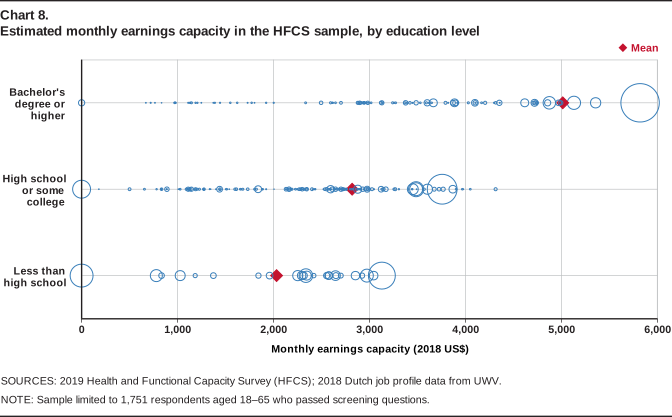
Our findings underscore the key role of education as a determinant of earnings capacity. Chart 8 displays the mean and range of estimated earnings for the HFCS respondents by education level, where the size of the bubbles represents the share of respondents within each education group with a given level of potential earnings. The highest-earning occupations require a bachelor's degree, while the lowest-earning occupations do not require a high school diploma, leading to large differences in the theoretical maximums of potential monthly earnings by education level ($5,012 for college graduates, $2,818 for high school graduates, and $2,031 for individuals without a high school diploma). In addition, differences in potential earnings by education level reflect the fact that college graduates tend to report fewer functional limitations than high school graduates report (4.1 versus 8.6, on average), and high school graduates tend to report fewer functional limitations than individuals without a high school diploma report (12.5, on average) (Table 1).
| Monthly earnings capacity (2018 US$) | Relative within-group weight |
|---|---|
| Less than high school | |
| 0.00 | 0.1874 |
| 778.50 | 0.0513 |
| 832.96 | 0.0113 |
| 1,027.07 | 0.0353 |
| 1,183.31 | 0.0062 |
| 1,372.72 | 0.0118 |
| 1,842.13 | 0.0100 |
| 1,958.40 | 0.0161 |
| 2,251.96 | 0.0366 |
| 2,291.83 | 0.0250 |
| 2,312.63 | 0.0193 |
| 2,336.28 | 0.0662 |
| 2,344.80 | 0.0290 |
| 2,418.06 | 0.0071 |
| 2,552.40 | 0.0137 |
| 2,573.46 | 0.0212 |
| 2,576.43 | 0.0186 |
| 2,644.80 | 0.0331 |
| 2,649.55 | 0.0128 |
| 2,700.18 | 0.0086 |
| 2,852.63 | 0.0252 |
| 2,921.42 | 0.0100 |
| 2,971.48 | 0.0596 |
| 3,041.80 | 0.0262 |
| 3,127.82 | 0.2584 |
| High school or some college | |
| 0.00 | 0.1149 |
| 179.68 | 0.0002 |
| 499.78 | 0.0029 |
| 654.59 | 0.0012 |
| 781.23 | 0.0008 |
| 830.26 | 0.0004 |
| 831.50 | 0.0005 |
| 832.96 | 0.0024 |
| 885.42 | 0.0003 |
| 888.49 | 0.0072 |
| 888.71 | 0.0003 |
| 1,007.46 | 0.0002 |
| 1,020.63 | 0.0003 |
| 1,027.07 | 0.0012 |
| 1,090.98 | 0.0019 |
| 1,102.80 | 0.0009 |
| 1,110.62 | 0.0064 |
| 1,116.04 | 0.0005 |
| 1,120.29 | 0.0030 |
| 1,134.67 | 0.0033 |
| 1,143.94 | 0.0064 |
| 1,183.31 | 0.0007 |
| 1,187.35 | 0.0033 |
| 1,206.00 | 0.0014 |
| 1,227.10 | 0.0016 |
| 1,268.06 | 0.0005 |
| 1,273.81 | 0.0009 |
| 1,274.67 | 0.0024 |
| 1,333.06 | 0.0002 |
| 1,335.37 | 0.0003 |
| 1,344.35 | 0.0002 |
| 1,400.37 | 0.0004 |
| 1,437.43 | 0.0119 |
| 1,438.48 | 0.0001 |
| 1,440.97 | 0.0027 |
| 1,442.04 | 0.0003 |
| 1,501.73 | 0.0003 |
| 1,511.29 | 0.0010 |
| 1,537.88 | 0.0002 |
| 1,597.29 | 0.0018 |
| 1,612.04 | 0.0024 |
| 1,653.70 | 0.0012 |
| 1,663.84 | 0.0006 |
| 1,679.21 | 0.0015 |
| 1,730.52 | 0.0024 |
| 1,802.56 | 0.0014 |
| 1,820.00 | 0.0017 |
| 1,838.69 | 0.0169 |
| 1,884.42 | 0.0007 |
| 1,885.73 | 0.0008 |
| 1,922.36 | 0.0004 |
| 2,004.48 | 0.0001 |
| 2,127.60 | 0.0006 |
| 2,129.96 | 0.0049 |
| 2,149.39 | 0.0009 |
| 2,160.14 | 0.0019 |
| 2,160.95 | 0.0073 |
| 2,176.77 | 0.0008 |
| 2,181.60 | 0.0004 |
| 2,189.89 | 0.0003 |
| 2,191.15 | 0.0017 |
| 2,219.69 | 0.0002 |
| 2,229.32 | 0.0012 |
| 2,250.00 | 0.0006 |
| 2,265.75 | 0.0026 |
| 2,280.00 | 0.0024 |
| 2,292.89 | 0.0008 |
| 2,298.36 | 0.0045 |
| 2,305.55 | 0.0003 |
| 2,320.00 | 0.0016 |
| 2,328.00 | 0.0005 |
| 2,344.80 | 0.0043 |
| 2,345.79 | 0.0015 |
| 2,400.00 | 0.0029 |
| 2,410.22 | 0.0004 |
| 2,428.80 | 0.0005 |
| 2,434.07 | 0.0007 |
| 2,518.82 | 0.0002 |
| 2,532.36 | 0.0024 |
| 2,552.40 | 0.0040 |
| 2,558.40 | 0.0003 |
| 2,574.93 | 0.0012 |
| 2,587.08 | 0.0005 |
| 2,588.90 | 0.0006 |
| 2,593.74 | 0.0193 |
| 2,604.81 | 0.0003 |
| 2,610.00 | 0.0068 |
| 2,630.39 | 0.0006 |
| 2,644.80 | 0.0071 |
| 2,645.32 | 0.0005 |
| 2,653.69 | 0.0009 |
| 2,683.78 | 0.0016 |
| 2,689.66 | 0.0006 |
| 2,701.19 | 0.0003 |
| 2,701.81 | 0.0067 |
| 2,702.29 | 0.0001 |
| 2,709.37 | 0.0006 |
| 2,713.12 | 0.0002 |
| 2,719.56 | 0.0006 |
| 2,721.60 | 0.0035 |
| 2,721.82 | 0.0017 |
| 2,732.40 | 0.0011 |
| 2,737.37 | 0.0020 |
| 2,757.60 | 0.0019 |
| 2,761.20 | 0.0005 |
| 2,796.22 | 0.0007 |
| 2,815.04 | 0.0010 |
| 2,830.08 | 0.0003 |
| 2,863.85 | 0.0018 |
| 2,876.40 | 0.0234 |
| 2,877.00 | 0.0008 |
| 2,887.68 | 0.0002 |
| 2,889.79 | 0.0008 |
| 2,896.80 | 0.0004 |
| 2,908.72 | 0.0006 |
| 2,912.00 | 0.0005 |
| 2,927.78 | 0.0070 |
| 2,939.24 | 0.0004 |
| 2,966.00 | 0.0036 |
| 2,974.50 | 0.0127 |
| 2,984.39 | 0.0039 |
| 2,998.32 | 0.0015 |
| 2,999.52 | 0.0009 |
| 3,025.47 | 0.0031 |
| 3,046.26 | 0.0004 |
| 3,120.00 | 0.0115 |
| 3,127.82 | 0.0015 |
| 3,144.53 | 0.0039 |
| 3,169.58 | 0.0075 |
| 3,254.77 | 0.0019 |
| 3,267.07 | 0.0031 |
| 3,305.11 | 0.0007 |
| 3,441.02 | 0.0005 |
| 3,445.62 | 0.0006 |
| 3,450.19 | 0.0420 |
| 3,483.88 | 0.0804 |
| 3,484.87 | 0.0594 |
| 3,489.83 | 0.0003 |
| 3,568.20 | 0.0020 |
| 3,602.40 | 0.0360 |
| 3,673.50 | 0.0055 |
| 3,723.60 | 0.0046 |
| 3,756.00 | 0.3155 |
| 3,766.25 | 0.0063 |
| 3,866.85 | 0.0209 |
| 3,901.12 | 0.0010 |
| 3,966.06 | 0.0010 |
| 3,976.11 | 0.0003 |
| 4,048.84 | 0.0010 |
| 4,312.74 | 0.0034 |
| Bachelor's degree or higher | |
| 0.00 | 0.0139 |
| 669.62 | 0.0003 |
| 719.56 | 0.0005 |
| 764.24 | 0.0003 |
| 832.96 | 0.0002 |
| 967.70 | 0.0004 |
| 970.65 | 0.0012 |
| 978.50 | 0.0009 |
| 1,110.62 | 0.0005 |
| 1,127.52 | 0.0006 |
| 1,134.67 | 0.0005 |
| 1,143.94 | 0.0015 |
| 1,187.35 | 0.0007 |
| 1,206.00 | 0.0007 |
| 1,247.25 | 0.0003 |
| 1,372.72 | 0.0004 |
| 1,388.27 | 0.0006 |
| 1,442.04 | 0.0006 |
| 1,549.04 | 0.0009 |
| 1,621.09 | 0.0009 |
| 1,729.16 | 0.0004 |
| 1,771.20 | 0.0009 |
| 1,801.21 | 0.0003 |
| 1,922.36 | 0.0007 |
| 2,001.30 | 0.0006 |
| 2,333.30 | 0.0013 |
| 2,494.90 | 0.0043 |
| 2,593.74 | 0.0016 |
| 2,613.52 | 0.0008 |
| 2,617.30 | 0.0005 |
| 2,644.80 | 0.0012 |
| 2,701.81 | 0.0028 |
| 2,876.40 | 0.0034 |
| 2,880.00 | 0.0021 |
| 2,894.40 | 0.0007 |
| 2,895.36 | 0.0008 |
| 2,896.80 | 0.0045 |
| 2,908.72 | 0.0023 |
| 2,927.78 | 0.0013 |
| 2,939.24 | 0.0020 |
| 2,944.80 | 0.0011 |
| 2,945.21 | 0.0025 |
| 2,966.00 | 0.0008 |
| 2,981.27 | 0.0041 |
| 2,984.39 | 0.0004 |
| 3,015.93 | 0.0011 |
| 3,117.53 | 0.0032 |
| 3,127.82 | 0.0065 |
| 3,134.40 | 0.0013 |
| 3,240.00 | 0.0015 |
| 3,256.76 | 0.0006 |
| 3,271.20 | 0.0012 |
| 3,366.83 | 0.0016 |
| 3,375.00 | 0.0072 |
| 3,392.92 | 0.0012 |
| 3,420.00 | 0.0024 |
| 3,445.62 | 0.0003 |
| 3,450.33 | 0.0004 |
| 3,484.87 | 0.0068 |
| 3,528.25 | 0.0011 |
| 3,591.28 | 0.0017 |
| 3,600.00 | 0.0140 |
| 3,618.62 | 0.0008 |
| 3,646.68 | 0.0010 |
| 3,663.86 | 0.0222 |
| 3,790.80 | 0.0032 |
| 3,818.12 | 0.0005 |
| 3,868.13 | 0.0088 |
| 3,884.59 | 0.0217 |
| 3,894.49 | 0.0113 |
| 3,919.20 | 0.0015 |
| 3,920.28 | 0.0004 |
| 4,028.40 | 0.0015 |
| 4,097.10 | 0.0159 |
| 4,100.40 | 0.0068 |
| 4,102.66 | 0.0005 |
| 4,166.70 | 0.0012 |
| 4,203.56 | 0.0036 |
| 4,297.12 | 0.0006 |
| 4,313.40 | 0.0023 |
| 4,351.64 | 0.0101 |
| 4,355.86 | 0.0004 |
| 4,615.92 | 0.0225 |
| 4,707.60 | 0.0036 |
| 4,718.40 | 0.0172 |
| 4,726.19 | 0.0067 |
| 4,742.05 | 0.0008 |
| 4,742.33 | 0.0036 |
| 4,854.47 | 0.0137 |
| 4,872.36 | 0.0556 |
| 4,968.52 | 0.0113 |
| 4,991.63 | 0.0066 |
| 5,128.80 | 0.0622 |
| 5,354.40 | 0.0373 |
| 5,817.33 | 0.5256 |
| SOURCES: 2019 Health and Functional Capacity Survey (HFCS); 2018 Dutch job profile data from UWV. | |
| NOTE: Sample limited to 1,751 respondents aged 18–65 who passed screening questions. | |
Because our survey data include both functional abilities and educational credentials, we can use a decomposition exercise to explore the relative contributions of these measures to economic returns to education (Table 5). First, we divide the HFCS sample into mutually exclusive subgroups based on actual education level, then we estimate mean monthly earnings capacity for each subgroup if their education level was less than high school, high school or some college, or at least a bachelor's degree, respectively. The results when actual education is the same as simulated education equal the estimates of mean monthly earnings by education level presented in Table 3. We find that, for high school graduates versus college graduates, the difference in average functional abilities between groups affects earnings capacity less than increased job access resulting from a college degree; but for individuals with and without a high school diploma, the difference in average functional abilities has about the same effect on earnings capacity as access to occupations requiring a high school diploma. Note that the estimated effect of education on functional abilities likely reflects a mix of selection bias (that is, individuals with fewer functional limitations self-select into higher education levels) and a true causal effect of education on functional abilities (which may also include the indirect effects of current and past job demands on one's functioning).
| Education level subgroup | Simulated education level | ||
|---|---|---|---|
| Less than high school |
High school or some college |
Bachelor's degree or higher |
|
| Less than high school | 2,031 (1,188) |
2,393 (1,411) |
3,280 (2,088) |
| High school or some college | 2,379 (1,059) |
2,818 (1,264) |
4,020 (1,995) |
| Bachelor's degree or higher | 2,898 (519) |
3,428 (622) |
5,012 (1,170) |
| SOURCES: 2019 Health and Functional Capacity Survey (HFCS); 2018 Dutch job profile data from UWV. | |||
| NOTE: Each row divides the sample into mutually exclusive groups based on actual education level, and each column presents mean estimated monthly earnings capacity (with standard deviations in parentheses) assuming an education level of less than high school, high school or some college, or at least a bachelor's degree, respectively. The diagonal cells (where actual education is the same as simulated education) correspond to the mean monthly earnings capacity estimates by education presented in Table 3. | |||
Specifically, we can see in Table 5 that, starting from the position of a high school graduate, if we were to hypothetically give these respondents a college degree (thereby granting them access to additional, higher-earning job profiles), they would increase their potential monthly earnings by $1,202 ($4,020 − $2,818). If, instead of the degree, we were to give them only the functional ability profile of an average college graduate, they would increase their potential earnings by only $610 ($3,428 − $2,818). Therefore, the average college graduate would be better off keeping their degree itself and forgoing the functional ability gains associated with the degree.
The story changes for individuals on the margin of a high school education. Starting again from the position of a high school graduate, if we were to hypothetically take away their high school diploma, they would reduce their potential monthly earnings by $439 ($2,818 − $2,379), on average. If instead we were to replace the average high school graduate's functional abilities with the average functional abilities profile of a person without a high school diploma, then they would reduce their average potential earnings by $425 ($2,818 − $2,393). Therefore, in contrast to the average college graduate, the average high school graduate is not substantially better off in one scenario versus the other.
Our study concludes with an exploration of the characteristics of five groups from the HFCS sample: (1) overall, (2) workers, (3) DI or SSI beneficiaries, (4) individuals identified by the UWV algorithm as having earnings capacity below SGA, and (5) individuals identified by the algorithm as having zero earnings capacity (Table 6). For each group, we report the mean monthly earnings (actual 9 and estimated); mean numbers of health conditions and functional limitations; distributions of usual weekly work hours (0, 1–19, 20–39, and 40 or more), education levels, and age groups; the percentages reporting at least one health condition or DI or SSI receipt; and the percentages with estimated potential earnings capacity below SGA, estimated earnings capacity of zero, or zero feasible job profiles.
| Characteristic | Overall sample | Workers | DI and SSI beneficiaries | Respondents with estimated earnings capacity— | |
|---|---|---|---|---|---|
| Below the SGA threshold a | Equal to zero | ||||
| Mean monthly earnings | |||||
| Actual | 3,920 | 5,219 | 484 | 773 | 699 |
| Estimated | 3,514 | 3,902 | 1,143 | 265 | 0 |
| Mean number of— | |||||
| Health conditions | 2.2 | 2.0 | 5.4 | 3.9 | 4.3 |
| Functional limitations | 7.3 | 5.5 | 23.4 | 23.4 | 25.7 |
| Percentage distributions | |||||
| Hours worked per week | |||||
| 0 (not working) | 25.4 | 0.0 | 80.2 | 75.5 | 78.7 |
| 1–19 | 3.3 | 4.5 | 9.0 | 2.5 | 2.7 |
| 20–39 | 13.3 | 17.9 | 4.7 | 6.2 | 3.9 |
| 40 or more | 57.5 | 77.1 | 6.1 | 12.9 | 10.7 |
| Education level | |||||
| Less than high school | 6.2 | 5.0 | 12.0 | 15.1 | 13.6 |
| High school or some college | 59.8 | 55.8 | 79.4 | 78.6 | 80.3 |
| Bachelor's degree or higher | 34.0 | 39.2 | 8.6 | 6.0 | 5.5 |
| Age group | |||||
| Younger than 35 | 29.0 | 30.3 | 6.3 | 22.5 | 27.8 |
| 35–44 | 23.9 | 25.4 | 13.5 | 19.2 | 12.2 |
| 45–54 | 21.4 | 23.1 | 25.5 | 21.3 | 26.4 |
| 55–65 | 25.7 | 21.1 | 54.7 | 37.0 | 33.6 |
| Percentage— | |||||
| Reporting at least 1 health condition | 66.5 | 65.2 | 93.7 | 70.0 | 68.3 |
| Receiving U.S. disability benefits | 5.4 | 1.4 | 100.0 | 28.1 | 32.6 |
| With estimated earnings capacity below the SGA threshold a | 11.8 | 3.9 | 61.2 | 100.0 | 100.0 |
| With zero estimated earnings capacity | 8.5 | 2.4 | 51.5 | 72.5 | 100.0 |
| With zero feasible job profiles | 5.4 | 0.6 | 31.3 | 45.7 | 63.0 |
| Number of observations | 1,751 | 1,310 | 118 | 180 | 128 |
| SOURCES: 2019 Health and Functional Capacity Survey (HFCS); 2018 Dutch job profile data from UWV. | |||||
| NOTES: Sample limited to 1,751 respondents aged 18–65 who passed screening questions.
Observations are weighted to match the March 2018 Annual and Social Economic Supplement to the Current Population Survey population distributions by age, sex, race and ethnicity, educational level, household income, and number of household members.
Rounded components of percentage distributions do not necessarily sum to 100.0.
SGA = substantial gainful activity.
|
|||||
| a. US$1,180 in 2018 for nonblind individuals. | |||||
Among the workers in the sample, about two-thirds report at least one health condition, averaging 2.0 health conditions and 5.5 functional limitations. Only 3.9 percent of workers have estimated earnings capacity below SGA, and only 0.6 percent have no feasible job profiles. Mean actual monthly earnings ($5,219) exceed mean estimated monthly earnings ($3,902), which is unsurprising because the latter is calculated from only the median of the three highest-earning job profiles matched in the jobs database.
Most self-reported DI and SSI beneficiaries in the HFCS sample (80.2 percent) are not working at all, whereas 6.1 percent report working full time despite being subject to the SGA earnings limit. Nearly all DI and SSI beneficiaries (93.7 percent) report at least one health condition, averaging 5.4 health conditions and 23.4 functional limitations. The UWV algorithm estimates that 61.2 percent of the DI and SSI beneficiaries have earnings capacity below SGA; in other words, approximately two-thirds of the DI and SSI beneficiaries meet the conceptual standard for DI benefits and SSI in the United States according to the Dutch disability determination procedure. On average, DI and SSI beneficiaries earn $484 per month, which is below their estimated monthly earnings capacity of $1,143; this is expected because earnings above the SGA threshold can trigger benefit suspension or termination. Relative to the overall HFCS sample, DI and SSI beneficiaries tend to be older (up to the sample's maximum age of 65) and have lower educational attainment.
Compared with DI and SSI beneficiaries, individuals with estimated earnings capacity below SGA tend to work more hours per week, although both groups are much more likely than the overall population to be not working (80.2 percent for DI and SSI beneficiaries, 75.5 percent for individuals with earnings capacity below SGA, and 25.4 percent in the overall population). Note that there is overlap between the subgroups: 28.1 percent of individuals with earnings capacity below SGA report receiving DI benefits or SSI (although we do not know how many nonbeneficiaries may be in the application process). Respondents with earnings capacity below SGA are much less likely to report a health condition than DI and SSI beneficiaries (70.0 percent versus 93.7 percent), but they report the same number of functional limitations on average (23.4). Despite the fact that many individuals in this group do not receive DI benefits or SSI, average actual monthly earnings ($773) are substantially less than the 2018 SGA limit for nonblind individuals ($1,180), while also higher than average estimated monthly earnings ($265). Although the distributions by education are similar for DI and SSI beneficiaries and individuals with estimated earnings capacity below SGA, the age distributions are very different. In particular, individuals with earnings capacity below SGA are much more likely to be younger than 35 and much less likely to be aged 55–65 than DI and SSI beneficiaries.
The last subgroup we considered are HFCS respondents who were identified by the UWV algorithm as having zero earnings capacity. As noted earlier, this final group is less sensitive to the assumption that earnings levels in the Netherlands are comparable to earnings levels in the United States. Individuals with zero estimated earnings capacity report having 4.3 health conditions and 25.7 functional limitations, on average, and 63 percent have zero feasible job profiles in the Dutch job profile database. Note that respondents can have zero estimated earnings capacity even if some feasible job profiles are identified if those profiles do not meet the minimum number of occupations or positions per job profile. Despite having zero earnings capacity, only a third of these individuals (32.6 percent) report receiving DI benefits or SSI.
Discussion and Conclusion
In this article, we apply aspects of the Dutch disability determination process to a sample of U.S. adults to estimate work capacity. Using the Dutch method, we find that 11.8 percent of U.S. working-age adults have an estimated earnings capacity lower than the SGA threshold used to determine DI benefit eligibility in the U.S. system. We also find that earnings capacity is positively associated with education, reflecting both differences in the functional abilities of individuals in different education groups as well as differences in access to higher-paying jobs based on educational credentials. For high school graduates versus college graduates, the difference in average functional abilities matters less than having a college degree, but for individuals with and without a high school diploma, the difference in average functional abilities matters about the same as having a diploma.
The methods we use to measure work capacity reflect a simplification of the Dutch procedure: Instead of highly trained specialists measuring functional abilities, we use the results of a self-administered survey. Additionally, UWV disability assessors individually accept or reject feasible job profiles with flagged functional requirements, a part of the process we are unable to replicate. The treatment of flagged profiles is shown to generate large differences in the estimates of disability prevalence; rejecting (rather than accepting) all job profiles with flagged requirements more than doubles the share of the HFCS sample with estimated earnings capacity below SGA (25 percent versus 12 percent). Despite our study's limitations, qualitatively similar differences across education groups remain. Overall, we find that our estimates do not vary much under different assumptions about how respondents are matched to feasible job profiles and how job profiles are combined to generate estimates of work capacity.
While there is some overlap in our sample between current DI and SSI beneficiaries and individuals identified by the Dutch method as having earnings capacity below SGA, a comparison of the two groups highlights important differences. Only 61 percent of DI and SSI beneficiaries are estimated to have earnings capacity below SGA. Conversely, fewer than a third of individuals estimated to having earnings capacity below SGA report receiving DI benefits or SSI. Those estimated to have earnings capacity below SGA are less likely to report health conditions than DI and SSI beneficiaries, but they report the same number of functional limitations on average. While the two groups tend to work at similar rates and have similar educational profiles, individuals with estimated earnings capacity below SGA tend to be much younger than DI and SSI beneficiaries. Having low earnings capacity is a critical vulnerability for these relatively young workers—should their health and functional abilities deteriorate further, their prospects for transferring their skills to other jobs in the economy are low.
Our results suggest that if the United States were to retroactively adopt the Dutch method for disability determination there may be some individuals who currently qualify for benefits who would no longer be eligible and vice versa. However, prior research suggests that certain groups' outcomes would likely remain the same under the Dutch method. For instance, Strand and Trenkamp (2015) examine claimants denied at the U.S. disability determination step 5 (those who were found unable to continue in their prior jobs but still deemed capable of other work) and find that median post-disability-onset earnings for these claimants generally fall by 25–35 percent, just under the Dutch earnings loss threshold. This suggests that many of these denials would also be denials under the Dutch system. Moreover, the shares of applicants allowed and denied in the U.S. and Dutch systems are currently quite similar, suggesting that the overall allowance and denial rates for DI and SSI would not change appreciably were the Dutch method to be adopted in the United States. Future research is needed to understand whether the Dutch method identifies individuals with earnings potential below SGA more accurately than the current U.S. method, though this is complicated by the fact that the current U.S. method relies on outdated information about occupational requirements and that actual work capacity is never observed, only estimated.
Implementation of a new disability determination procedure, such as the one discussed in this article, is also potentially complicated by other features of the current U.S. system, such as long wait times while applicants pursue benefits through up to four appeal levels, during which time their functional abilities may potentially deteriorate (or improve). As already seen with the current U.S. system, applicants under a new system may also learn to game functional assessment procedures by exaggerating their functional limitations (although they are unlikely to be able to do so in a sophisticated way, because that would require deep knowledge of functional occupational requirements in the national economy). On the other hand, implementing a disability determination procedure based on congruences between functional abilities and occupational requirements could potentially reduce decision variability across individual disability examiners and administrative law judges who may apply policies inconsistently (Maestas, Mullen, and Strand 2013; Garcia-Gomez and others 2023). Furthermore, implementing a new disability determination process would also affect SSA's current procedures for monitoring policy compliance among adjudicators.
SSA is already taking steps to collect modern occupational requirements. However, the U.S. system still lacks a harmonized functional assessment, similar to the FML, that can be used to match DI or SSI applicants to feasible jobs by matching functional abilities with occupational requirements across multiple dimensions.
Appendix A
| Job requirement | Functional ability | |
|---|---|---|
| Used for matching in our study | ||
| General | ||
| Education level | . . . | |
| Education field | . . . | |
| Work pattern (days of week, time of day) | . . . | |
| Prior work experience | . . . | |
| Multidimensional | ||
| Sitting | Time spent sitting uninterrupted Time spent sitting throughout work day |
|
| Standing | Time spent standing uninterrupted Time spent standing throughout work day |
|
| Walking | Time spent walking uninterrupted Time spent walking throughout work day |
|
| Climbing stairs | Ability to ascend or descend stairs | |
| Climbing | Ability to ascend or descend steps | |
| Kneeling or squatting | Ability to reach the ground by kneeling or squatting Ability to be active while kneeling or squatting |
|
| Active while bending | Ability to be active while bending or twisting | |
| Short-cycle twisting | Ability to twist torso | |
| Short-cycle bending | Ability to bend Frequency of bending throughout work day |
|
| Head movements | Ability to move head | |
| Head fixation | Ability to keep head in specific position throughout work day | |
| Reaching | Ability to stretch arm Frequency of stretching arm throughout work day |
|
| Being active above shoulder | Ability to be active with arm above shoulder | |
| Lifting | Frequency of lifting and using lightweight objects Ability to frequently lift heavy loads |
|
| Lifting or carrying | Weight that one can lift or carry | |
| Using mouse or keyboard a | Time spent using mouse or keyboard throughout work day | |
| Unidimensional | ||
| Sphere grip | Ability to grasp round object | |
| Pen grip | Ability to handle objects between the tips of two fingers and thumb | |
| Tweezer grip | Ability to handle objects between top of index finger and thumb | |
| Key grip | Ability to grip objects with fingers and thumb | |
| Cylinder grip | Ability to handle rod-shaped objects | |
| Squeezing and gripping | Ability to grip with hand | |
| Fine motor skills | Ability to make fine, accurate movements with fingers and hands | |
| Repetitive acts | Ability to make repetitive movements with fingers and hands | |
| Pushing and pulling | Weight that one can push or pull | |
| Air draft | Exposure to draft or sudden air movements | |
| Air quality: dust, smoke, gas, vapors | Exposure to dust, smoke, gas, or vapors | |
| Cold | Exposure to cold | |
| Heat | Exposure to heat | |
| Skin contact | Exposure to substances that might make skin wet, dirty, or irritated | |
| Vibrations | Exposure to vibrations or jolts | |
| Seeing | Ability to see with or without the use of glasses or contact lenses | |
| Hearing | Ability to hear with or without the use of hearing aids | |
| Speaking | Ability to speak | |
| Reading | Ability to read | |
| Writing | Ability to write | |
| Noise | Exposure to noise levels high enough to require protective equipment | |
| Protective equipment | Ability to wear protective equipment | |
| Personal risk | Ability to recognize and protect oneself from physical risks | |
| Touch sense | Sense of touch | |
| Screw movement with arm-hand | Ability to make twisting movement with arm-hand | |
| Rate of action | Ability to do work with a fast pace | |
| Adjusting to production peaks | Ability to work harder than usual or to meet deadlines | |
| Frequent contact with customers | Ability to have contact with customers or clients | |
| Managing others | Ability to do work that involves managing other people | |
| Dealing with conflicts | Ability to cope with conflicts with difficult people | |
| Collaborate | Ability to work in teams Ability to have contact with colleagues |
|
| Dealing with patients | Ability to do work that requires care of others (patients) | |
| Hours per week | Time that one can work per week | |
| Hours per day | Time that one can work per day | |
| Not used for matching in our study | ||
| General | ||
| Minimum age | . . . | |
| Maximum age | . . . | |
| Multidimensional | ||
| Crawling b | Ability to be active while kneeling or squatting, Ability to reach the ground by kneeling or squatting | |
| Active while twisted b | Ability to be active while bending or twisting, Ability to twist torso, Ability to bend, Frequency of bending throughout work day | |
| Using mouse or keyboard a | Ability to use a mouse or keyboard c | |
| Unidimensional | ||
| Not being able to fall back on colleagues | Ability to do solitary work c | |
| SOURCE: Adapted from UWV (2013). | ||
| NOTES: Job requirement type is an author-specific designation not used by the UWV.
. . . = not applicable.
|
||
| a. Ability to use is not captured by the Health and Functional Capacity Survey (HFCS), therefore only the time spent using during the work day measure is used for matching in our study. | ||
| b. Manually evaluated by UWV using indicated functional abilities; omitted from matching in our study because we do not have disability assessors to complete this step. | ||
| c. Not in the HFCS. | ||
| U.S. education classification | Dutch education level |
|---|---|
| Less than high school | |
| Kindergarten | 1 |
| Grade 1–6 | 2 |
| Grade 7–9 | 2 |
| Grade 10–12, no diploma received | 3 |
| High school or some college | |
| High school diploma or equivalent (GED) | 5 |
| Some college, but no degree | 5 |
| Associate degree in college—occupation or vocational program | 5 |
| Associate degree in college—academic program | 5 |
| Bachelor's degree or higher | |
| Bachelor's degree (BA, BS, AB) | 6 |
| Master's degree (MA, MS, MEng, MEd, MSW, MBA) | 7 |
| Doctoral degree (PhD, ScD, EdD) | 7 |
| Professional school degree (MD, DDS, DVM, LLB, JD) | 7 |
| SOURCE: Authors' construction using education levels present in the 2019 Health and Functional Capacity Survey (HFCS) and 2018 Dutch job profile data from UWV. | |
| NOTE: The automated preselection algorithm used by the authors applies this mapping between U.S. education classifications and Dutch education levels. The U.S. classifications have no equivalent to Dutch education level 4. | |
Notes
1 In this article, “DI” refers exclusively to U.S. Social Security Disability Insurance. The lowercase term “disability insurance” refers to the general concept and to comparable foreign programs, such as work incapacity insurance in the Netherlands.
2 Effective January 1, 2006, the WIA replaced the Disablement Insurance Act (Wet op de arbeidsongeschiktheidsverzekering, or WAO) for new beneficiaries. Individuals who were receiving WAO benefits before the transition may remain under that scheme. In this article, both WAO and WIA benefits are considered DI-equivalent benefits.
3 Not all individuals in this age range are fully insured for DI. For context, about three-fourths of U.S. adults aged 20 to full retirement age meet the Social Security requirements for disability-insured status (SSA 2025).
4 WIA benefits include both the Return-to-Work Scheme for the Partially Disabled (Werkhervatting Gedeeltelijk Arbeidsgeschikten, or WGA) and the Income Provision Scheme for Fully Occupationally Disabled People (Inkomensvoorziening Volledig Arbeidsongeschikten, or IVA).
5 Dutch employers can lay off workers who do not meet their obligations under the return-to-work plan, in which case the worker is no longer eligible for disability insurance.
6 Unlike the United States, the Netherlands has a statutory retirement age (currently 67 years) and allows certain occupations (for example, firefighters) to implement lower maximum age restrictions. However, we do not apply any age restrictions in our analyses.
7 RAND ALP data and documentation are available at https://alpdata.rand.org.
8 After adjusting to a common currency using purchasing power parities, the OECD (2023) estimates average annual wages in 2022 were $65,640 in the Netherlands compared with $77,226 in the United States.
9 Mean actual monthly earnings is calculated from a categorical annual earnings question by taking the median of each category and dividing by 12; for the highest category (“$200,000 or more”), we define the median as $237,500, consistent with the $75,000 range for the preceding category.
References
Autor, David H., and Mark Duggan. 2010. “Supporting Work: A Proposal for Modernizing the U.S. Disability Insurance System.” Policy Proposal. Washington, DC: The Center for American Progress and The Hamilton Project. https://www.hamiltonproject.org/publication/policy-proposal/supporting-work-a-proposal-for-modernizing-the-u-s-disability-insurance-system/.
Bickenbach, Jerome, Aleksandra Posarac, Alarcos Cieza, and Nenad Kostanjsek. 2015. “Assessing Disability in Working Age Population: A Paradigm Shift from Impairment and Functional Limitation to the Disability Approach.” Working Paper. Washington, DC: World Bank. https://hdl.handle.net/10986/22353.
Bolderson, Helen, Deborah Mabbett, and Bjorn Hvinden. 2002. Definitions of Disability in Europe: A Comparative Analysis. London: Brunel University. https://research.tilburguniversity.edu/en/publications/definitions-of-disability-in-europe-a-comparative-analysis-final-/.
Brandt, Diane E., Andrew J. Houtenville, Minh T. Huynh, Leighton Chan, and Elizabeth K. Rasch. 2011. “Connecting Contemporary Paradigms to the Social Security Administration's Disability Evaluation Process.” Journal of Disability Policy Studies 22(2): 116–128. https://doi.org/10.1177/1044207310396509.
Bureau of Labor Statistics. 2023a. “Employment Projections: Employment by Major Industry Sector.” https://www.bls.gov/emp/tables/employment-by-major-industry-sector.htm.
———. 2023b. “Labor Force Statistics from the Current Population Survey: Household Data, Annual Averages, 3. Employment Status of the Civilian Noninstitutional Population by Age, Sex, and Race.” https://www.bls.gov/cps/cpsaat03.htm.
Burkhauser, Richard V., and Mary Daly. 2011. The Declining Work and Welfare of People with Disabilities: What Went Wrong and a Strategy for Change. Washington, DC: American Enterprise Institute Press.
Center on Budget and Policy Priorities. 2023. Chart Book: Social Security Disability Insurance. Washington, DC: CBPP. https://www.cbpp.org/research/social-security/social-security-disability-insurance-0.
de Jong, Philip, Tom Everhardt, and Carlien Schrijvershof. 2013. “Duurzaam niet-duurzaam? Onderzoek naar niet-duurzaam volledig arbeidsongeschikt verklaarden [Permanently Temporary? Research on Those Declared Temporarily Fully Unfit for Work].” APE Report No. 967. The Hague: APE.
Flexbarometer. n.d. “Verhouding vast-flex-zelfstandig [Ratio of Permanent, Flexible, and Self-Employed Workers].” https://www.flexbarometer.nl/verhouding-vast-flex-zelfstandig.
Flood, Sarah, Miriam King, Renae Rodgers, Steven Ruggles, J. Robert Warren, Daniel Backman, Etienne Breton, Grace Cooper, Julia A. Rivera Drew, Stephanie Richards, David Van Riper, and Kari C. W. Williams. 2025. IPUMS CPS: Version 13.0 [dataset]. Minneapolis, MN: IPUMS. https://doi.org/10.18128/D030.V13.0.
Fultz, Elaine. 2015. Disability Insurance in the Netherlands: A Blueprint for U.S. Reform? Washington, DC: Center on Budget and Policy Priorities. https://www.cbpp.org/research/social-security/disability-insurance-in-the-netherlands-a-blueprint-for-us-reform.
Garcia-Gomez, Pilar, Pierre Koning, Owen O'Donnell, and Carlos Riumallo Herl. 2023. “Selective Exercise of Discretion in Disability Insurance Awards.” IZA Discussion Paper No. 15928. Bonn, Germany: Institute of Labor Economics (IZA).
Geiger, Ben Baumberg, Kayleigh Garthwaite, Jon Warren, and Clare Bambra. 2018. “Assessing Work Disability for Social Security Benefits: International Models for the Direct Assessment of Work Capacity.” Disability and Rehabilitation 40(24): 2962–2970. https://doi.org/10.1080/09638288.2017.1366556.
Hoynes, Hilary W., Nicole Maestas, and Alexander Strand. 2022. “Legal Representation in Disability Claims.” NBER Working Paper No. 29871. Cambridge, MA: National Bureau of Economic Research. https://www.nber.org/papers/w29871.
Institute of Medicine. 2007. Improving the Social Security Disability Decision Process. Washington, DC: The National Academies Press. https://doi.org/10.17226/11859.
Koning, Pierre, and Maarten Lindeboom. 2015. “The Rise and Fall of Disability Insurance Enrollment in the Netherlands.” Journal of Economic Perspectives 29(2): 151–172. https://doi.org/10.1257/jep.29.2.151.
Maestas, Nicole. 2019. “Identifying Work Capacity and Promoting Work: A Strategy for Modernizing the SSDI Program.” The Annals of the American Academy of Political and Social Science 686(1): 93–120. https://doi.org/10.1177/0002716219882354.
Maestas, Nicole, Kathleen J. Mullen, and Alexander Strand. 2013. “Does Disability Insurance Receipt Discourage Work? Using Examiner Assignment to Estimate Causal Effects of SSDI Receipt.” American Economic Review 103(5): 1797–1829. https://doi.org/10.1257/aer.103.5.1797.
———. 2021. “The Effect of Economic Conditions on the Disability Insurance Program: Evidence from the Great Recession.” Journal of Public Economics 199: 104410. https://doi.org/10.1016/j.jpubeco.2021.104410.
Mitra, Sophie. 2009. “Temporary and Partial Disability Programs in Nine Countries: What Can the United States Learn from Other Countries?” Journal of Disability Policy Studies 20(1): 14–27. https://doi.org/10.1177/1044207308315283.
National Academies of Sciences, Engineering, and Medicine. 2019. Functional Assessment for Adults with Disabilities. Washington, DC: The National Academies Press. https://doi.org/10.17226/25376.
———. 2023. Advances in the Diagnosis and Evaluation of Disabling Physical Health Conditions. Washington, DC: The National Academies Press. https://doi.org/10.17226/26941.
OECD. 2023. “OECD Data Explorer: Annual average wages, 2023, Netherlands and United States.” https://data-explorer.oecd.org/vis?df[ds]=DisseminateFinalDMZ&df[id]=DSD_EARNINGS%40AV_AN_WAGE&df[ag]=OECD.ELS.SAE&dq=USA%2BNLD......&pd=2023%2C&to[TIME_PERIOD]=false&vw=tb.
Pollard, Michael, and Matthew D. Baird. 2017. The RAND American Life Panel: Technical Description. Santa Monica, CA: RAND Corporation. https://www.rand.org/pubs/research_reports/RR1651.html.
RAND Corporation. 2019. “American Life Panel. Well Being 522–Health & Functional Capacity Survey [Main].” https://alpdata.rand.org/index.php?page=data&p=showsurvey&syid=522.
Ryan, Chris, and Mathias Sinning. 2011. Differing Skill Requirements Across Countries and Over Time. Adelaide, Australia: National Centre for Vocational Education Research. https://www.ncver.edu.au/research-and-statistics/publications/all-publications/differing-skill-requirements-across-countries-and-over-time.
[SSA] Social Security Administration. n.d. “Occupational Information System (OIS) Project.” https://www.ssa.gov/disabilityresearch/occupational_info_systems.html.
———. 2023. Annual Statistical Report on the Social Security Disability Insurance Program, 2022. Publication No. 13-11826. Washington, DC: Office of Research, Evaluation, and Statistics. https://www.ssa.gov/policy/docs/statcomps/di_asr/2022/index.html.
———. 2025. Fast Facts and Figures About Social Security, 2025. Publication No. 13-11785. Washington, DC: SSA. https://www.ssa.gov/policy/docs/chartbooks/fast_facts/2025/index.html.
Statistics Netherlands. 2022. “The Netherlands in Numbers 2022: Where Do Most People Work?” https://longreads.cbs.nl/the-netherlands-in-numbers-2022/where-do-most-people-work/.
———. 2024. “Personen met een uitkering; kenmerken uitkeringsontvangers [Beneficiaries: Characteristics of People Receiving Benefits].”
Strand, Alexander, and Brad Trenkamp. 2015. “When Impairments Cause a Change in Occupation.” Social Security Bulletin 75(4): 1–13. https://www.ssa.gov/policy/docs/ssb/v75n4/v75n4p1.html.
Taylor, Paul J., Wen-Dong Li, Kan Shi, and Walter C. Borman. 2008. “The Transportability of Job Information Across Countries.” Personnel Psychology 61(1): 69–111. https://doi.org/10.1111/j.1744-6570.2008.00106.x.
[UWV] Uitvoeringsinstituut Werknemersverzekeringen. 2003. “Claimbeoordelings- en Borgingssysteem (CBBS): Introductie voor belangstellenden [Claim Assessment and Security System (CBBS): Introduction for Interested Parties].” https://socialcase.nl/wp-content/uploads/2021/11/200305-Introductie-claimbeoordelings-en-borgingssysteem-versie-1.1.pdf.
———. 2013. “Basisinformatie CBBS [Basic Information CBBS].” (May 6.)
———. 2018. “Job Profile Database.”
———. 2021. “UWV Jaarverslag 2020 [UWV Annual Report 2020].” https://www.uwv.nl/nl/publicaties/jaar-en-tertaalverslagen/2021/uwv-jaarverslag-2020.
Wise, David A., ed. 2017. Social Security Programs and Retirement Around the World: The Capacity to Work at Older Ages. National Bureau of Economic Research Conference Report. Chicago: University of Chicago Press. https://press.uchicago.edu/ucp/books/book/chicago/S/bo25527519.html.
Wright, Peter, and Wout de Boer. 2002. “Introduction.” In Assessing Disability in Europe: Similarities and Differences, 7–23. Strasbourg, France: Council of Europe Publishing.